Bali has more than 60 named beaches spread across an island roughly the size of Luxembourg, and picking the wrong one can ruin your week.
The west coast is grey volcanic sand with plastic washing up during monsoon season. The south hides white sand coves at the foot of limestone cliffs you have to reach by descending hundreds of steps. The east offers calm water, protected by reefs, where you can snorkel right from shore. The north feels like Bali twenty years ago. And the Nusa Islands, a 30-minute boat ride away, are a trip within a trip.
Most first-time visitors land in Kuta, take one look at the grey-brown water and the line of debris on the sand, and wonder what went wrong. What went wrong is the beach, not the island. This guide breaks down each coast, beach by beach, so you know exactly which stretch of sand matches what you actually want from your trip. For a broader overview of planning your Bali trip, check out our complete guide to visiting Bali.
The south coast: Kuta, Seminyak, and Legian
Let’s get this out of the way: Kuta Beach is not good. It was the first tourist beach, it sits right next to the airport, and decades of mass tourism have taken their toll. The sand is grey volcanic gravel, the water is murky, hawkers won’t leave you alone, and during the rainy season (December to March), ocean plastic washes ashore in depressing quantities. If you’ve seen photos of Bali’s trash problem in the news, they were almost certainly taken at Kuta. For advice on where to stay near Kuta’s beaches, we wrote a dedicated guide.
Walk 20 minutes north along the sand and you reach Seminyak, then Legian. The beach itself doesn’t change much (same grey sand, same due-west orientation), but the scene behind it does.
Seminyak has better restaurants, more upscale hotels, and a slightly less chaotic atmosphere. Double Six Beach, on the Seminyak-Legian border, is the only real highlight of this entire stretch: it’s a beach break over a sandy bottom, probably the safest place in Bali to try surfing for the first time. No reef underneath, no rocks, just soft sand if you fall. The waves are gentle enough for a complete beginner to stand up on their first lesson.
Should you stay here? Only if nightlife, restaurants, and being able to walk everywhere are your priorities. The beaches themselves are the worst on the island. If you want to surf, come here for your first lesson and move on. If you want to swim or relax on nice sand, grab a taxi south or east.
The Bukit Peninsula: white sand and steep stairs
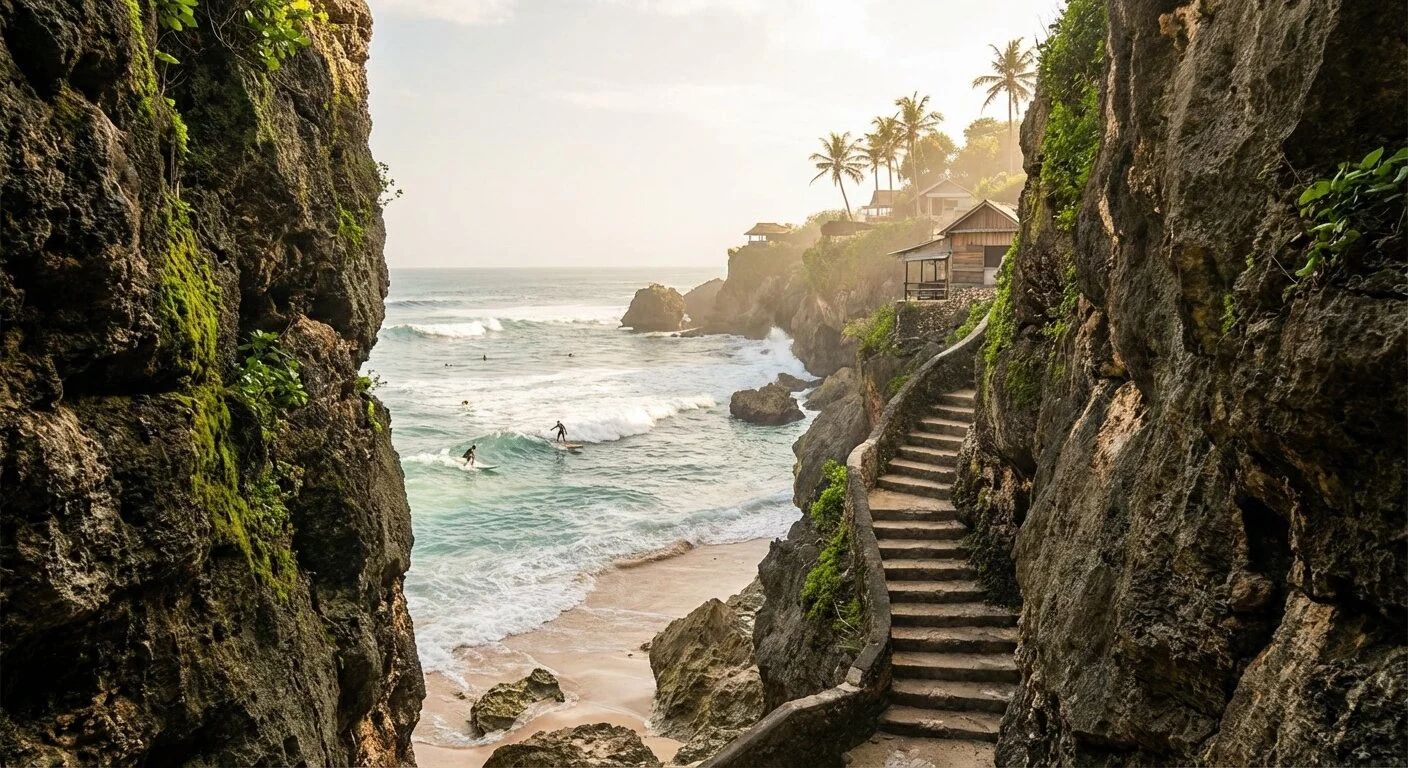
Drive 30 minutes south from the Kuta-Seminyak strip and the landscape changes completely. The flat, built-up tourist zone gives way to the Bukit Peninsula, a raised limestone plateau with cliffs dropping down to white sand beaches. This is where Bali delivers on the postcard promise. The catch: almost every beach requires climbing down a long, steep staircase carved into the cliff face, and you’ll need a scooter or a driver to get from one to the next since they’re scattered across the peninsula.
The general rule on Bukit is simple: the harder a beach is to reach, the cleaner and quieter it will be.
Padang Padang
If you watched Eat, Pray, Love, you’ve seen Padang Padang. It’s a small, photogenic beach wedged between cliffs with a narrow cave entrance. The problem is that everyone else has seen that movie too. At peak hours, you’ll be sharing a tiny strip of sand with far too many people for the available space.
There’s an important distinction most guides miss: Padang Padang Left is an expert-only wave (locals call it the “Balinese Pipeline” for its hollow, powerful tubes over sharp reef), while Baby Padang on the right side is where surf schools operate. Even Baby Padang is only swimmable at high tide because of the shallow reef underneath. Check the tide table before you go.
Bingin Beach
Bingin has a particular charm that other Bukit beaches don’t. The cliff above is lined with small guesthouses and warungs (local restaurants) built right into the rock, and the beach below feels like it belongs to a much smaller, less touristy island. The surf spot is intermediate and above (reef bottom, strong current), so it’s not a swimming beach for most people. But as a place to spend an afternoon eating nasi goreng while watching surfers from a warung terrace, Bingin is hard to beat.
Balangan Beach
A long crescent of white sand with a row of warungs perched on the cliff top. Balangan is one of the best sunset spots in the Uluwatu area, and it’s less crowded than Padang Padang or Dreamland. The surf here is fast over a shallow reef, strictly high-tide only for anyone below intermediate level. For non-surfers, the draw is the view, a cold Bintang at sunset, and the relative peace.
Dreamland Beach
More accessible than its neighbours (shorter stairs, proper parking), which attracts more people. The sand is white and the water is clear, but Dreamland has become a victim of its own convenience. Come early morning or late afternoon if you want space.
Melasti Beach
This might be the most beautiful beach in Bali right now. The access road cuts through towering limestone walls, and the beach itself is a wide stretch of clean white sand with crystal-clear turquoise water. Travellers disappointed by other Bali beaches often end up here and leave satisfied.
It’s more accessible than most Bukit beaches (you can drive down), has organized parking and some facilities, and the water is calm enough for swimming. The downside is that word of mouth has done its work, so it’s no longer the secret it was five years ago.
Nyang Nyang Beach
A massive stretch of white sand that until recently required a brutal descent from the clifftop. A road has been built to make access easier, which will inevitably bring more people. If you go now, especially on weekdays, you might still have hundreds of metres of sand almost to yourself. There’s a wild, untouched feel here that you almost can’t find anywhere else in southern Bali.
Green Bowl Beach
Hundreds of steps down to a small beach with caves for shade. The number of steps deters most people, so if you go early in the morning, you’ll probably have it to yourself. The caves are a real bonus when the midday sun hits too hard. Bring water because there’s nothing to buy at the bottom.
Pandawa Beach
White sand, organized facilities, parking, and carved statues lining the access road. Pandawa is the Bukit beach for those who want the white sand without the cliff-staircase adventure. It’s set up for day visitors with sun loungers for rent and food stands. Not the most atmospheric beach on the peninsula, but practical.
The Uluwatu area: cliffs, temples, and expert waves
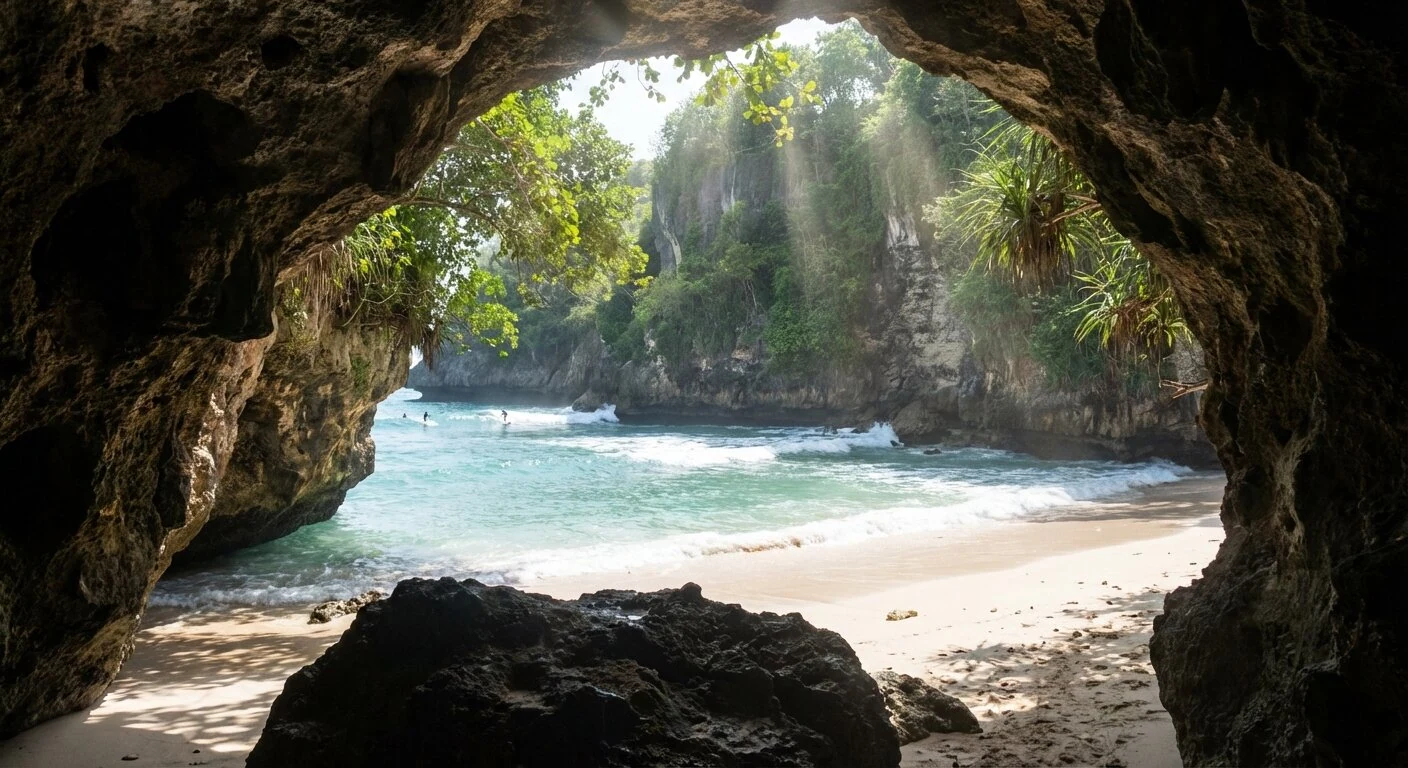
The southwestern tip of Bukit is Uluwatu territory. The famous temple sits on a cliff 70 metres above the Indian Ocean, monkeys patrol the grounds looking for sunglasses to steal, and below, some of Indonesia’s most powerful waves pound the reef.
Suluban Beach (Blue Point)
Suluban is the beach below the bars and cafes perched on Uluwatu’s cliffs. You reach it through a narrow path between limestone rock formations, crossing a tidal cave that’s only passable at low tide. The beach itself is small and rocky, and the main surf spot is for experts only.
Let’s be clear: local surfers and many Reddit discussions use the phrase “you will literally die” when talking about beginners getting in the water at Uluwatu. The reef is razor-sharp, the current is strong, and the entry point is through a cave. If you’re not an experienced surfer, come watch from the bars on the clifftop (Single Fin is the most famous) and enjoy the view with a drink in hand.
Thomas Beach
Just north of Padang Padang, Thomas Beach is wider and less crowded than its more famous neighbour. The sand is white, the water is good for swimming at high tide, and there are warungs at the top for food and drinks. It’s the “I want a nice beach in the Uluwatu area without the crowds” option that most people overlook because it doesn’t have a catchy name.
Jimbaran
Technically on the east side of the peninsula’s neck, Jimbaran is the unexpected family pick. The bay creates gentle waves, the sand is decent, and the real draw is the row of seafood restaurants right on the beach where you eat grilled fish with your feet in the sand at sunset. It’s touristy in the “organized Indonesian tourism” way rather than the “backpacker chaos” way. Families with young children who find Bukit’s cliff beaches impractical often end up happiest here.
The east coast: calm water and real snorkelling
Bali’s east coast faces Lombok across the strait, and offshore reefs protect most of the shoreline from big waves. The result: calm, often flat water better suited to snorkelling and kayaking than surfing. Tourist crowds thin out noticeably the further east and north you go.
Sanur
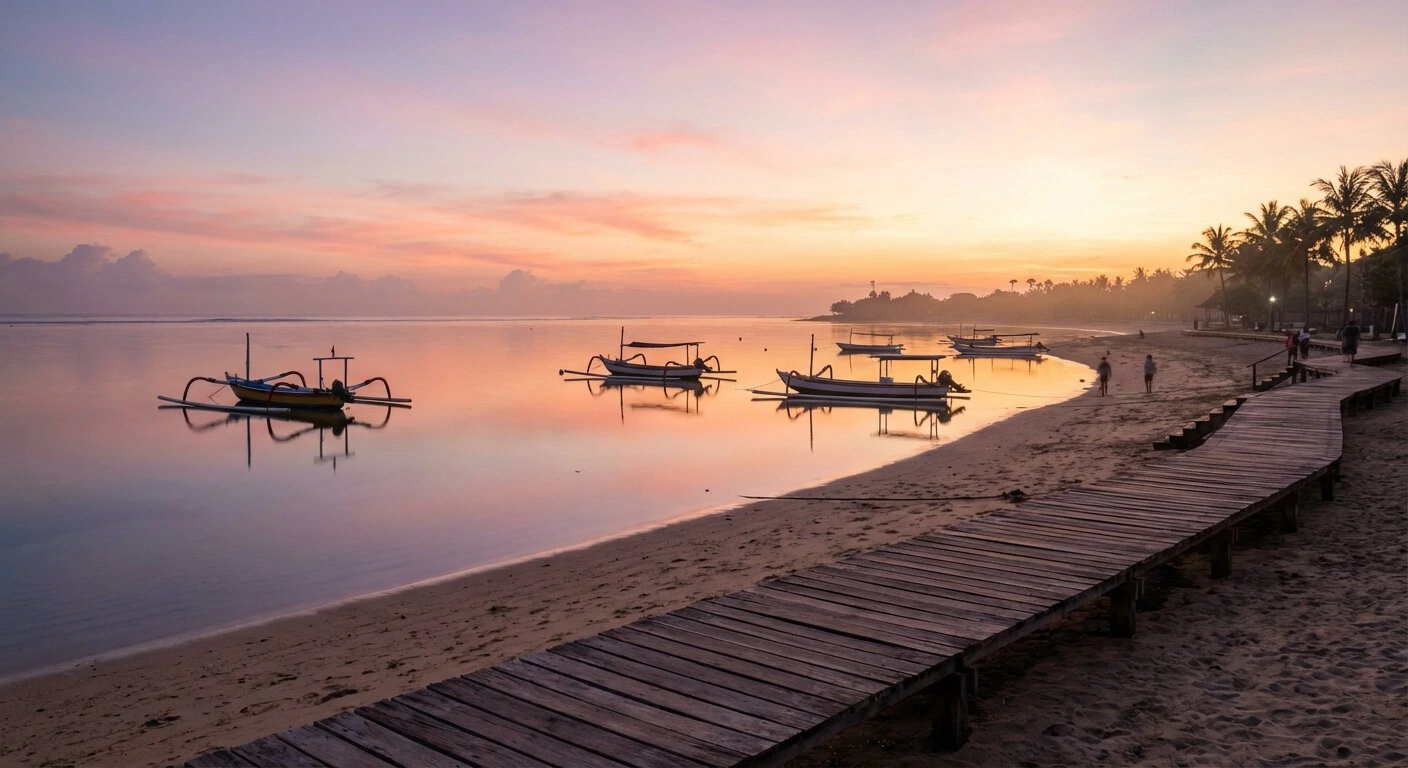
If you’re travelling with children under 10, Sanur should be at the top of your list. The reef just offshore turns the water into a kind of shallow lake. Kids can wade out 50 metres and still have waist-deep water.
There’s a paved seaside promenade where you can push a stroller without fighting the sand, lined with cafes and local restaurants. The sand is golden-grey (not the white of Bukit, but not the dark grey of Kuta either), and the vibe is frankly quiet. Older travellers, families, and anyone exhausted by Seminyak tend to end up here. The sunrise over the water makes up for missing the west coast sunsets.
Virgin Beach (Pasir Putih)
About two hours east of the touristy south, near Candidasa, Virgin Beach is the go-to recommendation for travellers who tried the west coast and felt short-changed. White sand, clear water, local warungs serving fresh fish, and very few foreign tourists. The drive is part of the experience (winding roads through rice paddies and traditional villages), and the relative remoteness keeps the crowds away. If you have a driver for the day and want a genuinely beautiful beach without the hype, this is the one.
Amed
Three hours from the airport, on Bali’s northeast coast at the foot of Mount Agung, Amed has the best shore-access snorkelling on the island. The beaches are black volcanic sand and pebbles (not pretty to look at), but the water is flat, crystal-clear, and full of coral just a few metres from the edge.
Jemeluk Bay is the most popular snorkelling spot, with an underwater temple structure and beautiful coral gardens. It can get crowded with tour groups by mid-morning.
The Japanese Shipwreck at Banyuning is a shallow wreck you can snorkel over without any diving gear; go at 7 AM before the groups arrive. Lipah Beach is a sandy-bottom alternative with excellent coral just offshore. And if you want to go where almost no tourists do, Selang Beach and Ibus Beach at the far east end of the Amed coast offer pristine reef with virtually no one around.
The drive to Amed is long but worth building into a wider eastern Bali itinerary. Most people spend two or three nights there, snorkel in the morning, and do not much in the afternoon, which is exactly the point.
Bias Tugel (Secret Beach, Padang Bai)
Near the port town of Padang Bai, a short walk along a rocky path leads to this hidden white sand cove. The walk filters out about 90% of potential visitors, leaving a small, pretty beach with decent snorkelling. Watch out for currents on the outer edge. It’s worth the detour if you’re passing through Padang Bai to catch a boat to the Nusa Islands.
The north coast: the Bali of old
The north coast is a three to four hour drive from the airport, which keeps the vast majority of tourists away. The beaches are black volcanic sand, the water is calm, and the pace of life is closer to what long-time visitors describe as “what Bali used to look like 20 years ago.”
Lovina
Lovina is the north’s main tourist area, although “tourist area” is a generous term. It’s a quiet strip of black sand beach with a few guesthouses and dive shops. The water is shallow and calm, protected by the nearshore reef, making it safe for young children.
The main draw is the early-morning dolphin trips: you hire a local boatman for cheap, head out before sunrise, and watch pods of spinner dolphins. It’s not SeaWorld. The boats are basic jukung outriggers, the dolphins are wild and sometimes don’t show up, and you’re back on shore by 8 AM. On the way back, some boatmen stop over a reef for snorkelling.
Pemuteran
Even quieter than Lovina, Pemuteran is a small village with a few dive resorts and a Bio-Rock coral restoration project where artificial structures have been seeded with coral to rebuild the reef. You can snorkel right over it from shore. The village is the main jumping-off point for Menjangan Island in West Bali National Park.
Menjangan Island
If snorkelling or diving matters more to you than any other activity in Bali, Menjangan should be your priority. Many experienced divers and snorkellers rank it as having the best coral and clearest water in all of Bali. The island is protected as part of the national park, which has kept development and degradation at bay.
Underwater, you’ll find vertical drop-offs, massive sea fans, and fish diversity that makes the south coast sites look like entry-level aquariums. It’s peaceful, uncrowded, and nothing like the over-touristed snorkelling trips around the Nusa Islands. Stay in Pemuteran and take a morning boat to the island.
The Nusa Islands: Penida, Lembongan, and Ceningan
The three Nusa Islands sit off Bali’s southeast coast, visible from Sanur on a clear day. A fast boat gets you to Nusa Lembongan or Nusa Penida in about 30 minutes. Each of the three islands has its own character, and lumping them together (as most tour operators do) is a mistake.
Nusa Penida
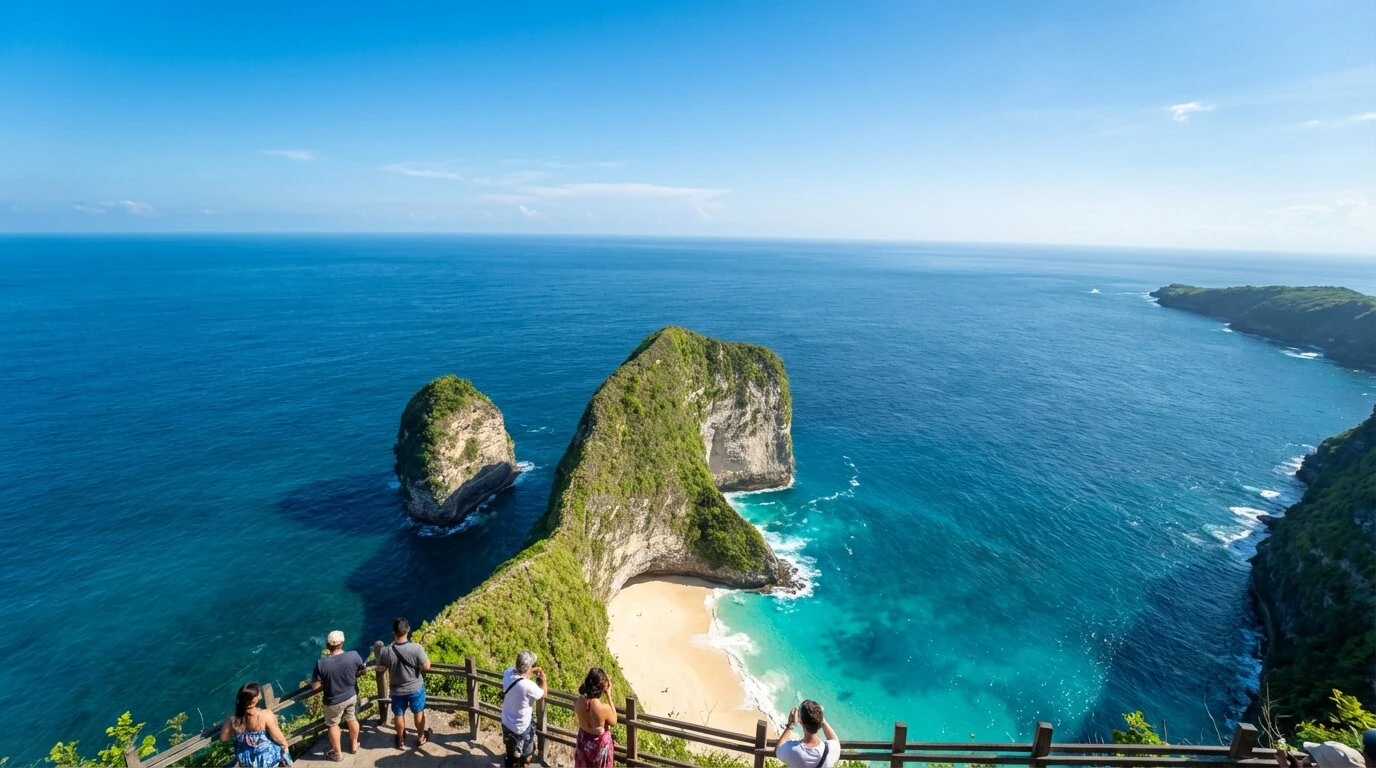
Nusa Penida is the big one, both in size and Instagram fame. Kelingking Beach, with its T-Rex-shaped cliff plunging into turquoise water, is probably the most photographed spot in all of Bali. The view from the top is genuinely stunning. Everything about the access and crowd management, much less so.
Nusa Penida’s roads are atrocious. Not “a bit bumpy” atrocious, but genuinely dangerous: unpaved, potholed, dusty, with sheer drops and no guardrails. Most day-trippers from Bali arrive exhausted from the boat, spend four hours bouncing between viewpoints in a minibus, take photos at each stop surrounded by 50 other people doing exactly the same thing, and leave feeling like the whole thing was a rushed and gruelling exercise. Redditors who’ve done the day trip are near-unanimous in saying “don’t do that.”
The fix is to stay at least one or two nights on the island. Day-trippers all arrive around 10 AM and leave by 4 PM. Show up at Kelingking at sunrise and you might share the viewpoint with four people instead of four hundred. The descent to the beach itself is steep, exposed, and dangerous (people have died doing it), but at sunset, there might only be a handful of people on the sand.
Beyond Kelingking, Diamond Beach and Atuh Beach on the east side offer impressive cliff-framed views, although swimming at both is difficult and dangerous due to waves and currents. Angel’s Billabong and Broken Beach are the other standard day-trip stops; most travellers find them underwhelming compared to Kelingking.
The activity that justifies a longer stay on Penida for many is the manta ray snorkelling trip, which takes you out into open water where mantas cruise at cleaning stations. You need to be a confident swimmer for this one as the water is deep and the current can be strong.
Hire a private driver rather than joining a group tour. It costs more but gives you control of the timing (our practical tips guide for Bali covers transport options), and that’s everything on this island.
Nusa Lembongan
If Nusa Penida is the dramatic, difficult sister island, Lembongan is the laid-back one. The roads are manageable, the island is small enough to explore in a day by scooter, and the overall vibe is relaxed without being dead. Several travellers describe the snorkelling off Lembongan as the best snorkelling experience of their lives, with better conditions and better visibility than the more famous Crystal Bay on Penida.
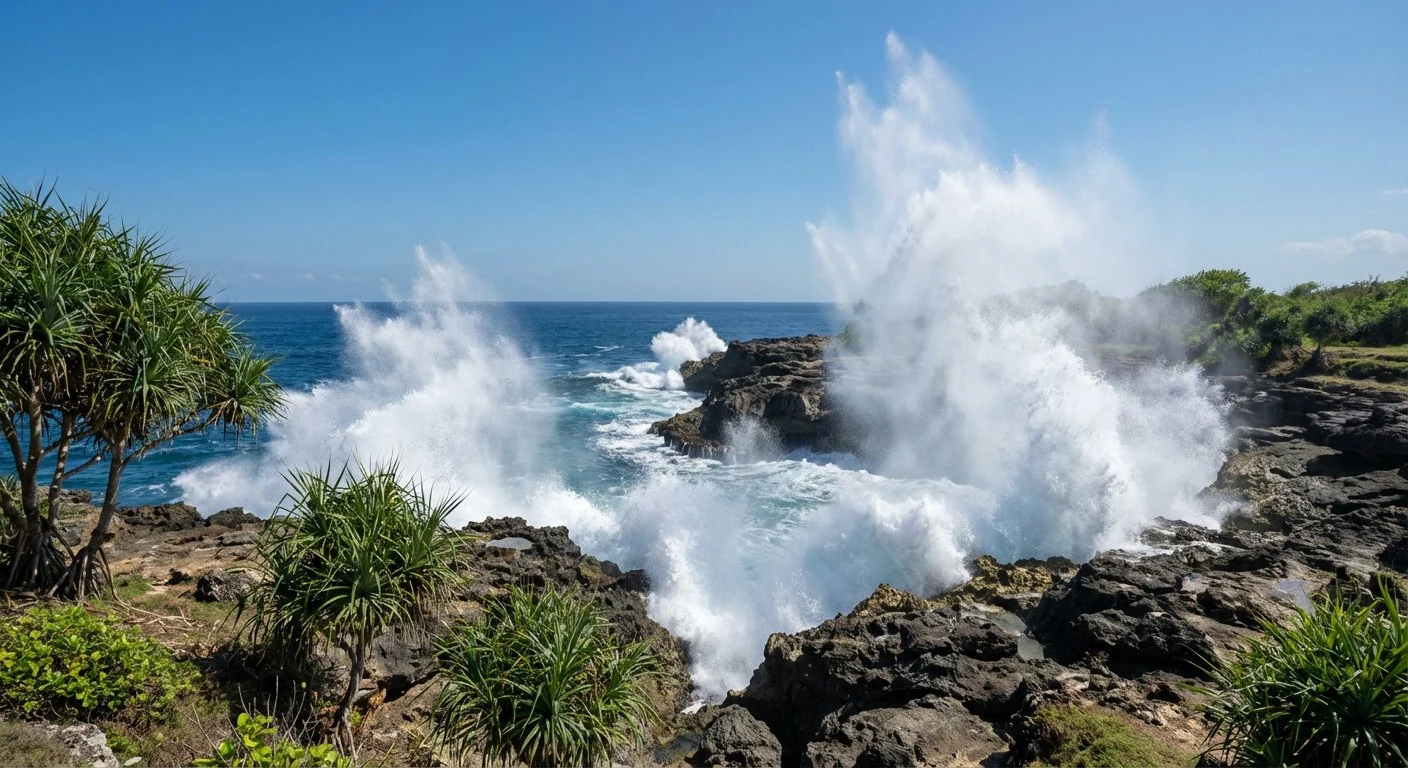
A popular strategy is to base yourself on Lembongan and take a 15-minute boat to Penida for specific sites. You get Lembongan’s comfortable accommodation and quiet evenings, with day access to Penida’s viewpoints. The Deck is a bar worth checking out for its sunset views over the strait.
Nusa Ceningan
Connected to Lembongan by the Yellow Bridge (a narrow, slightly nerve-wracking suspension bridge shared by scooters and pedestrians), Ceningan is the smallest and quietest of the three Nusa Islands. The snorkelling in the surrounding waters is good, the cliff-jumping spot at Blue Lagoon draws a few visitors, and the rest of the island is seaweed farms and empty roads. If Lembongan feels too busy (it probably won’t, but just in case), Ceningan is the escape from the escape.
Best surf spots: quick guide
Bali’s reputation as a surf destination is well earned, but the gap between beginner and expert spots here is bigger than in most places. Reef breaks with sharp coral and strong currents are the norm, not the exception. For a more detailed breakdown of lessons, board rental, and surf camps, check out our guide to activities and adventures in Bali.
If you’re a complete beginner, start at Double Six Beach in Seminyak. Sandy bottom, gentle whitewash, and no reef to worry about. It’s the only truly forgiving beginner wave in the south.
Batu Bolong in Canggu is the most popular beginner-to-intermediate spot, but it gets dangerously crowded (imagine 100 people in the same lineup) and has a mixed reef-sand bottom. Go at 6 AM if you want any space at all.
Intermediate surfers should look at Balangan (fast reef break, high tide only) and Medewi on the north coast, a mellower wave over river stones that offers long rides without the crowds. Bingin is another option if you’re comfortable on reef.
Advanced and expert surfers already know Uluwatu, Padang Padang Left, and Impossibles. These are serious, powerful waves over shallow, sharp reef with strong currents. Cave entries, long paddle-outs, and localism are part of the deal. If you need to ask whether you’re ready for these spots, you’re not.
One tip that applies everywhere: go at sunrise. At 6 AM, the wind is still, the crowds aren’t there yet, and the light on the water is worth the early wake-up. After about 10 AM, the onshore wind chops up most spots and the lineups fill with surf school students.
Best snorkelling and diving spots
Bali’s underwater life varies enormously by location. The overall ranking, based on traveller feedback, places Menjangan Island first, followed by the Amed coast, then Nusa Lembongan, with Crystal Bay at Nusa Penida a distant fourth. The west and south coast beaches offer virtually nothing for snorkelling.
For shore-access snorkelling (no boat needed), Amed is unbeatable. At Jemeluk Bay, Lipah Beach, and the Japanese Shipwreck, you walk into the water and you’re on coral in under 10 metres. The Bio-Rock project in Pemuteran is another direct-access option. At Sanur, the reef is there but visibility is lower and the coral less impressive.
For boat-based snorkelling, Menjangan’s wall dives and clear water are in a different league from the south coast trips. The manta ray snorkelling off Nusa Penida is a unique experience but requires open-water confidence. If you want the easiest and most consistently good boat snorkelling without a long journey, trips departing from Nusa Lembongan are your best bet.
To learn more about water activities, including dive courses and guided snorkelling trips, check out our guide to activities and adventures in Bali.
Beach clubs and where to stay near the beach
Bali’s beach club scene is concentrated in two areas: Seminyak (Potato Head, Ku De Ta) and the Uluwatu cliffs (Sundays, Ulu Cliffhouse). These are all-day venues with pools, DJs, cocktails, and daybeds you rent by the hour.
It’s expensive by Balinese standards but cheap compared to the equivalent in Ibiza or Mykonos. If the beach club experience is part of your Bali agenda, Seminyak gives you walking access to several options, while the Uluwatu clubs trade convenience for ocean views from the clifftops.
Where to stay depends entirely on which coast suits you. In short: Seminyak and Canggu for nightlife and restaurants, the Uluwatu area for white sand beaches and surfing, Sanur for families, Amed for snorkelling, Nusa Lembongan for island life. Our where to stay in Bali guide breaks it down neighbourhood by neighbourhood.
Practical tips: when to go and what to bring
The dry season runs from April to October, with June to September as the peak months. This is when the west coast beaches are at their best, with cleaner water, less debris, and consistent surf. The rainy season (November to March) brings rain, stronger currents, and the plastic problem on the west coast. If you visit during the rainy season, prioritize the east coast and the Bukit Peninsula, which are less affected.
Reef shoes are non-negotiable if you plan to visit any Bukit Peninsula beach or snorkel from shore at Amed. The reef is sharp enough to cut through flip-flops. Bring them from home because the ones sold in Kuta tourist shops are flimsy.
Sunscreen matters more than you think. You’re near the equator, UV index regularly exceeds 10, and you’ll burn faster than expected even on overcast days.
Zinc-based sunscreen is better for the reef and better for your skin. Apply it before leaving your hotel, reapply after every swim, and wear a rash guard if you’re snorkelling or surfing for more than an hour.
Tide tables matter on the Bukit beaches. Padang Padang, Balangan, and several other southern beaches go from swimmable to exposed reef at low tide. Check the tide before climbing down 200 steps to find a beach you can’t use.
Cash is still king at most beach warungs. The clifftop bars and beach clubs accept cards, but small local restaurants at beach level often don’t. Have small change in Indonesian rupiah.
Getting between coasts takes time. Bali traffic is genuinely bad, especially around the Kuta-Seminyak-Canggu corridor. A drive from Seminyak to Uluwatu that should take 30 minutes can take 90 at peak hours. Build in buffer time for any day where you’re targeting multiple beaches, or better yet, base yourself near the coast you’re most interested in.
If you’ve already explored Bali’s beaches and want to compare with another Southeast Asian beach destination, our guide to the most beautiful beaches in Phuket offers a similar coast-by-coast breakdown of Thailand’s largest island.
For a total cultural contrast, discover Bangkok’s urban activities or things to do in Hanoi including the Old Quarter and Ha Long Bay.