Bangkok is a city that flat-out refuses to sit still
Between the temples https://marcwiner.com/plus-beaux-temples-bangkok/, the street food https://marcwiner.com/ou-manger-bangkok/ and the unfiltered chaos of daily life, you could fill an entire month here and never get bored. But it’s the activities beyond the classic tourist spots that make the difference between a good trip to Bangkok and an unforgettable one. Whether you’re watching a Muay Thai fight, skimming along the canals in a long-tail boat or sipping a sunset cocktail on the 50th floor, this city offers experiences you simply won’t find anywhere else.
This guide covers 20 of the best things to do in Bangkok, from trips to ancient ruins to rooftop bars where you’ll blow your budget in the best possible way. For an overall introduction to the city, see https://marcwiner.com/guide-complet-visiter-bangkok/.
The Chao Phraya River: express boats, canal rides and cruises
The Chao Phraya splits Bangkok in two, and getting out on the water is one of the easiest ways to see the city from a different angle. You have three main options, and they vary enormously in both price and vibe.
The Blue Flag tourist boat
The most convenient choice. This hop-on/hop-off boat runs the main river, stopping at headline sites like Wat Arun, the Grand Palace pier and Chinatown. A ride costs 15–40 baht (under €1), and you can use it all day just for the scenery. It’s the same river the overpriced dinner cruises use—just without the buffet and the painful bill.
Long-tail boat rides through the canals (khlongs)
This is the outing most travellers miss, and it’s arguably the best water activity in Bangkok. Hire a private long-tail from Sathorn Pier or Tha Chang Pier and plunge into Thonburi’s canal network on the west bank. You’ll glide down narrow waterways lined with stilted wooden homes, little temples and locals going about their day. It feels like stepping back a century.
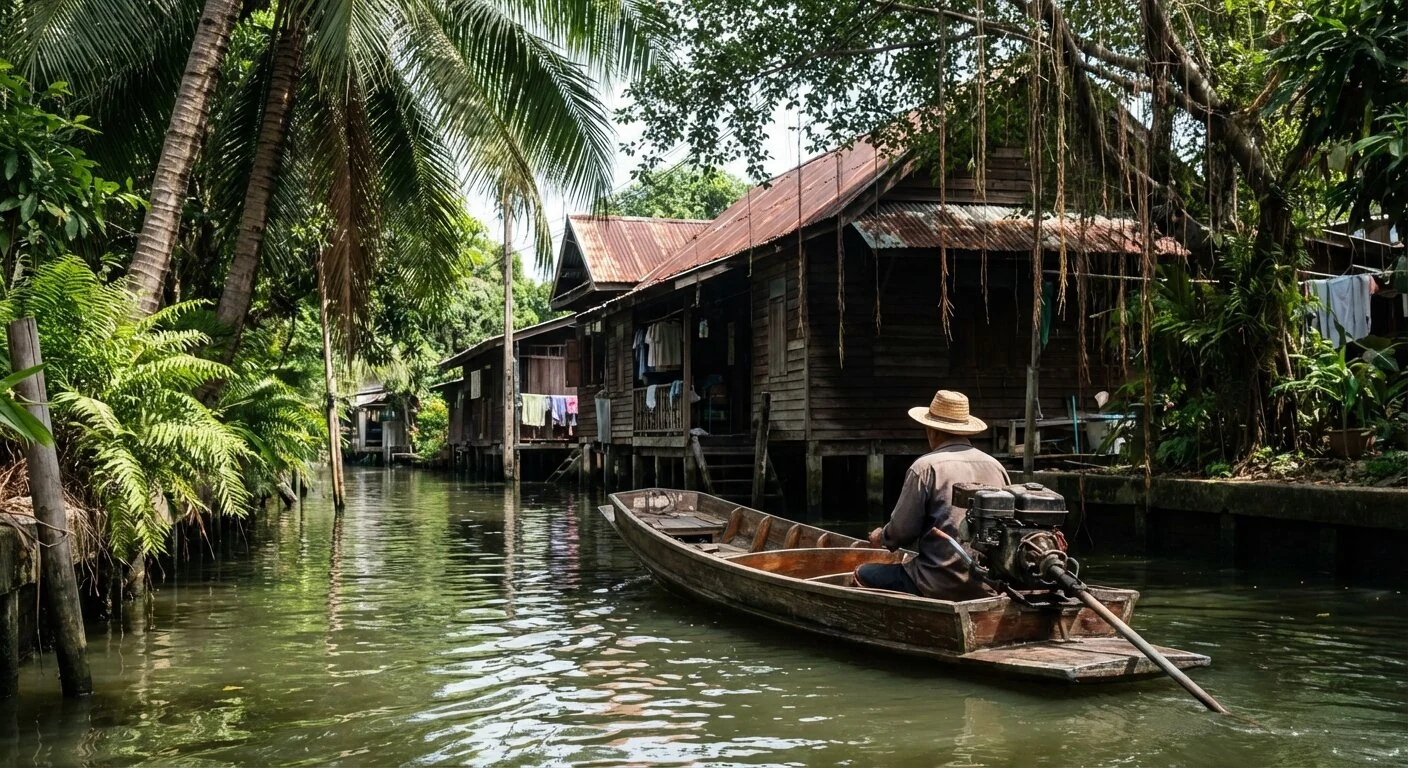
A fair price for the whole boat is 1 000–1 500 baht (€26–40) total, not per person. If someone quotes 1 500–2 000 per head, walk away and bargain directly at the pier. Don’t book overpriced canal tours online when you can set up the same thing on the spot for a fraction of the cost.
The best stop en route is the Artist’s House (Baan Silapin), a traditional wooden canal-side home where puppet shows are staged daily. It’s free, it’s peaceful, and it reveals a Bangkok far beyond the malls and traffic jams.
Dinner cruises
The honest take: dinner cruises on the Chao Phraya are overpriced and underwhelming. The food is a mediocre buffet, the boats are crowded and you’re essentially paying extra for the same view you’d get from a 30-baht (<€1) ferry. If you want sunset on the river, hop on the Blue Flag boat at golden hour and keep the 2 000-plus baht (€53) in your pocket.
Markets and shopping
Bangkok’s market scene is vast to the point of insanity. You could spend your whole trip trawling markets and still miss dozens. These are the ones truly worth the detour.
Chatuchak Weekend Market
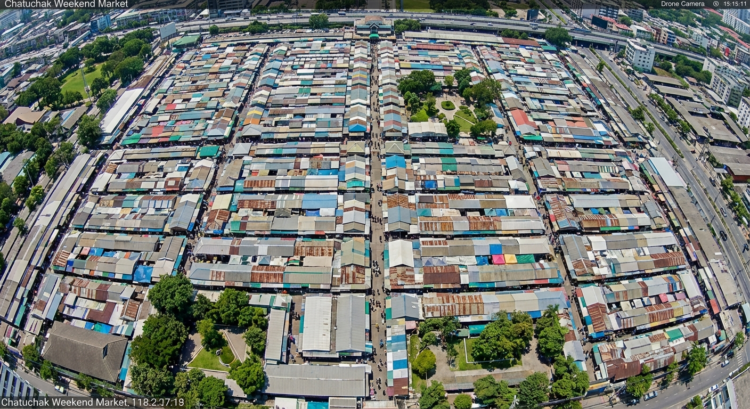
Chatuchak is one of the largest open-air markets on the planet, with more than 15 000 stalls spread over 11 hectares. It runs on Saturday and Sunday (there’s also a smaller Friday-night version from 6 pm to midnight—cooler and less packed, though not every stall opens).
The sweet spot is 9–10 am on Saturday or Sunday: shops are open, tour buses haven’t arrived yet and the temperature is still bearable. Between 1 pm and 3 pm the heat trapped under the metal roofs becomes literally suffocating.
Chatuchak’s golden rule: buy it when you see it. The market is a maze. You will not find that stall again. Don’t kid yourself that you’ll circle back—you won’t.
Use the Clock Tower as your meeting point. When you need an air-conditioned break, duck into JJ Mall or Mixt Chatuchak next door. Take the BTS to Mo Chit or the MRT to Chatuchak Park.
Best sections: young Thai designers’ clothing in Sections 2–4, ceramics and vintage denim. And grab a coconut ice-cream from one of the roving vendors to keep your core temperature from hitting critical.
Markets for food lovers
Wang Lang Market is on the opposite bank of the river, directly across from the Grand Palace. It’s where Siriraj Hospital staff and students eat—which tells you everything about the prices and the quality. Virtually all local clientele, minimal tourist markup.
Or Tor Kor Market adjoins Chatuchak and sells some of Bangkok’s best fresh produce and ready-to-eat dishes. It’s cleaner and better organised than most markets, with premium tropical fruits you won’t find on street stalls.
Khlong Toei Market is the no-frills option: a wet market where locals do their daily shopping. No tourists, no English signs, no Instagram staging. It’s authentic in the last meaningful sense of the word.
Night markets
Jodd Fairs has replaced the old Train Night Market Ratchada and become the most popular evening market. It’s photogenic, the food is good, and it pulls a mix of tourists and locals. Touristy, yes, but the enjoyable kind of touristy.
For something more under-the-radar, the Srinagarindra Train Night Market (Talad Rot Fai) is out of the way but huge, packed with vintage goods and antiques, and virtually tourist-free. If you love rummaging, it’s worth the trek. The Owl Night Market (Talad Nok Hook) near the MRT Purple Line is similar: low prices, local crowd, zero tourists.
Shopping malls
MBK Center is a Bangkok institution for electronics, phone repairs and bargain goods. IconSiam is the upscale option: it houses an indoor, air-conditioned ‘floating market’—totally artificial but handy on a rainy day. Platinum Fashion Mall in Pratunam sells clothing wholesale at prices that make fast fashion look expensive.
Floating markets: the unfiltered version
Every Bangkok itinerary includes a floating market, and every traveller asks the same question: which one isn’t a tourist trap? Here’s the straight answer.
Damnoen Saduak: give it a miss
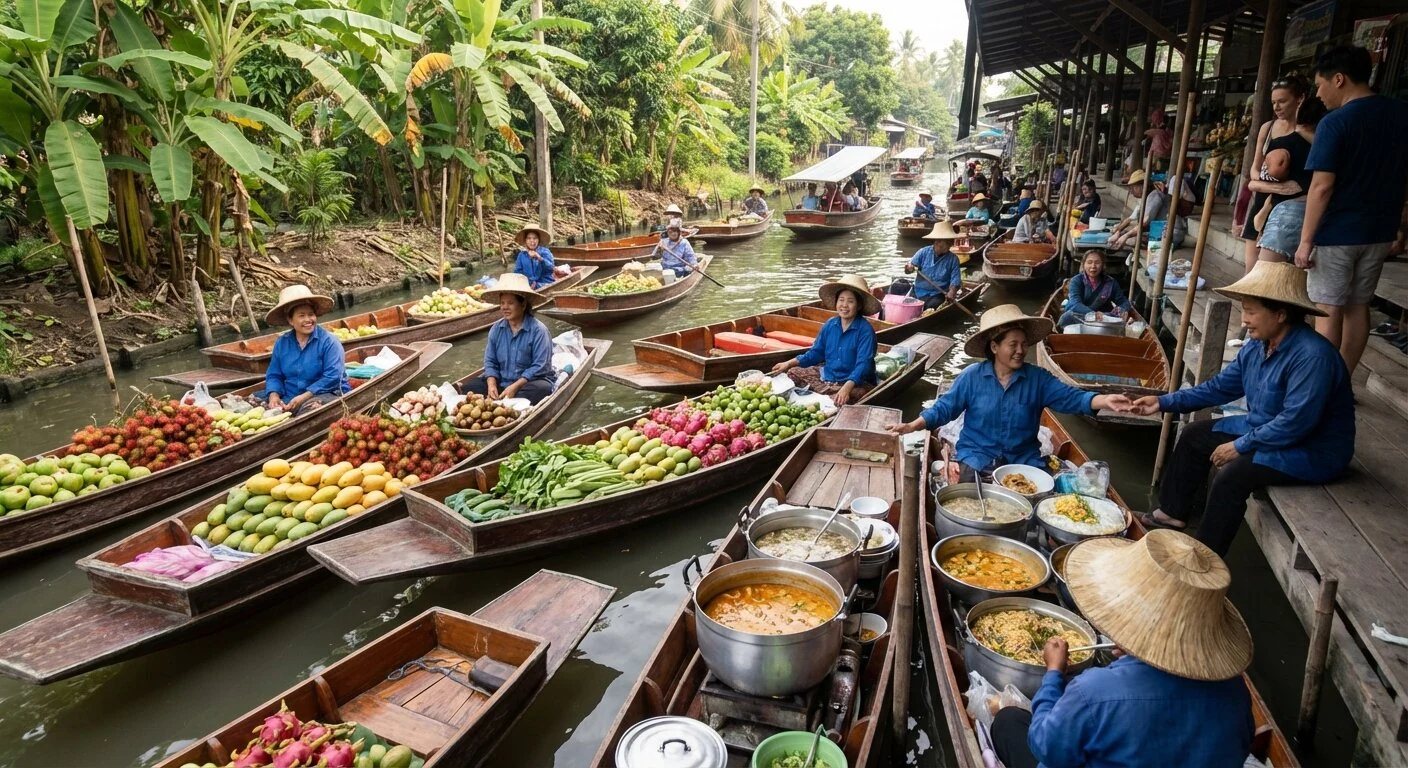
Damnoen Saduak is the most famous floating market, and that’s exactly the problem. It has turned into what travellers unanimously describe as a ‘shabby theme park’: concrete canals lined with souvenir stalls selling the same mass-produced stuff, inflated prices and boatloads of tourists bumping into each other.
The classic postcard of colour-packed boats loaded with fruit? You can get it here, but you’ll pay top dollar for everything that comes with it.
There’s also a common scam: taxi drivers drop you at a private pier that charges over 2 000 baht (€53) for a boat ride. The official pier is deeper inside the market and costs 300–500 baht (€8–13). If you go anyway, walk straight past the first pier you see.
Amphawa: the best choice
Amphawa runs Friday to Sunday and is best visited late afternoon into the evening. Food is the star attraction, especially the grilled seafood cooked on boats along the canal. The vibe is calmer than Damnoen Saduak, far more local, and the sunset boat trips to see fireflies are worth the journey.
Amphawa is about 15–20 minutes from Maeklong Railway Market, so you can combine the two in one outing.
Khlong Lat Mayom: the foodie’s pick
If you care more about eating than photographing, Khlong Lat Mayom is the best floating market near Bangkok. The clientele is roughly 90 % local, and food is the reason they’re there. Don’t miss Pla Pao, a salt-crusted grilled fish. You can also take a short boat ride to nearby orchid farms for 100–200 baht (€3–5).
Weekends only.
Other options
Taling Chan is close to Bangkok and easy to reach—perfect for a half-day. Tha Kha sees few tourists and offers a quiet, authentic mood. And if none of these markets fit your weekend, Khlong Bang Luang runs daily and puts on puppet shows at the canal-side Artist’s House.
Day trip: Ayutthaya
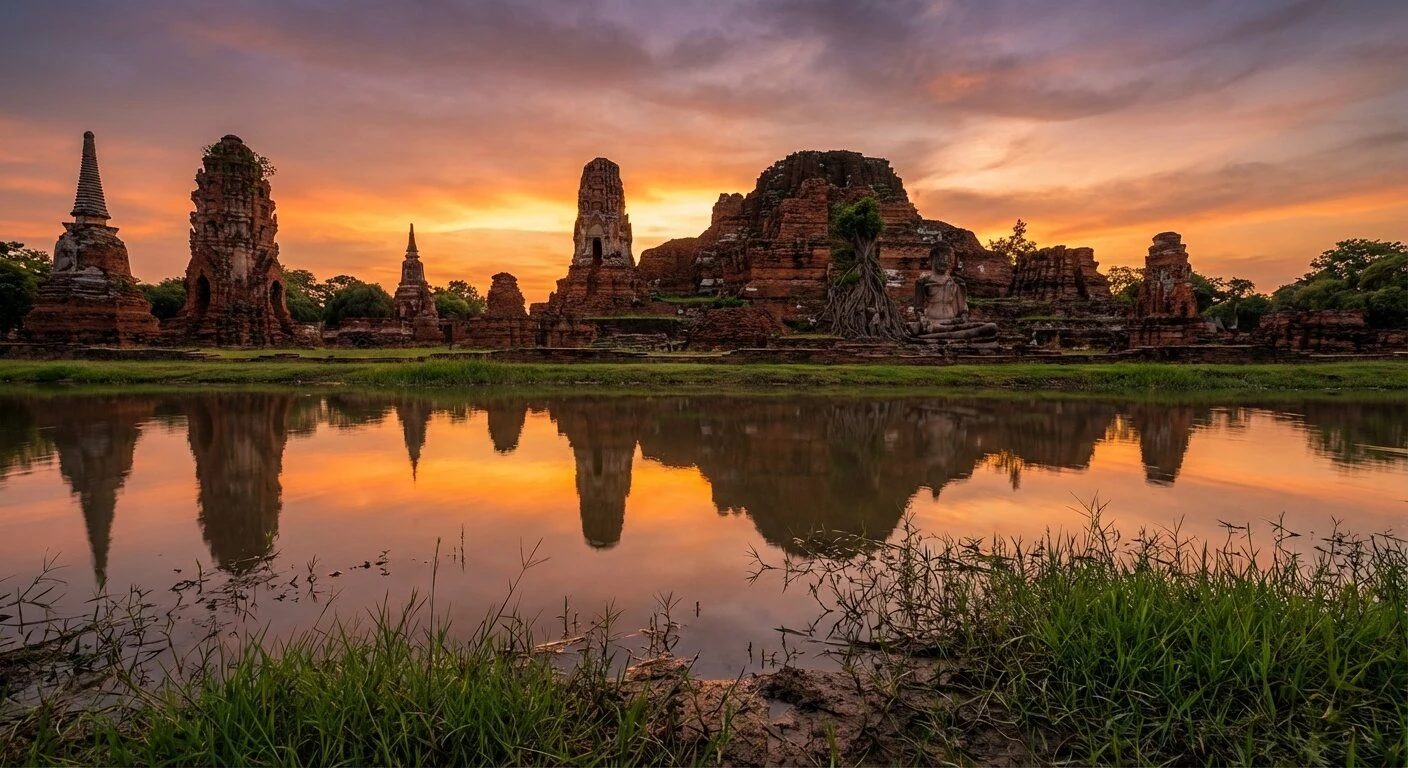
Ayutthaya was the capital of Siam for more than 400 years before the Burmese burned it to the ground in 1767. What’s left is a UNESCO World Heritage site: crumbling brick temples, headless Buddha statues and tree roots slowly strangling the stone walls.
It’s 80 km north of Bangkok and one of the region’s best day trips—think Thailand’s Pompeii, with centuries of Khmer and Buddhist history thrown in.
How to get there
The train from Krung Thep Aphiwat Central Terminal (formerly Bang Sue) is the classic choice. Third class costs 15–20 baht (yes, not even €1) for a 1.5- to 2-hour ride with no AC, windows open and hawkers selling snacks—a quintessential Thai travel experience.
Second class with air-conditioning is more comfortable and only slightly pricier.
The minivans from the terminal are faster but cramped, with drivers who treat speed limits as loose suggestions. A Grab taxi runs 1 000–1 500+ baht (€26–40) one way.
Leave Bangkok around 7–8 am to make the most of the day before the midday heat becomes unbearable.
Getting around Ayutthaya
On arrival at the station, cross the road and take the little ferry (5–10 baht) to the island side where the ruins are. Don’t let the station-side tuk-tuk drivers overcharge you; cross the river first, then negotiate.
Renting a tuk-tuk for 200–300 baht per hour (€5–8) for 3–4 hours is the most convenient option. Your driver waits at each temple while you explore. Agree on the total price before you get in.
Bicycles are available for 50–60 baht a day (about €1.50), but they’re realistic only if you’re fit and start before 10 am; after that, cycling the exposed ruins becomes truly hazardous.
What to see
Wat Mahathat is home to the famous Buddha head entwined in banyan roots—probably Ayutthaya’s most photographed image.
Wat Chaiwatthanaram is a Khmer-style temple complex with imposing prangs (towers). Go in late afternoon and its sunset silhouette feels like a pocket-size Angkor Wat.
The sunset boat tour around the island is, by near-universal traveller consensus, Ayutthaya’s best experience. A long-tail circles the ruins between 4 pm and 5 pm, stopping at three temples on the way. Shared boats cost about 200 baht per person (€5); a private boat runs 600–800 baht (€16–21). Bring insect repellent.
Don’t leave without trying the boat noodles. They come in tiny bowls (you’ll stack up a dozen or more) and are an Ayutthaya specialty.
A temple-fatigue warning: after Wat Mahathat and Wat Chaiwatthanaram, the remaining ruins start to blur together. Plan on 4–6 hours total and don’t feel obliged to see everything.
Alternative: Ancient City (Muang Boran)
If you don’t have a full day, Ancient City (Muang Boran) is a park south of Bangkok with scaled-down replicas of Thai historical sites. It’s not the real thing, but it’s closer (BTS plus a short taxi), less physically demanding and the reproductions are well executed. Rent a golf cart to get around the grounds.
Excursion: Kanchanaburi
Kanchanaburi is home to the Bridge on the River Kwai (famous from the film), the Hellfire Pass Museum and Erawan National Park with its seven-tier waterfall. It’s a destination worth seeing, but here’s the catch: it’s over three hours from Bangkok each way—six hours or more on the road for a day trip.
The near-unanimous advice from travellers who’ve done it: don’t attempt Kanchanaburi as a day trip. If you can’t stay overnight, choose Ayutthaya instead. If you can spend one or two nights, Kanchanaburi is superb. Budget roughly €30–50 per night for a nice place via Booking.com.
If you go
The train leaves from Thonburi Station (not the main terminal—a common time-wasting mistake). The route covers stretches of the Death Railway, which is scenic but slow and has only fans, no AC.
The minivans from the Southern Bus Terminal (Sai Tai Mai) take about 2 h 30 with AC and are the most convenient option.
The Erawan National Park is the highlight for most visitors. The waterfall has seven tiers with turquoise pools you can swim in. Strategy: hike straight to Level 7 in the morning before the crowds, then descend, swimming at each stage.
Fish in the water nibble at your feet—charming or alarming, depending on your temperament. The last bus from Erawan back to Kanchanaburi town leaves around 4 pm; miss it and you’re stuck.
The Hellfire Pass Museum is routinely described as one of the best WWII museums in Southeast Asia—more moving and informative than the bridge itself.
Excursion: Maeklong Railway Market
Maeklong (Talad Rom Hup) is a market built right on active railway tracks. Eight times a day, vendors fold back their awnings, pull in their goods and let a train rumble through with barely 30 cm of clearance on either side. Then everything pops back out as if nothing happened.
Trains pass roughly at 6:20, 8:30, 9:00, 11:10, 11:30, 14:30, 15:30 and 17:40 (check locally as times change). Arrive 15–20 minutes before a train to secure a good spot.
Entry is free. Weekdays are less crowded. And because Amphawa floating market is only 15–20 minutes away, you can combine the two in one afternoon-evening trip.
Muay Thai: watch a fight or lace up the gloves
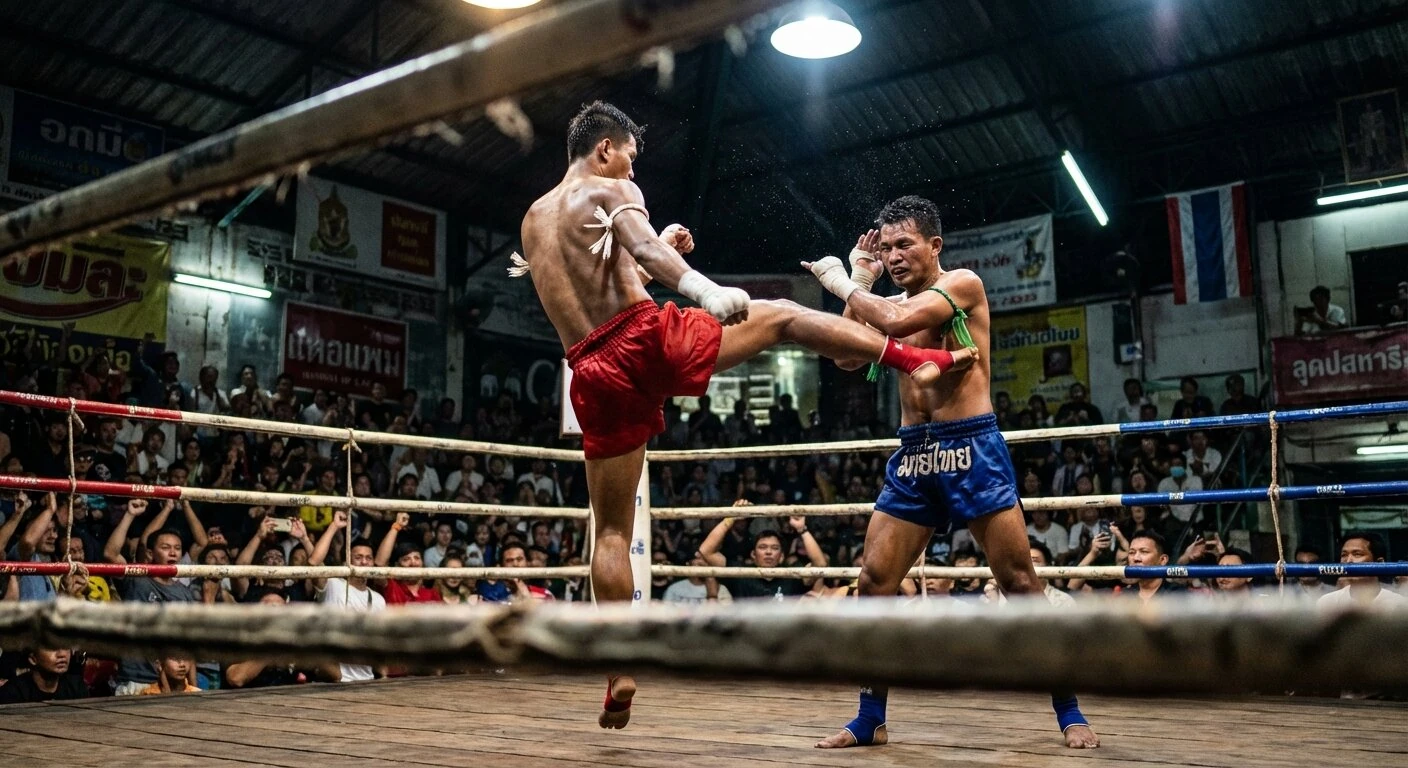
Muay Thai is Thailand’s national sport, and seeing a live bout in Bangkok is one of those experiences that simply doesn’t translate to a screen. The crack of a shin slamming into a ribcage, the betting, the roar of the crowd, the ritual Wai Kru dance before each fight—it’s raw and visceral.
Watching a fight
The Rajadamnern Stadium is the best option for visitors. Recently renovated, it’s central, and the Friday-night fights have the best atmosphere.
Tickets cost 1 000–2 000 baht (€26–53) for foreigners. Go ringside if your budget allows; the difference between ringside and the upper tiers is huge—up close you hear every impact.
The Lumpinee Stadium is the other historic venue, but it has relocated near Don Mueang Airport, making it inconvenient for most visitors. Fights Tuesday and Friday nights.
If you want something truly local, the Channel 7 Stadium sometimes offers free standing-room entry on Sunday afternoons. No frills, no tourist show—just raw fights and a local crowd.
Training
Drop-in Muay Thai classes are available all over Bangkok for 300–500 baht (€8–13) per session. For beginners, Khongsittha is clean, modern and welcoming. Petchyindee Academy has top-notch facilities and structured classes. For something grittier, Sor Vorapin near Khao San Road has produced real champions.
Key logistical tip: pick a gym near your hotel. Bangkok traffic can turn a 5-km journey into a 45-minute ordeal, and showing up for Muay Thai already exhausted from a taxi ride defeats the purpose. Private sessions run 500–1 500 baht (€13–40) and are worth it if you really want to sharpen your technique.
Thai massage and spas
Thai massage is available on virtually every corner in Bangkok, starting at 200–300 baht per hour (€5–8) in street-side parlours. Quality ranges from miraculous to painful, so the address matters.
Wat Pho Traditional Thai Massage School is the gold standard. Located inside Wat Pho temple complex, this is where traditional Thai massage was formalised. An hour costs about 500 baht (€13). Getting a massage in the very place the practice was systematised adds a dimension you won’t find in an anonymous Sukhumvit parlour.
Health Land is the travellers’ favourite for a reliable, clean, mid-range option. Several branches around the city. A two-hour massage costs 600–800 baht (€16–21), excellent value—the same service in France would easily set you back €150–200.
Avoid the massage parlours on Khao San Road where prices are inflated and touts are aggressive. Walk one street away in any direction and you’ll find better quality for less.
If you’re torn between traditional Thai massage (no oil, lots of stretching and pressure points) and an oil massage, choose the traditional at least once.
Oil massage is relaxing but available everywhere in the world. A well-executed traditional Thai massage feels like someone is folding you into positions you never thought possible—and you’ll feel incredible afterwards.
Rooftop bars
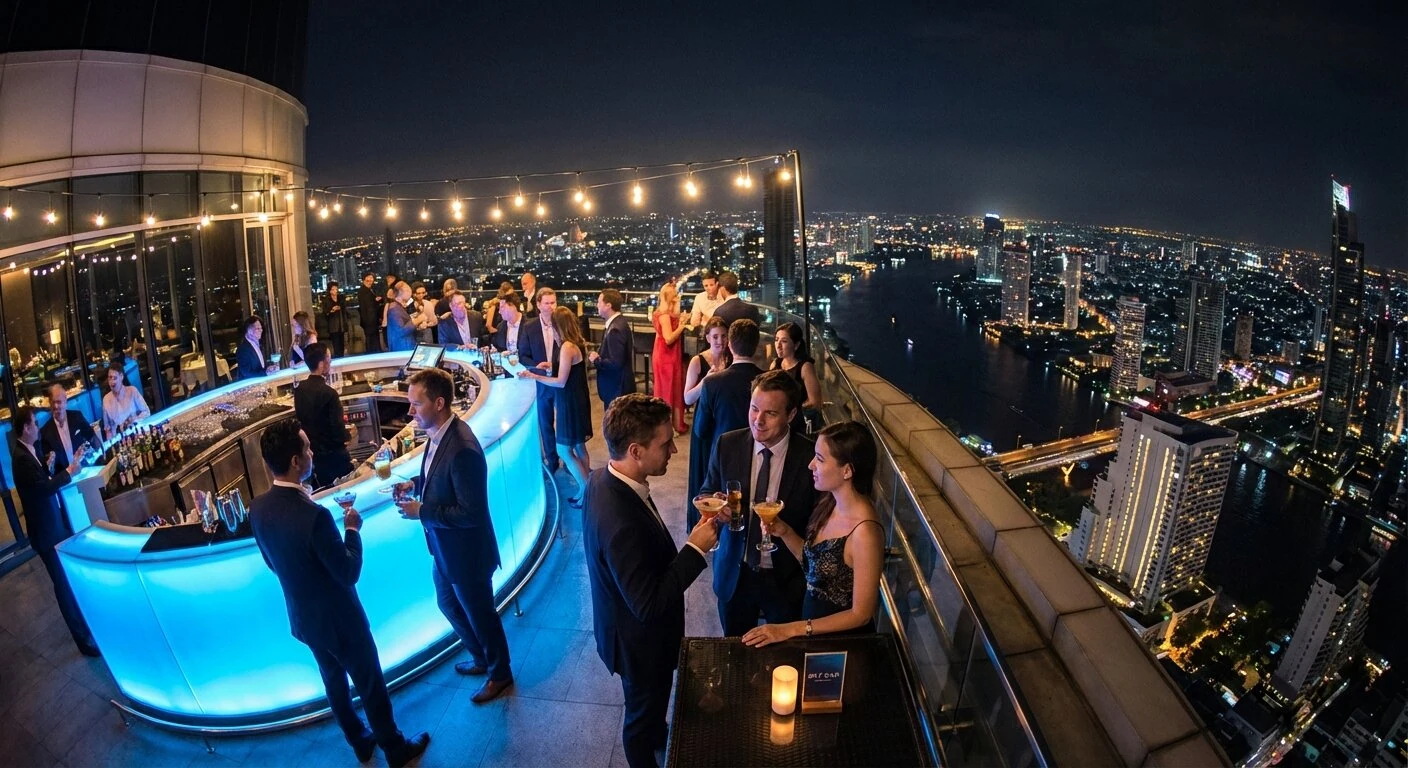
Bangkok has more rooftop bars than almost any city on earth, and watching sunset from the 50th floor and above is something you should do at least once. Here’s where to go.
Octave (Marriott Hotel, Sukhumvit)
Octave is the go-to for regulars and expats, and with good reason. It delivers 360-degree views, a laid-back, unpretentious vibe and a happy hour with 50 % off cocktails before sunset.Cocktails normally run 300–500 baht (€8–13). Arrive around 5 pm for a good spot, grab a few discounted drinks as the sun goes down and you’ll get the full Bangkok rooftop experience for under €15.
Tichuca
The younger, Instagram-ready option. There’s a giant LED ‘jellyfish tree’ that’s extremely photogenic. The crowd is younger and trendier. Cocktails cost 400–600 baht (€11–16). It can be crowded and party-like on weekends—good or bad depending on what you’re after.Vertigo and Moon Bar (Banyan Tree Hotel)
The classic high-end alternative. An open-air restaurant with panoramic views. More expensive, but regulars agree the experience justifies the price more than the competition.Others to know
Cielo Sky Bar in Phra Khanong is little-known to tourists: fewer crowds, more affordable, great view without the pretension. Above 11 offers a Peruvian-Japanese menu and park views, with a vibe focused on enjoyment rather than flaunting your bank balance.
The one to avoid
Lebua (Sirocco/Sky Bar) is the famous bar from ‘The Hangover’, and traveller consensus is near universal: skip it. The view is great. Everything else is mediocre—crowded, overpriced, pushy staff funneling you through the venue. It trades entirely on the movie reference. Choose Octave or Vertigo instead.
Dress code and budget tips
Most rooftop bars enforce a smart-casual dress code: no shorts, flip-flops or tank tops. Plan an appropriate outfit if you’re going.
The budget strategy: come for sunset happy hour (5 pm–7 pm), have one or two drinks, soak up the view, then head elsewhere for the rest of the night. You get 90 % of the experience for 20 % of the price.
Jim Thompson House
Jim Thompson was an American businessman who built a Thai-silk empire after WWII, then vanished without a trace in the Malaysian Highlands in 1967. His Bangkok home—a cluster of traditional teak buildings reassembled along a canal—is now a museum.
English-language guided tours are included in the entry fee (about 200 baht, €5). The house is air-conditioned, making it a great rainy-day activity. It’s near BTS National Stadium station, and the Bangkok Art and Culture Centre (BACC) is right next door if you want to double up. The BACC is free and hosts rotating contemporary-art exhibitions.
Jim Thompson House divides opinion: architecture and design buffs love it; if old teak houses aren’t your thing, there are better ways to spend your time.
Lumpini Park and Benjakitti Forest Park
Bangkok’s green spaces provide a welcome break from concrete and exhaust fumes.
Lumpini Park is Bangkok’s answer to the Jardin du Luxembourg, tropical edition: joggers in the morning, dawn Tai Chi practitioners and giant monitor lizards roaming the ponds. The lizards are harmless, though seeing a two-metre reptile cross your path can be startling. Free entry.
Benjakitti Forest Park is newer and, according to many visitors, even better. It features elevated walkways linking it to Lumpini, and the experience of walking above the canopy exists only here in Bangkok.
At night the walkways light up and the skyline views are worth the trip. An evening stroll here spares you the daytime heat and offers one of Bangkok’s best free experiences.
Both parks are free and reachable by BTS/MRT.
Chinatown on foot
Bangkok’s Chinatown (Yaowarat) is best explored on foot, ideally in late afternoon when the heat eases and neon signs start to glow. The main drag, Yaowarat Road, is a wall of gold shops, street-food stalls and red lanterns, but the real finds hide in the side lanes (sois).
For detailed food recommendations in Chinatown, see https://marcwiner.com/ou-manger-bangkok/. For Wat Traimit (Temple of the Golden Buddha) at Chinatown’s entrance, see https://marcwiner.com/plus-beaux-temples-bangkok/.
Beyond food and temples, Chinatown hosts a growing scene of hidden bars in old shophouses along Soi Nana (not to be confused with the ‘Nana’ district on Sukhumvit, which is entirely different). Teens of Thailand is the gin bar that started it all. Tax, from the same crew, goes for a punk-chic mood and vinegar-based cocktails.
Night-life districts
Bangkok nightlife is arranged into distinct geographic zones, each with its own personality. For advice on where to stay based on your nocturnal preferences, see https://marcwiner.com/ou-loger-bangkok-quartiers/.
Khao San Road is the backpacker HQ. Cheap cocktail buckets (80–150 baht, €2–4), blaring music spilling from bars and a young, international crowd. It’s chaotic, it’s overflowing and it’s the kind of place you either love or flee. Not remotely representative of Thai nightlife, but entertaining in its own way.
Thong Lor (Sukhumvit Soi 55) is where well-heeled Thais and expats go out. Dress codes apply (no shorts, no flip-flops), bottle service is standard in clubs and prices match the vibe. The Commons is a community mall with good restaurants and bars—perfect for a warm-up drink before diving into the soi.
Sukhumvit Soi 11 strikes the middle ground: a mix of expats, tourists and locals, with rooftop bars, pubs and clubs all within walking distance.
RCA (Royal City Avenue) is the mega-club strip, with venues like Route 66 and Onyx, dedicated to EDM and festival vibes. Out of the centre but popular with young Thais.
For cocktails, Find the Locker Room (hidden behind a wall of lockers) and Havana Social (enter via a phone booth on Soi 11) are the speakeasy choices.
Bamboo Bar at the Mandarin Oriental is the best jazz bar in town—pricey and old-school. Smalls in Sathorn is a late-night jazz and absinthe haunt popular with expats.
Cultural experiences beyond the temples
Cooking classes
A Thai cooking class is routinely named the best non-temple activity in Bangkok. The top classes include a morning visit to a fresh market where you buy your own ingredients, then several hours learning to prepare 3–5 dishes from scratch—including pounding curry paste by hand with a mortar and pestle.
Silom Thai Cooking School is the benchmark: market visit, small groups, hands-on approach. Half-days cost 1 500–2 000 baht (€40–53). Cooking with Poo in Klong Toey is a community-based, heart-warming class but fills up fast—book on Booking.com or their site several days ahead. Blue Elephant teaches royal Thai cuisine in a colonial building and is the top-end choice at 3 000–4 000 baht (€80–105).
The key distinction: classes that teach you to make curry paste from scratch (rather than opening a jar) are the ones worth the money. Small groups of fewer than 10 guarantee more individual attention. For more food recommendations, see https://marcwiner.com/ou-manger-bangkok/.
Traditional shows
Calypso Cabaret at Asiatique is a well-known ladyboy cabaret. Siam Niramit is a large-scale stage production about Thai history and culture. Both are tourist-oriented, but Siam Niramit in particular is a sound-and-light show worth the trip.
For something more intimate, the puppet shows at Baan Silapin (Artist’s House) on the Thonburi canals are traditional, free and as far from mass tourism as you can get.
Places most visitors miss
Bang Krachao (the Green Lung)
An island of tropical greenery on the opposite side of the river from central Bangkok, reached by a short ferry ride. Rent a bike for 50–100 baht (€1–3) and follow raised concrete paths through the jungle. It’s hard to believe you’re in the same city.Visit Bang Nam Phueng Market on the weekend for local food.
Talad Noi
A historic neighbourhood near Chinatown with street art, narrow lanes and hip cafés mixed with old auto garages. Mother Roaster, a café above a spare-parts shop, captures the district’s spirit. It’s a slice of old Bangkok in organic, ongoing transformation.The flower market at 4 am
Pak Khlong Talat, Bangkok’s main flower market, is liveliest in the pre-dawn hours when retailers stock up on fresh blooms. It isn’t a packaged tourist attraction, which is exactly what makes it interesting. The colour and scale of the 4 am scene are invisible at normal hours.Benjakitti at night
Already mentioned above, but it bears repeating: the elevated walkway through Benjakitti Forest Park after dark, with Bangkok’s skyline lit up around you, is free and one of the city’s most underrated experiences.Planning your activities: logistics and transport
Most central Bangkok activities are reachable by BTS (Skytrain) or MRT (subway). For everything else, Grab (Southeast Asia’s Uber) is the default. For detailed advice on transport, budgeting and how to get around without overpaying, see https://marcwiner.com/preparer-voyage-bangkok/.
A few activity-specific transport notes:
Excursions (Ayutthaya, Amphawa, Maeklong) work best with an early start, ideally around 7–8 am. Kanchanaburi requires an overnight stay to be worthwhile.
Markets have fixed schedules. Chatuchak runs Saturday–Sunday (arrive around 9–10 am). Amphawa Friday–Sunday (arrive late afternoon). Khlong Lat Mayom weekends only.
Rooftop bars cluster around Sukhumvit and Silom. Plan to show up around 5 pm for sunset happy hours.
Muay Thai fights at Rajadamnern are best on Friday night. Book your tickets ahead during high season.
How Bangkok stacks up
If you’re planning a longer trip in Southeast Asia, Bangkok’s activities stand up well against other major destinations. The excursions here (especially Ayutthaya) provide a historical dimension lacking in the day trips around Phuket, which focus more on islands and beaches. Compared with the things to do in Bali, Bangkok swaps terraced rice fields and volcano hikes for urban exploration and cultural immersion.
Both destinations offer great cooking classes and temple tours, but the sheer scale and variety of things to do in Bangkok are hard to match in the region.
For a full guide to your Bangkok trip, including where to stay, what to eat and how to get around, head back to https://marcwiner.com/guide-complet-visiter-bangkok/.
For more Asian adventures, check out our must-do activities in Hanoi plus Ha Long Bay