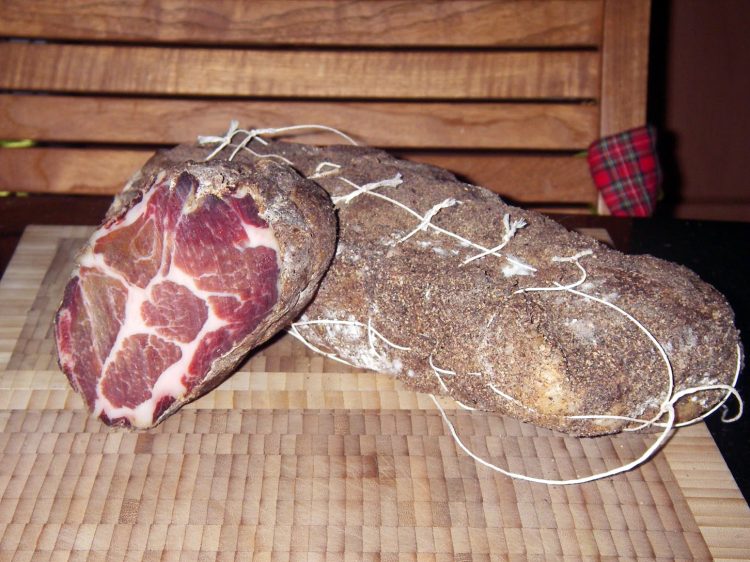
Homemade coppa: salted pork collar, rubbed with brandy, peppered, then dried for several months
A few thin slices of coppa on a board, a glass in hand, and cocktail hour has begun. This traditional charcuterie made from pork collar has a melt-in-your-mouth texture and plenty of flavor. Making it yourself lets you choose your ingredients and adjust the seasoning to your taste, while keeping an age-old craft alive. It takes patience, but the first slice makes it all worthwhile: enjoyment guaranteed!
What Is Coppa?
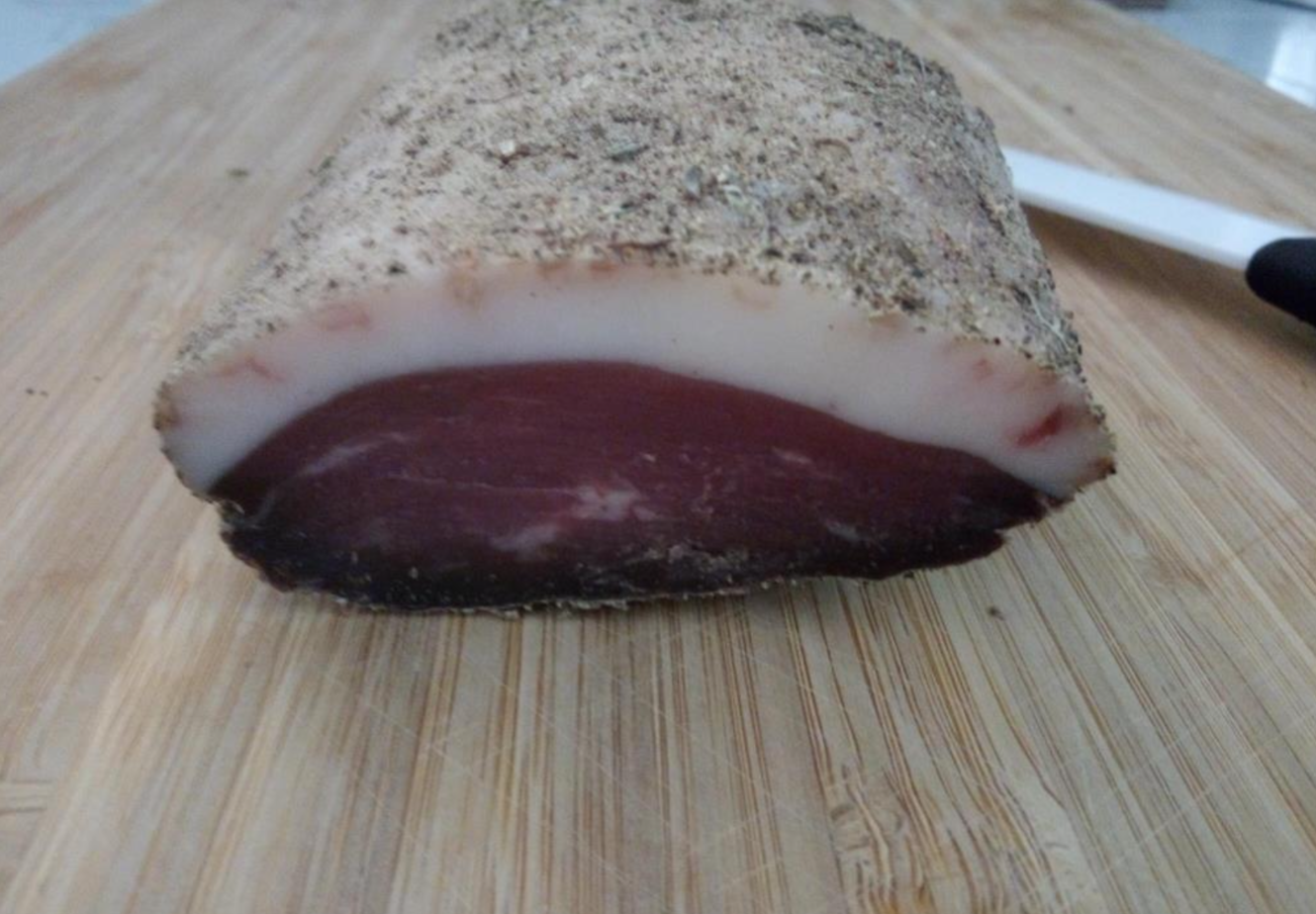
It’s a piece of pork collar, carefully salted, seasoned with spices and alcohol, then dried for a long time. Don’t confuse it with dry-cured sausage: even though some people put it in a casing, coppa is very much a dried meat.
From Emilia-Romagna to Corsica
Coppa comes from Italy, more precisely from Emilia-Romagna, Lombardy and Piedmont. It later crossed borders and took root in Corsica and in some parts of southern France.
Its name comes from the Italian word “coppa,” meaning the nape of the neck, a reference to the cut of pork used. Historically, it was made during the winter months, when the cold helped preserve the meat.
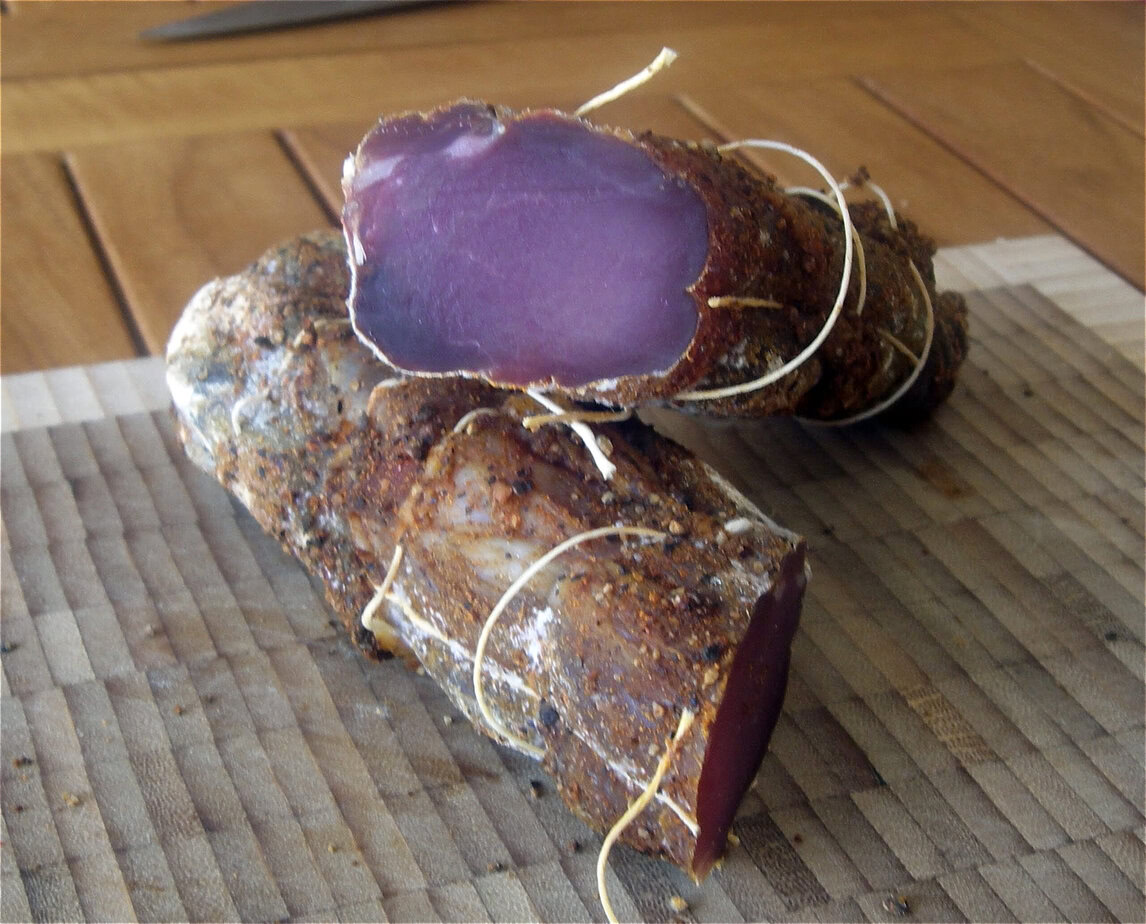
Salting and drying were developed as natural ways to keep meat for later. Over time, coppa became a classic of Italian and Corsican cuisine.
The Main Ingredients in Coppa
The simple recipe calls for very little: a nice pork collar, coarse salt to cover it completely, a little brandy to massage it with, and pepper or Espelette pepper to coat it. The rest is all drying time.
Technical Tips for a Good Coppa
The recipe gives a simple method for roughly estimating the curing time, and it works. For more precision, especially with vacuum-sealed curing (which lets you add spices; see the quantities below), calculate the curing time as follows: measure the diameter of the meat in centimeters, divide it by two to get the radius, then add 1. For a piece of meat 8 cm in diameter: 8 ÷ 2 = 4, then 4 + 1 = 5, which means 5 days in the fridge.
For the vacuum-sealed method, which gives more flavor, prepare a mix that provides 4.5% salt relative to the weight of the meat. Per kilo of meat:
- 45 g salt (fine or coarse)
- 22.5 g brown sugar (50% of the weight of the salt, can be reduced to as little as 10%)
- 1 g ground pepper
- 1 g ground juniper berries
- 0.5 g four-spice blend (available in stores)
- 0.3 g chopped bay leaves
Quickly rub the meat with the mixture and vacuum-seal everything. Refrigerate for the time given by the formula, massaging and turning the bag from time to time so the spices penetrate well.
You can also add spices to the coarse salt in the simple recipe, but they won’t penetrate as well as with the vacuum-sealed method.
This recipe follows the traditional method, without nitrite curing salt: the salt quantities, temperatures and times given are what preserve the meat, and they must be followed to the letter, with impeccable hygiene; if you prefer an extra margin of safety, you can replace part of the salt with curing salt containing 0.6% nitrite, used according to the manufacturer’s instructions.
A recipe contributed by Charcuterie Di Lorenzo
Ingredients
- 1 good-sized pork collar
- Coarse Guérande salt enough to cover the meat completely
- A little brandy or a clear spirit you particularly like
- Pepper or Espelette pepper
Instructions
- Salt the pork collar for 24 hours per kilo of meat.1 good-sized pork collar, Coarse Guérande salt
- Make sure the collar is completely covered with coarse salt, in a tilted container so the water can drain off.
- Once the salting time is up, rinse the collar under running water to remove the excess salt.
- Lightly pat the meat dry and massage it with the brandy.A little brandy
- Tie the collar with string, leaving a loop long enough to hang it.
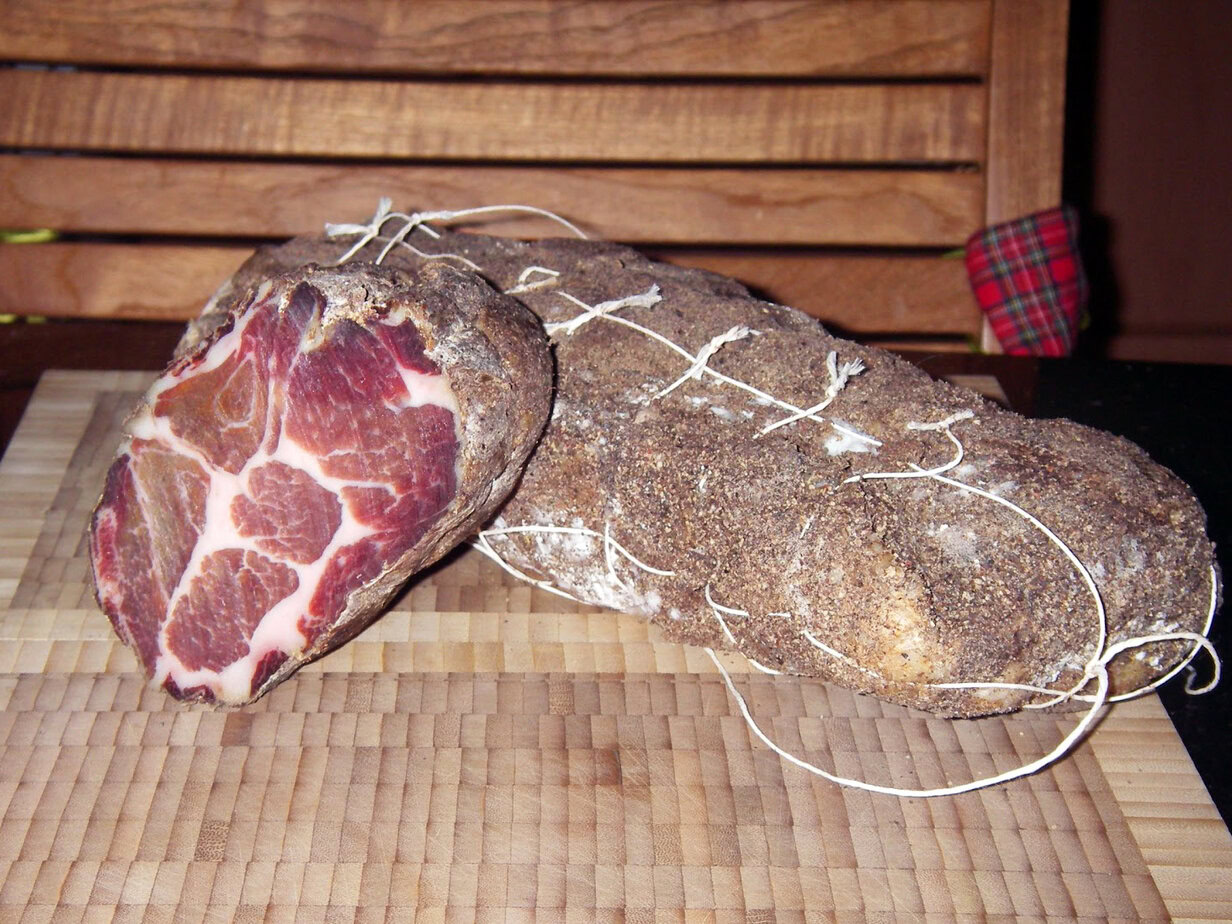
- Roll the meat in pepper or Espelette pepper to coat it.Pepper or Espelette pepper
- Hang the meat in a cool (between 8 and 14°C), well-ventilated place for 4 to 6 months.
- The drying is complete once the meat has lost 30 to 40% of its original weight