


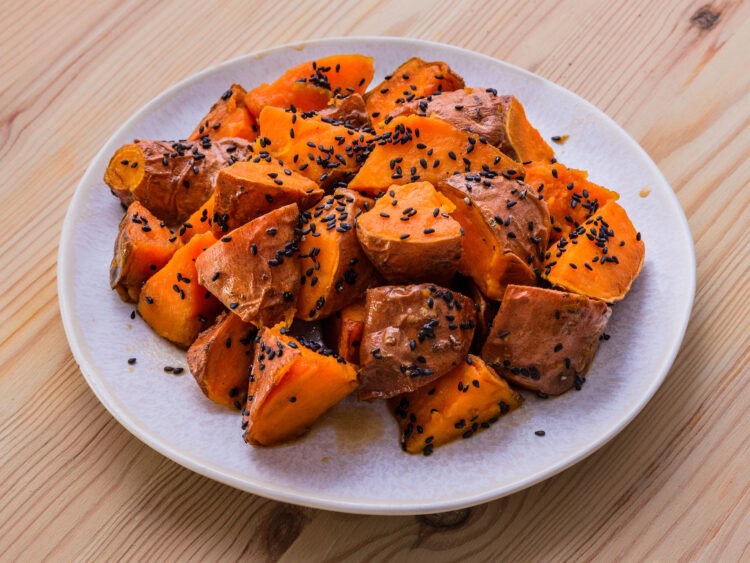
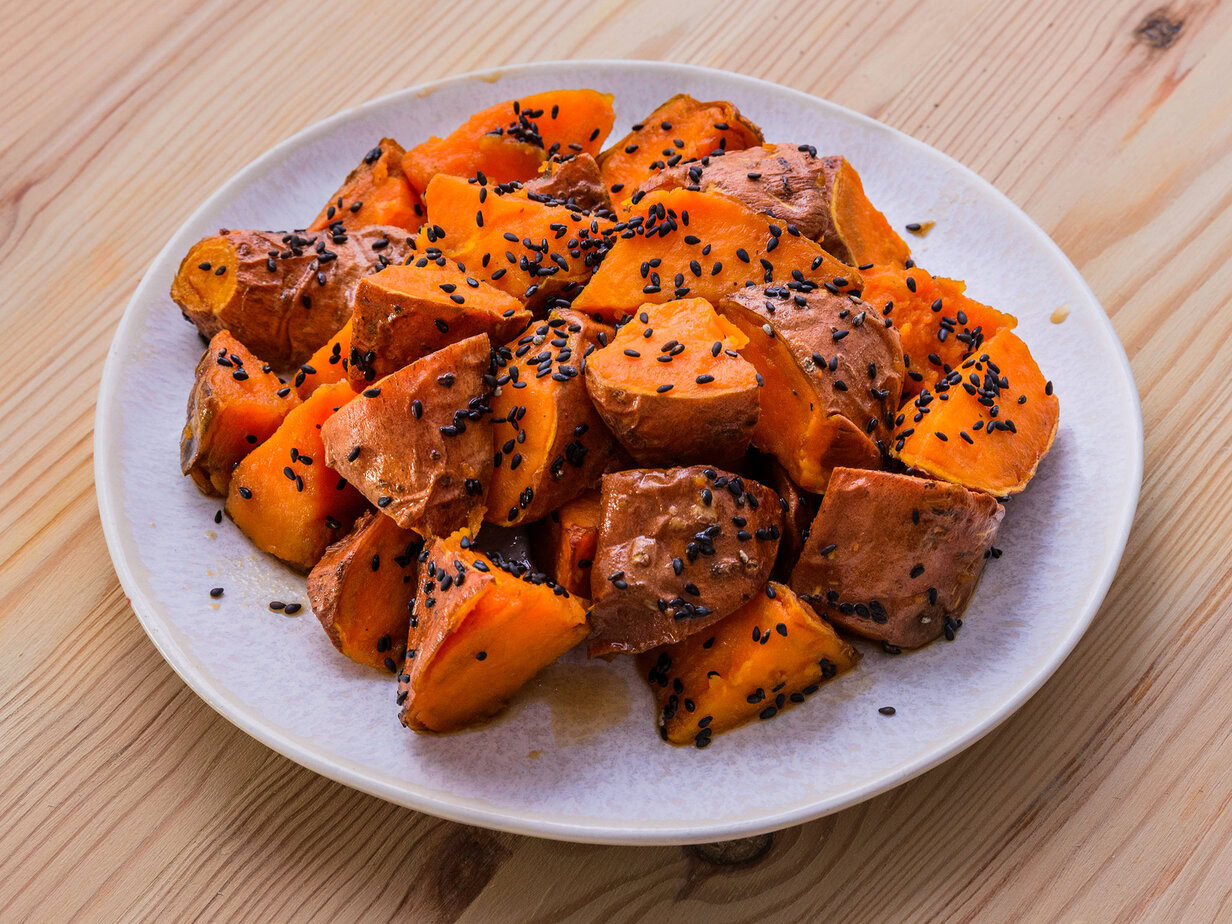
Double-fried Japanese sweet potatoes, glazed with a mirin–soy syrup and finished with black sesame for an irresistible crisp-outside, tender-inside bite.
Under the warm glow of street stalls, big wedges of sweet potato gleam beneath a glossy amber coat. The thin crust gives way with a clean crackle. A puff of steam rises from the split, fluffy flesh—sweet, honeyed, and gently chestnut-like.
A sticky yet supple glaze clings to the edges. Each bite balances a delicate crunch with the nutty snap of toasted black sesame. According to a widely repeated origin story, a vendor named Mikawaya—set up near the Akamon (Red Gate) of the University of Tokyo—introduced it, and students made it famous.
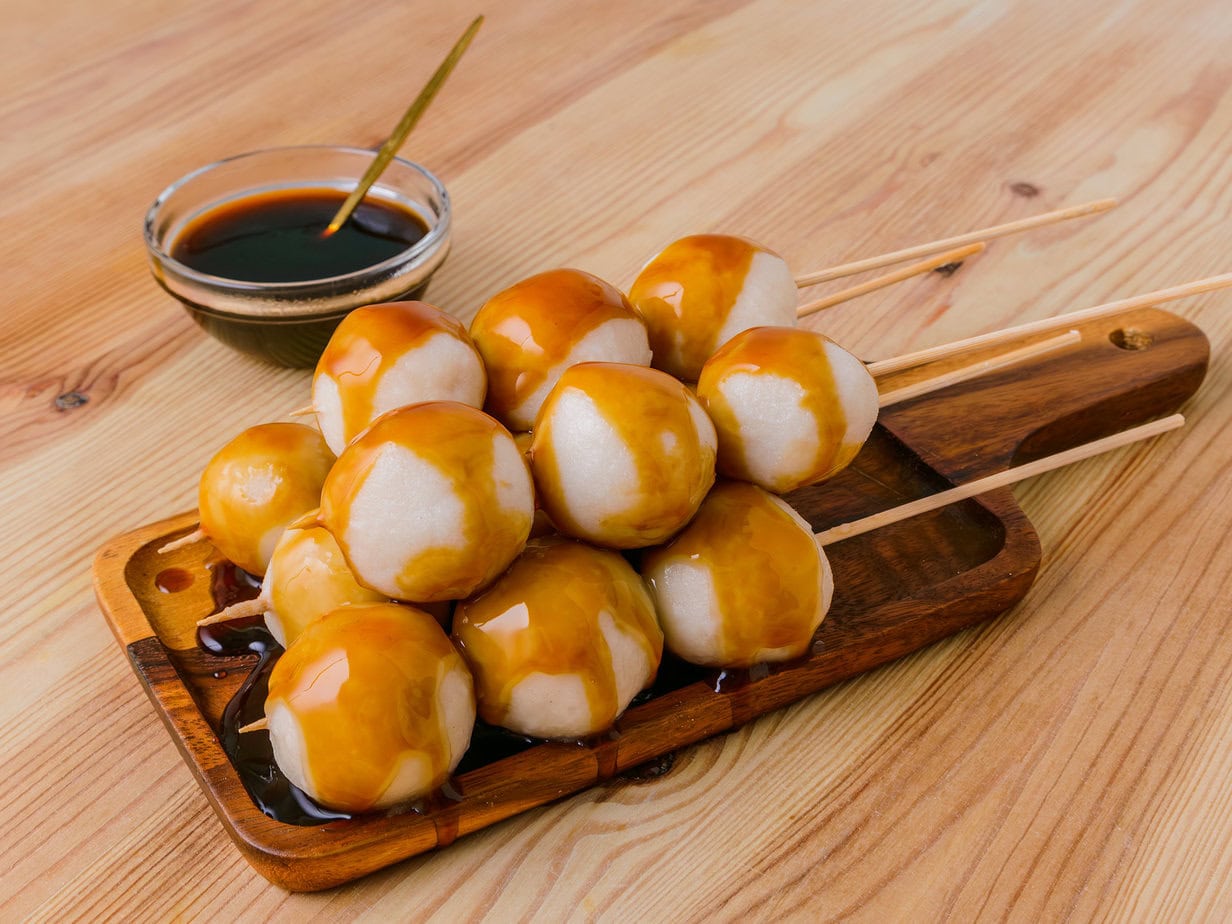
Today, Daigaku‑imo shows up at festivals (alongside okonomiyaki or yakisoba), in department-store food halls—where katsu sando and tamago sando are beloved—and in home kitchens.
Daigaku-imo: what is it?
Daigaku‑imo (大学芋), literally “university potatoes,” takes its name from early 20th‑century student life around the Akamon (Red Gate) of the University of Tokyo, where filling, affordable sweets helped students refuel between classes.
At the heart of the dish are Japanese sweet potatoes, cut into rustic chunks with the skin left on. They’re fried, coated in a shiny sugar syrup, then sprinkled with toasted black sesame. Serve them at room temperature or slightly warm (like mitarashi dango or zaru soba).
Authentic versions use satsumaimo varieties like Naruto Kintoki or Beniazuma for a light, naturally sweet interior. The syrup is simple: sugar and a splash of water, with a subtle touch of soy sauce. Of course, you can use what you have—but these varieties really do make a difference.
Optionally, mirin or a starch/malt syrup (mizuame) adds shine and stability. The hallmark texture is “crispy outside, tender inside,” with a thin, even glaze that clings without turning brittle.
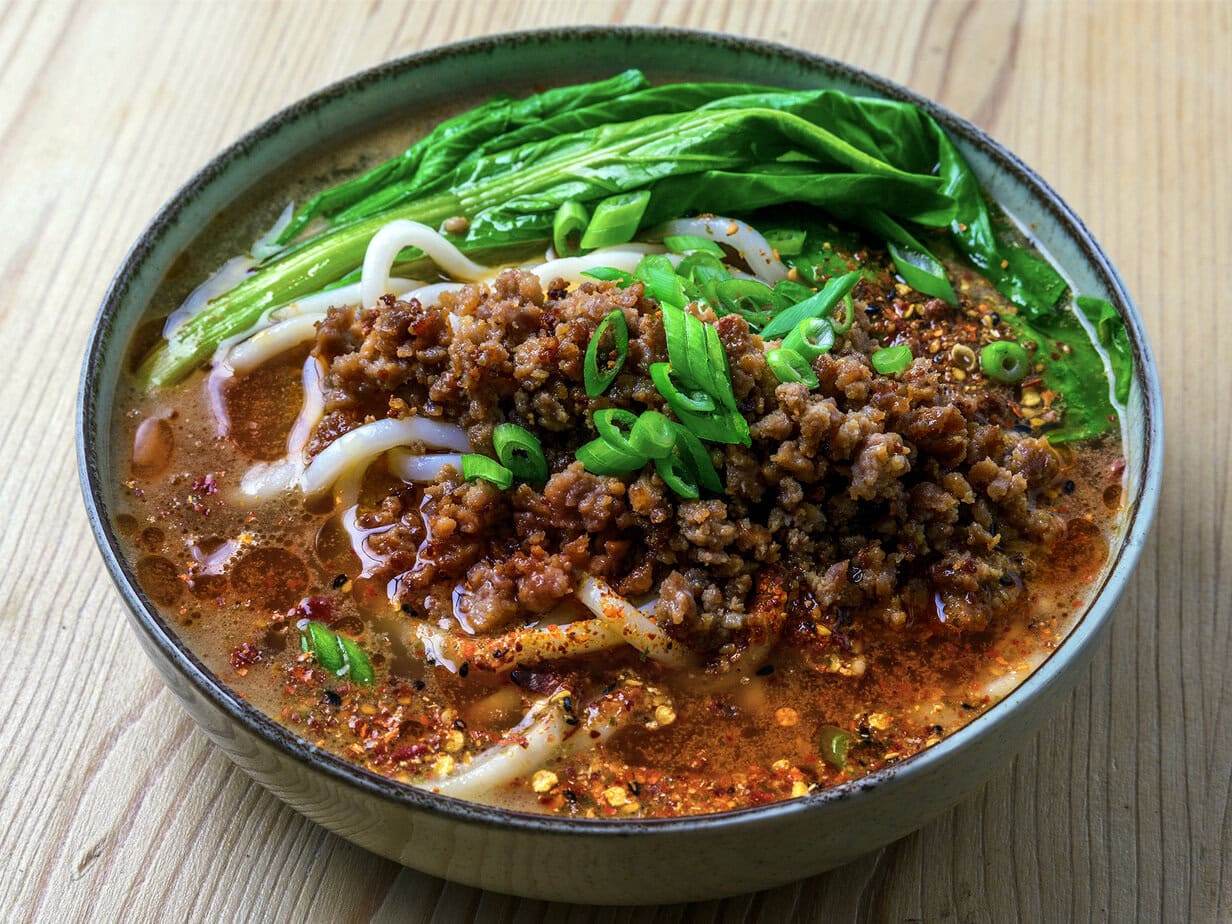
Equally telling are what you leave out: no breading before frying, no butter, and no heavy-handed spices. In Kantō, the coating stays slightly sticky and supple, with sesame sprinkled over the top; in Kansai, its relative “Chūka poteito” (here “chūka” refers to Sino‑Japanese dishes like tantanmen) leans toward a firmer caramel shell. These differences reflect how the dish spread over time.
The origins of Daigaku-Imo
Most Tokyo accounts point to the Taishō to early Shōwa years (1910s–1930s), when a vendor named Mikawaya set up near the Akamon of the University of Tokyo and began selling fried sweet potato pieces glazed in a sugar syrup.
Cheap, piping hot, and satisfying, the snack became a symbol of student life—and gave the dish its name. The idea likely traces back to a candied sweet potato recipe published in a Chinese cookbook in 1912 (fried in lard, then simmered in sugar, originally without sesame), later adapted in Japan into a national favorite.
Its identity is distinctly Kantō. In Asakusa, Chibaya still sells wedges with crisp edges and a very sweet glaze, often sold out by late morning; Aji no Ryōsaburō in Taitō carries on the Mikawaya style, now in its third generation.
But Daigaku‑imo lives well beyond nostalgia shops: it’s a home-cooking staple (like katsudon, oyakodon, or butadon), sometimes served in school cafeterias (alongside Japanese curry, katsu curry, or omurice) and, in sweet-potato-rich Ibaraki, even offered as a side dish.
In Kansai, the cousin “Chūka poteito” keeps more of its Chinese profile, favoring a thicker caramel that sets into a brittle shell. In other words, authenticity comes down to ingredients and technique—not just origin stories.
The main ingredients for daigaku-imo
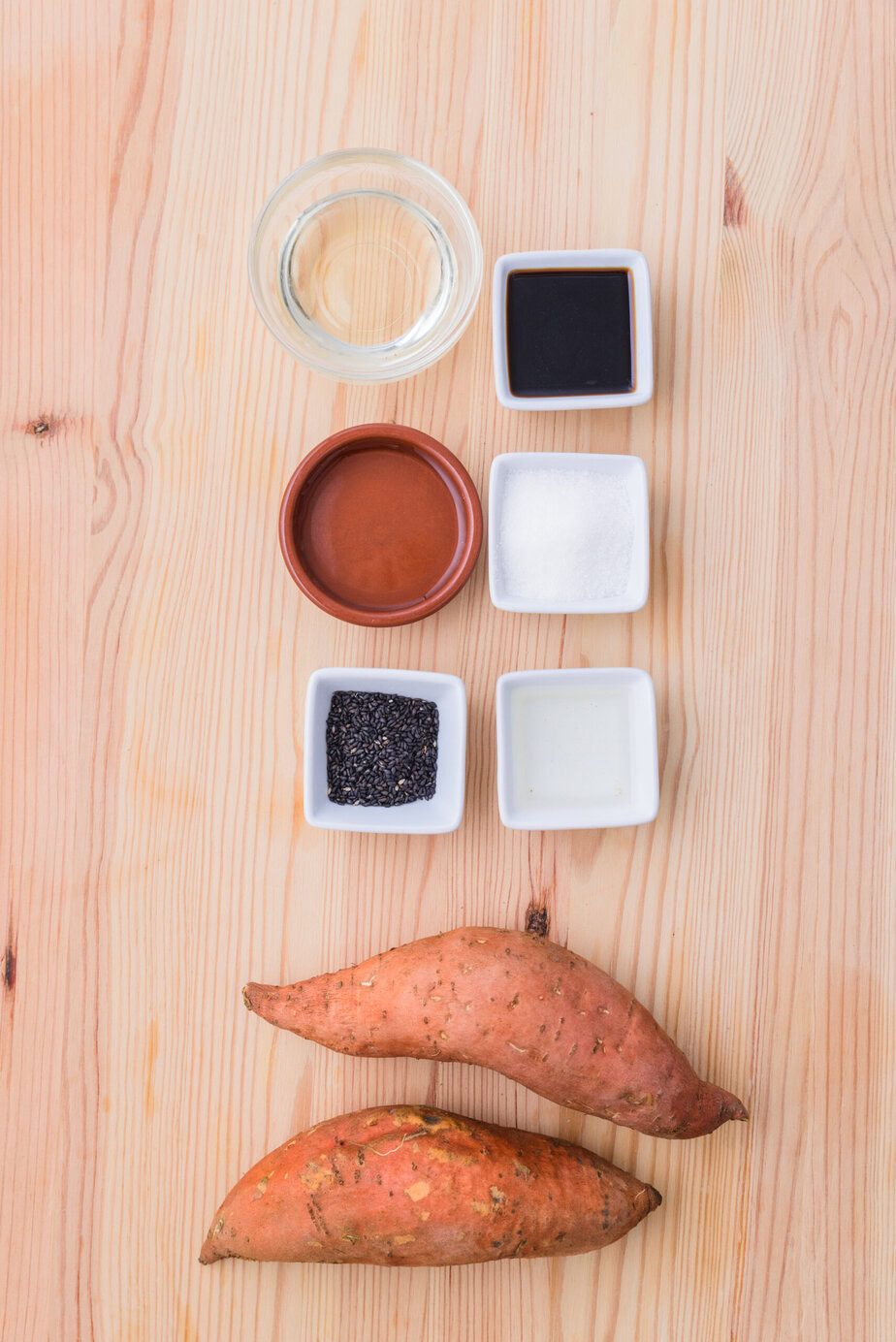
- Japanese sweet potatoes (satsumaimo): Varieties like Naruto Kintoki or Beniazuma cook up tender and sweet, with the red‑purple skin left on for aroma, color contrast, and to help the pieces hold together.
- Neutral frying oil: A neutral oil that handles high heat, crisping the surface without masking the sweet potato’s delicate flavor; traditionally, light vegetable oils are used.
- Sugar: The base of the glaze, cooked to a light-to-medium amber for subtle bitterness and shine; semi‑refined sanontō adds a rounder sweetness, also found in dorayaki.
- Water: Dissolves the sugar and manages caramelization so the syrup coats in a thin, even layer instead of seizing and crystallizing.
- Mizuame (starch/malt syrup), optional: Adds clarity and helps prevent gritty crystallization, reinforcing that signature glassy shine.
- Soy sauce (a tiny touch): A quiet seasoning that lifts the sweetness without taking over; you taste the balance, not the soy.
- Mirin, optional: Adds gloss, a gentle aroma, and a soft, rounded sweetness in the wagashi tradition.
- Vinegar or lemon juice, optional: A few drops of acid help keep the syrup flexible and prevent a brittle shell.
- Black sesame seeds (toasted): Kantō’s signature: nutty aroma, a light crunch, and striking contrast against amber potatoes; as in goma dare sauce.
- Salt (a pinch, optional): A finishing touch that brightens and highlights the sweetness without turning the dish savory.
Regional styles
In Tokyo and the rest of Kantō, Daigaku‑imo is finished with a slightly looser, stickier glaze and a shower of black sesame.
Kansai’s “Chūka poteito,” closer to its Chinese candied roots, leans toward a hard, crunchy caramel. Purists point to clear markers: fried pieces without breading, a glaze that’s mostly sugar with a small touch of soy sauce, mirin or mizuame optional for shine, and sesame to finish.
Daigaku‑imo is best enjoyed warm or at room temperature. After glazing, spread the pieces out and eat them promptly so they don’t stick together.
Authenticity comes down to technique: many cooks recommend double frying for the contrast of a crisp shell and a fluffy center, and add a few drops of acid to the syrup to keep it supple.
Purists also argue that modern shortcuts (skipping the soy sauce or mirin, or leaning too heavily on honey or corn syrup) dull the dish’s characteristic sweet-salty balance. From Asakusa institutions to school cafeterias, it’s a living classic (like mochi): simple on paper, but the balance of the glaze—and the timing—will test your touch.
Ingredients
- 500 g Japanese sweet potatoes about 2 medium potatoes, yellow-fleshed
- neutral vegetable oil for frying (2–3 cm depth in the pan)
- 40 g granulated sugar
- 1 tablespoon mirin
- 2 teaspoons light soy sauce
- 1 tablespoon water
- 2 tablespoons black sesame seeds toasted
Instructions
Prep the sweet potatoes
- Cut the sweet potatoes (skin on) into irregular, bite-size chunks.500 g Japanese sweet potatoes
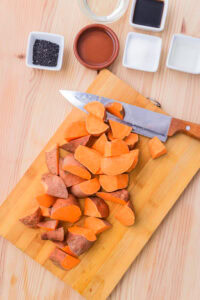
- Soak the pieces in water for 5 minutes. Drain well in a colander, then pat completely dry to remove excess moisture.
Double-fry
- Pour the vegetable oil into a deep skillet to a depth of 2–3 cm and heat to 130–140 °C.neutral vegetable oil
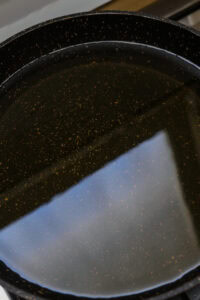
- Add the sweet potatoes and fry for about 5 minutes, turning occasionally. Remove and let rest for 3 minutes.
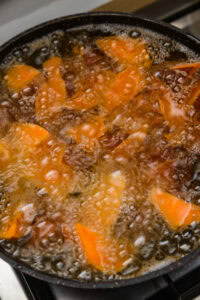
- Increase the oil temperature to 170–180 °C. Return the sweet potatoes to the pan and fry for 1–2 minutes. Remove and drain.
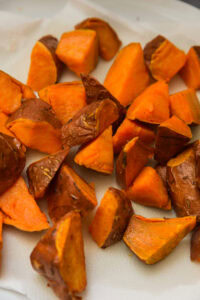
Make the syrup and coat
- Add the sugar, mirin, soy sauce, and water to a wok and heat. When the mixture comes to a boil, add the sweet potatoes and toss to coat for about 30 seconds.40 g granulated sugar, 1 tablespoon mirin, 2 teaspoons light soy sauce, 1 tablespoon water
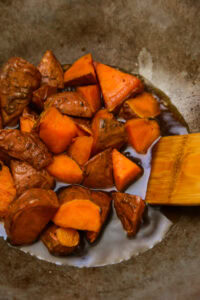
- Turn off the heat, add the black sesame seeds, and toss once more. Serve immediately.2 tablespoons black sesame seeds
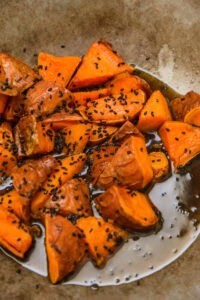
Notes
Culinary sources
• Daigaku Imo (Japanese sweet potato dessert) – Chef JA Cooks (English) (Chef JA Cooks)
• Daigaku Imo: the sweet potato with a college education – Steve Beimel (English)
• Daigaku Imo – Etymology, origin and recommended recipe – Food in Japan (English) (Food in Japan)
• Basic knowledge about daigaku-imo (Japanese) (大学芋 日本・大学芋愛協会)
• Daigaku-imo: a “University of Tokyo” origin? – Jタウンネット (Japanese) (Jタウンネット)
• What is the origin of daigaku-imo? – 五島商店 佐藤の芋屋 (Japanese) (五島商店 佐藤の芋屋)
• Daigaku-imo – Wikipedia (Japanese) (ja.wikipedia.org)
• Daigaku-imo made with maltose syrup – Delish Kitchen (Japanese) (デリッシュキッチン)
• Recipe: fried sweet potatoes (sweet and savory) – The Japan Times (English) (japantimes.co.jp)
• Daigaku Imo (大学芋) – r/JapaneseFood – Reddit (English) (Reddit)
• I made daigaku imo! – r/JapaneseFood – Reddit (English) (Reddit)
• Daigaku-imo – Recipe overview – 辻調おいしいネット (Japanese) (辻調グループ)
• Candied sweet potatoes (daigaku-imo) – Just One Cookbook (English) (Just One Cookbook)
• Daigaku-imo without sugar or reduction: a beautifully pourable syrup – FOODIE (Japanese) (mi-journey.jp)


Even my picky kid, who usually refuses anything “sticky,” kept sneaking pieces of this daigaku-imo and asked for more, which honestly shocked me. The double-fry really nails that crisp-outside, fluffy-inside bite, and the mirin-soy glaze with black sesame was a total hit 😊
This daigaku-imo has become my go-to treat every autumn when the nights start getting chilly, and the double-fry really nails that crisp outside with a fluffy center. The mirin-soy glaze with black sesame tastes just like a festival snack, so it’s now a regular for weekend movie nights.
Thanks so much for sharing this daigaku-imo recipe, the double-fry and quick glaze steps were incredibly helpful and made it turn out perfectly crisp and tender 😊
These daigaku-imo disappeared in minutes, the kids loved the crispy edges and sticky glaze and both asked for seconds 🙂 Will definitely make again for an after-school treat.