You’re in Phuket. Now What?
Phuket suffers from a curious reputation problem. Some people see nothing but party hostels and overpriced jet skis. Others swear it’s the best base in Thailand for island hopping, diving, and immersing yourself in Thai culture. Both camps have a point, but the second one is considerably more right.
The island packs an almost absurd variety of activities, from kayaking through limestone caves to watching Muay Thai fights in a Chalong gym where elbows fly low. The trick is knowing which activities are genuinely worth your time and money, and which ones are tourist traps dressed up with a pretty Instagram page.
As we explain in our complete guide to visiting Phuket, the island is best explored by planning around its geography. The south for culture and panoramic views, the west for beaches and water sports, the east for boat departures, the north for quiet getaways. This guide covers 20 activities and excursions that are genuinely worth your while, with an honest take on each one. For advice on how to book, budget, and get around, check out our practical guide.
Temples and Cultural Visits
Big Buddha
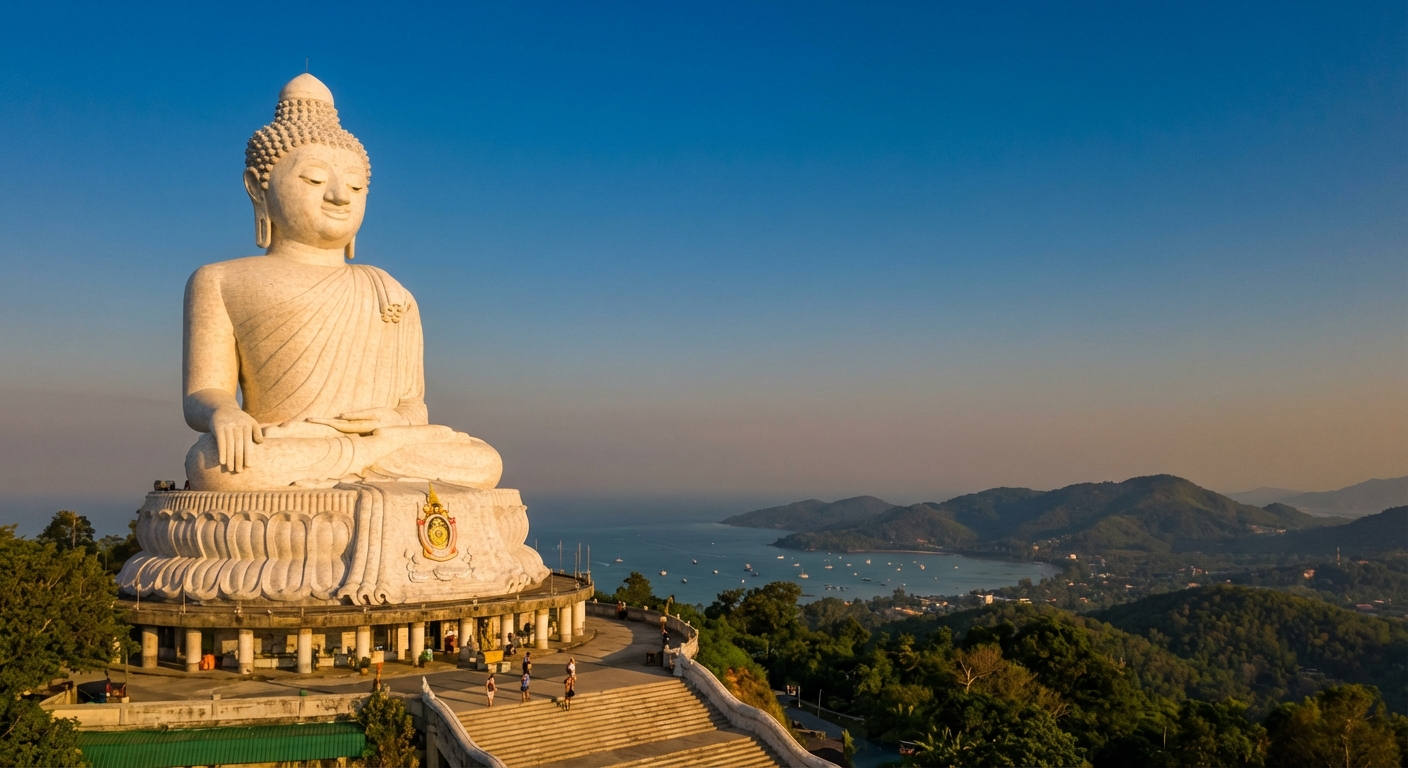
The 45-meter white marble Buddha sitting atop Nakkerd Hill is visible from half the island, and yes, it’s worth seeing up close. The statue itself is impressive, but the real draw is the panoramic view from the summit. On a clear morning, you can spot Chalong Bay, Kata, Karon, and the islands scattered to the south.
Go early. Before 9 AM, the parking lot is half empty and you can enjoy the viewpoint without a selfie stick photobombing your frame. By mid-morning, the tour buses roll in and it’s a madhouse. Modest dress is required: cover your shoulders and knees. If you forget, free sarongs are available at the entrance.
Wat Chalong
The most visited temple on the island, and one that actually feels like a living place of worship rather than a tourist attraction. The main stupa houses relics of revered monks, and the temple grounds are well-maintained and peaceful on weekday mornings. Combine it with the Big Buddha for a cultural half-day. The two sites are about fifteen minutes apart by car.
Walking Tour of Phuket Old Town
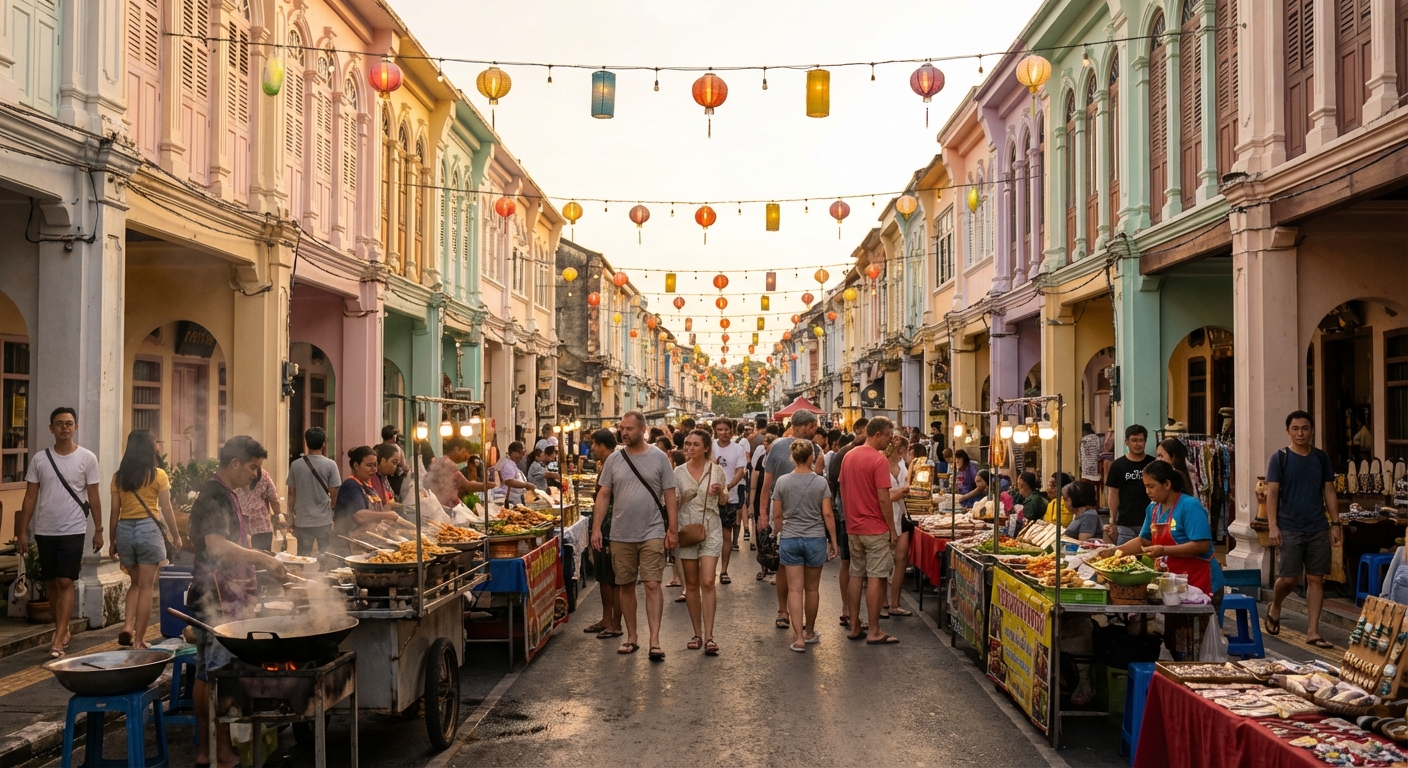
Old Town is where Phuket stops looking like a beach resort and starts looking like a real place with history. The Sino-Portuguese shophouses on Soi Romanee are the must-photograph stop, with their pastel facades and ornate ironwork. But the real reason to come is the food.
Lock Tien Food Court is a no-frills neighborhood canteen where locals come to eat. Cheap, fast, authentic.
Tu Kab Khao serves crab curry in a heritage building and has become something of a pilgrimage for serious foodies. Raya Restaurant serves southern Thai dishes like Moo Hong (Phuket-style braised pork belly) and Gaeng Som (sour curry) that you won’t find at the beachside tourist-strip restaurants.
If you’re there on a Sunday, the Lard Yai Walking Street night market takes over Thalang Road. It’s packed, but it’s the best night market on the island for street food and local crafts. Chillva Market, open on other evenings, has a more local vibe with its repurposed shipping containers, live music, and fewer tourists.
Thai Cooking Class
Half-day cooking classes run about three to four hours and are an excellent way to fill a morning, especially when it’s raining. Blue Elephant Cooking School in Old Town is housed in a restored former governor’s mansion and is highly rated.
You’ll typically prepare four or five dishes, starting with a market visit and ending by eating everything you’ve cooked. Expect to pay around 2,500 to 3,500 THB (65 to 90 EUR) per person depending on the school and menu.
Water Sports and Diving
Scuba Diving
Phuket is one of the main launching points for diving in the Andaman Sea, with options ranging from introductory dives to multi-day liveaboard trips.
For a first try (Discover Scuba), invest a little more in a reputable center. The difference between a good operator and a budget one is significant. Good centers offer ratios of two or three divers per instructor, well-maintained equipment, and instructors who are patient with nervous beginners. Budget operators sometimes cram six people per instructor, rush through safety briefings, and pack everyone onto a single boat.
A bad first dive can put you off diving for good, so it’s worth paying more.
Centers that consistently get positive feedback: Aussie Divers Phuket (probably the most recommended on forums), Sea Bees Diving (they have their own boat, which matters for comfort), and Kiwi Divers, in operation for over fifteen years.
For certified divers (PADI Open Water or equivalent CMAS Level 1 and above), day trips head to Racha Yai and Racha Noi, Shark Point, and the King Cruiser wreck.
Serious diving, however, means a liveaboard trip. Richelieu Rock is regularly ranked the best dive site in Thailand, but it’s hours of sailing from Phuket.
A four or five-day liveaboard is the proper way to get there. Day trips to the Similan Islands involve three to four hours of travel each way for only two dives. If you’re going to spend that money, do it properly with a liveaboard.
Shore Snorkeling
Don’t expect National Geographic-worthy images snorkeling off Phuket’s beaches. Visibility is decent but not spectacular. That said, a few spots are worth bringing a mask for.
Ao Sane Beach, near Nai Harn at the southern tip, is the spot locals consistently recommend. Rocky bottom, decent marine life, and far fewer crowds than the main beaches. Ya Nui Beach, right next door, works well for families. Kata Noi has some fish around the rocks at each end of the bay.
The Private Longtail Trick
This is a hack budget travelers have been using for years. Head to the pier at Rawai on the southeast coast, find a longtail boatman, and charter him privately for a few hours. For a group of four to six people, the per-head cost works out about the same or even cheaper than a standard group excursion, except you set your own schedule.
Most boatmen will take you to Coral Island (Koh Hey) or around the southern headland. Negotiate the price before you go. You can also do this from Yamu pier on the east coast.
Surfing at Kata
Phuket gets surfable waves during the monsoon season, roughly May to October. Kata Beach is the main spot, with consistent waves suited to beginners and intermediate surfers. Board rentals and lessons are available right on the beach. It’s not Bali and nobody will mistake the place for Pipeline, but if you want to catch a few waves between temple visits, head to Kata Beach for the best surf conditions.
A Word on Jet Skis
Skip them. This is one of those topics where Reddit and travel forums are nearly unanimous. The Phuket jet ski scam is well documented: you return the machine, the operator claims you damaged it, and demands hundreds or even thousands of euros in compensation. This has been going on for years and the operators have it down to an art. If you absolutely insist on riding one, film the machine from every angle before and after rental. But honestly, just don’t.
Day Trips and Island Hopping
Phi Phi Islands
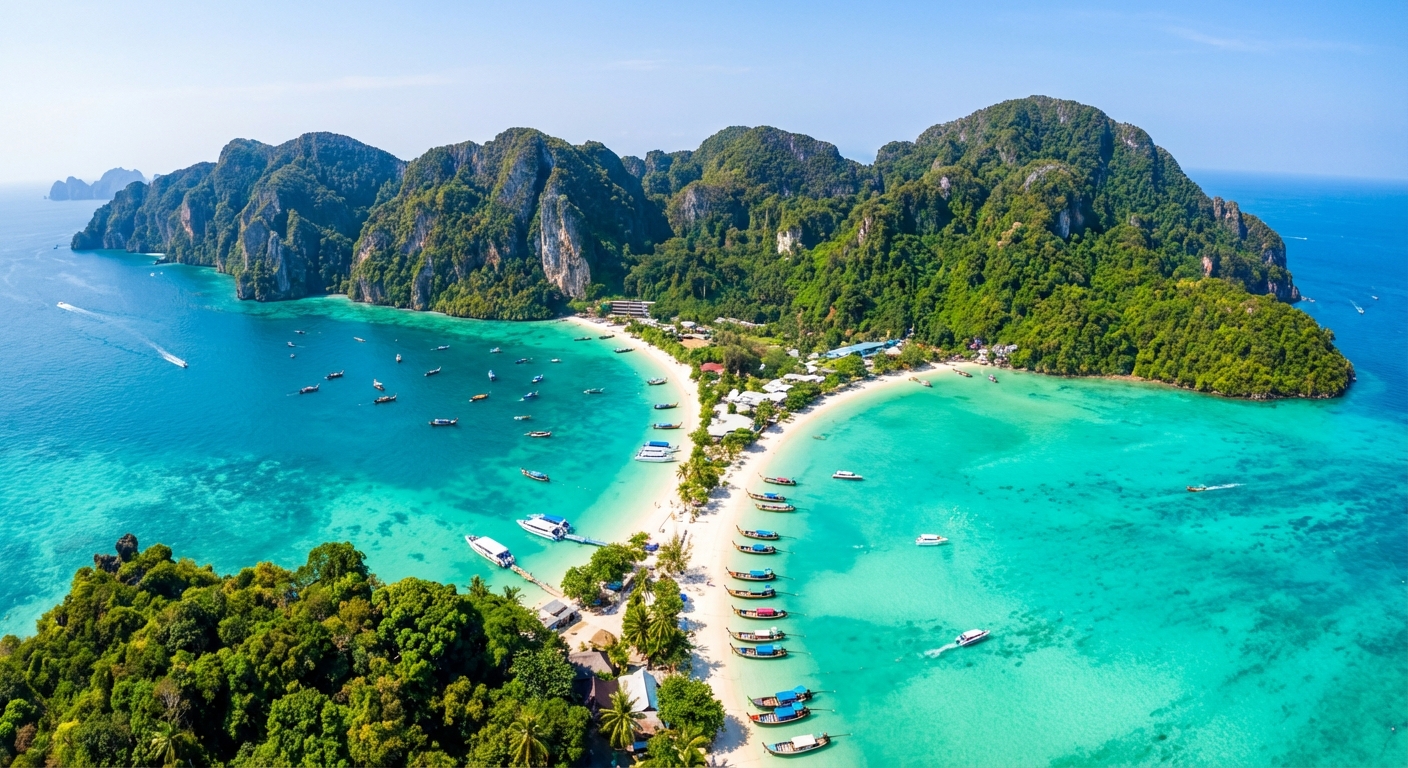
The classic. Everyone asks if Phi Phi is still worth it, and the answer depends on your tolerance for crowds and your willingness to wake up early.
Maya Bay (yes, the bay from the movie The Beach with Leonardo DiCaprio) has reopened after being closed for ecological restoration, and it’s stunning. But by 10 AM on any given day, it’s a wall of speedboats and selfie sticks.
The solution: book a sunrise trip departing at 6 AM or 6:30 AM. Companies like Simba Sea Trips specialize in these early departures. Arrive at Maya Bay before the crowds and you get 30 to 45 minutes of relative peace. It makes all the difference.
The snorkeling around Bamboo Island and Mosquito Island near Phi Phi is excellent. Clear water, colorful fish, far better than anything you’ll find snorkeling off Phuket’s beaches.
Some travelers prefer to skip the day trip entirely and take the ferry to Phi Phi Don to spend a night or two. Base yourself on the island, hire a private longtail at 7 AM, and you’ll see Pileh Lagoon before a single day-tripper arrives. Staying overnight completely transforms the experience.
Two caveats. First, the speedboat crossing is open ocean and can get rough. On choppy days, some describe it as “bone-rattling.” If you’re prone to seasickness, take medication before boarding and sit toward the back of the boat where the bouncing is less severe.
Second, avoid any combined excursion that tries to squeeze Phi Phi and James Bond Island into the same day. That’s 12 to 13 hours on a boat with 30 to 45 minutes at each stop. Exhausting and pointless. Give Phi Phi a full day.
Budget tip: book on the ground. Small travel agencies on the streets of Patong, Kata, or Chalong sell the same trips for up to 50% less than online bookings. And you can haggle. Well-reviewed operators include Simba Sea Trips, Aloha Tours, and Love Andaman.
Phang Nga Bay and James Bond Island
James Bond Island itself (Khao Phing Kan) is honestly a tourist trap. It’s a small rocky islet with souvenir vendors and a crowded photo spot in front of the famous limestone pinnacle. You take your photo, look around for two minutes, and leave. But the island isn’t the real draw of the trip.
The real draw is the bay itself. Phang Nga Bay is a submerged karst landscape with towering limestone cliffs rising from emerald-green water. It’s often described as “Jurassic” and that’s not an exaggeration. The views from the boat as you cruise through the bay are breathtaking.
Make sure your excursion includes sea canoeing or kayaking. This is the best part of the entire trip. Guides paddle you through low-ceilinged sea caves into hidden lagoons surrounded by rock walls. Sometimes you have to lie flat in the canoe to pass under the overhangs, then you emerge into a lagoon completely encircled by cliffs, open to the sky.
The caves at Koh Panak and Koh Hong are the highlights. Some tours rush through this part to fit in more photo stops. Book one that gives you real time in the caves. Ask specifically how many cave stops are included before paying.
Phang Nga Bay is also the best choice for families with young children or anyone prone to seasickness. The bay is sheltered and the water is calm, unlike the open-sea crossing to Phi Phi. If you can only pick one major excursion, decide based on what you want: Phi Phi for beaches and snorkeling, Phang Nga for scenery and kayaking.
Similan Islands
The Similans are about 70 kilometers northwest of Phuket and are only open seasonally, roughly November to May. The main attraction: water clarity and spectacular underwater boulder formations at the dive sites.
Opinions are split on day trips. Some visitors love it: the white sand of Donald Duck Bay, the snorkeling, the feeling of being on an island cut off from the world. Others found it overcrowded and the surface coral disappointing (damaged in places).
The difference often comes down to timing. Trips departing at 4 AM or 4:30 AM arrive before the wave of speedboats. Later departures land you on the islands at the same time as hundreds of other visitors.
For experienced divers, the Similans are far better explored on a liveaboard that can reach the more remote sites. Day trips don’t provide access to the best spots like Richelieu Rock or the outer archipelago sites.
If snorkeling is your main goal, consider the Surin Islands instead. Several divers and snorkelers have found that Surin has healthier shallow reefs, fewer tourists, and a cultural draw (the Moken sea nomad village at Mae Yai Bay) that the Similans lack. Surin’s reefs are shallow enough to see everything with just a mask and snorkel, while the Similans’ best spots require scuba gear.
The trade-off: Surin is farther away, harder to reach, and has fewer tours departing from Phuket. For either destination, basing yourself in Khao Lak rather than Phuket cuts the boat journey by about two hours.
Racha Islands
If you want a quick island escape without a long boat ride, the Racha Islands are 30 to 45 minutes south of Phuket by speedboat. Racha Yai (the closer one) has clear water and decent snorkeling, though the site gets busy. Racha Noi (farther out) offers better visibility and more marine life. Racha Noi is also a popular dive site for introductory dives, as the water is calm and conditions are gentle.
Coral Island (Koh Hey)
The closest island to Phuket, about fifteen minutes by speedboat from Rawai. Perfect for a laid-back half-day if you just want clear water and a beach without committing to a full-day excursion. It’s neither remote nor pristine, but it’s convenient. Combined with the longtail trick mentioned above, it’s a budget-friendly afternoon outing.
Adventure Activities
Muay Thai Training
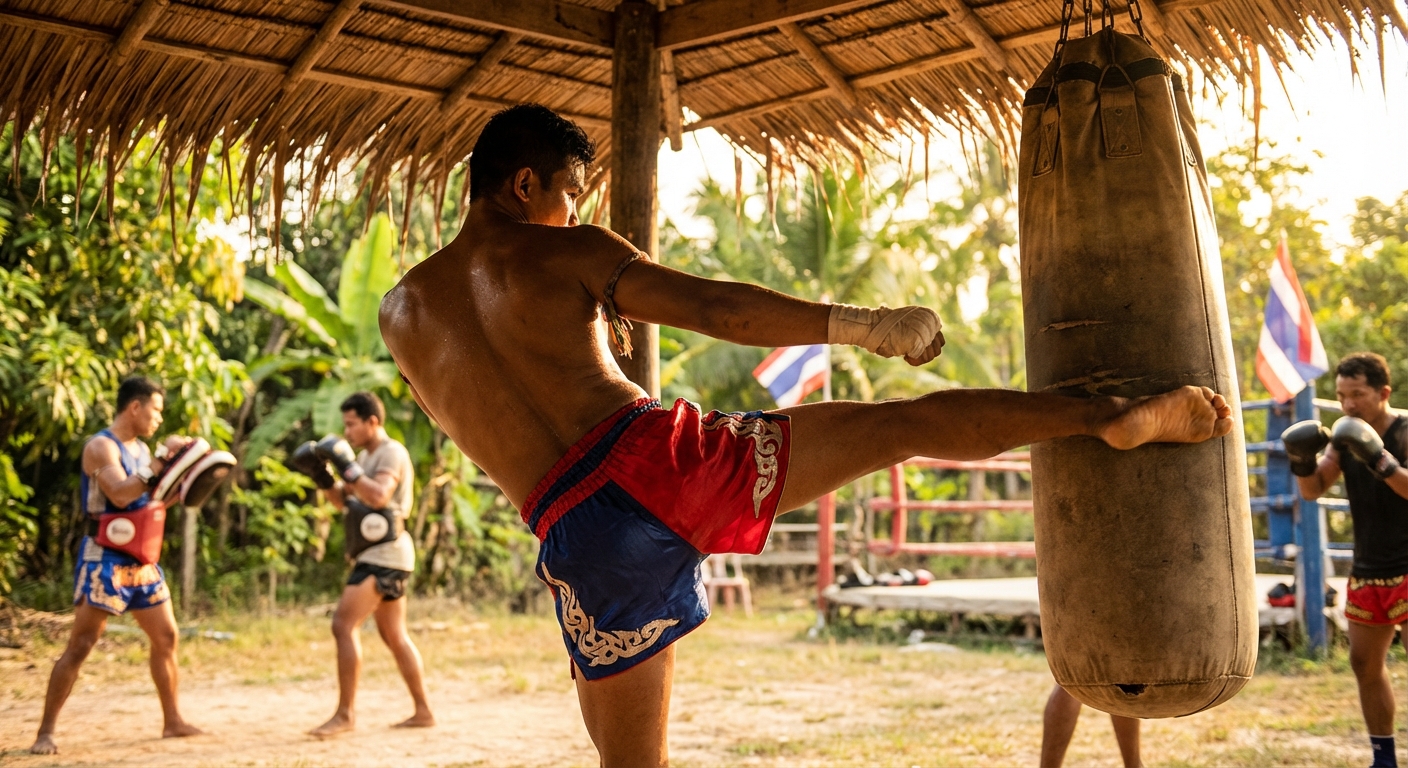
Phuket is one of the top destinations in the world for Muay Thai, and you don’t need to be a fighter to give it a try. Most gyms offer single-session drop-ins and beginner-friendly classes.
Soi Taied in Chalong is the historic fitness district, lined with training gyms and healthy restaurants. But Bang Tao is gaining ground, especially for travelers who want to combine training with a social vibe. Bangtao Muay Thai and MMA is frequently recommended for its coaching quality and welcoming crowd.
It’s particularly well-suited if you’re traveling solo and want to meet people. Rattachai, also in the area, has a family-friendly atmosphere and is patient with complete beginners.
If you’re looking for something more serious and less social, Eagle Muay Thai draws a quieter, more focused crowd. Sessions typically run 90 minutes to two hours. It’s also a reliable rainy-day activity, since training takes place under covered areas.
Ziplining
Several operators run zipline courses through the jungle canopy in Phuket’s inland hills. Courses typically last two to three hours and include multiple platforms connected by cables above the treetops. It’s a good half-day option, especially if you’re traveling with children or teenagers who are tired of temples. Flying Hanuman is the most established operator. Check recent reviews before booking, as quality among smaller operators varies.
ATV Riding
ATV tours take you through rubber plantations and jungle trails in the island’s hilly interior. Fun for an hour or two, though the experience is fairly standard for Southeast Asia. The main risk is accidents: crashes happen, and medical evacuation from a jungle trail isn’t quick. If you go, wear closed-toe shoes, take the safety briefing seriously, and don’t play daredevil on muddy slopes.
Viewpoints and Sunsets
Promthep Cape
The signature sunset spot in Phuket, located at the island’s southern tip. The view along the coastline toward the Andaman Sea is stunning, with the silhouettes of small islands dotting the horizon as the sun drops. The problem is that every tour bus on the island knows about it, and the viewpoint gets mobbed before sunset.
Arrive 30 to 45 minutes early to get a good spot. There’s a lighthouse you can climb for a slightly elevated vantage point, away from the main crowd.
Karon Viewpoint (Kata-Karon Overlook)
The famous three-bay viewpoint overlooking Kata Noi, Kata, and Karon. It’s a classic stop on the drive south and worth a ten-minute pause. Best in the morning when the light hits the water from the east.
Khao Rang Hill
A local favorite in Phuket Town. The viewpoint looks north over the town and surrounding hills. Less dramatic than the coastal lookouts, but quieter and more accessible. There’s a restaurant at the top if you want lunch with a view.
Black Rock Viewpoint
A lesser-known alternative that some locals actually prefer over Promthep Cape. Fewer people, comparable sunset quality. Worth a visit if you’ve already done Promthep or simply want to avoid the crowds.
Samet Nangshe Viewpoint
Technically not in Phuket. It’s about a 90-minute drive north, in Phang Nga Province. But those who’ve been describe it as the most beautiful panorama in the entire region. You look out over the full bay with karst pinnacles piercing the water’s surface. If you’re already doing a Phang Nga Bay excursion, consider adding this stop on the way. Sunrise is the ideal time.
Family-Friendly Activities
Aquaria Phuket
A large aquarium located inside the Central Phuket Floresta shopping mall. Air-conditioned, well-designed, and it keeps kids entertained for a couple of hours. Good rainy-day option, and since it’s in a large mall, you can combine the visit with lunch and wandering around in the cool air when the afternoon heat peaks.
The walk-through shark tunnel is the highlight. Expect to pay around 1,100 to 1,500 THB (28 to 38 EUR) for adults, with discounts for children.
Ethical Elephant Sanctuaries
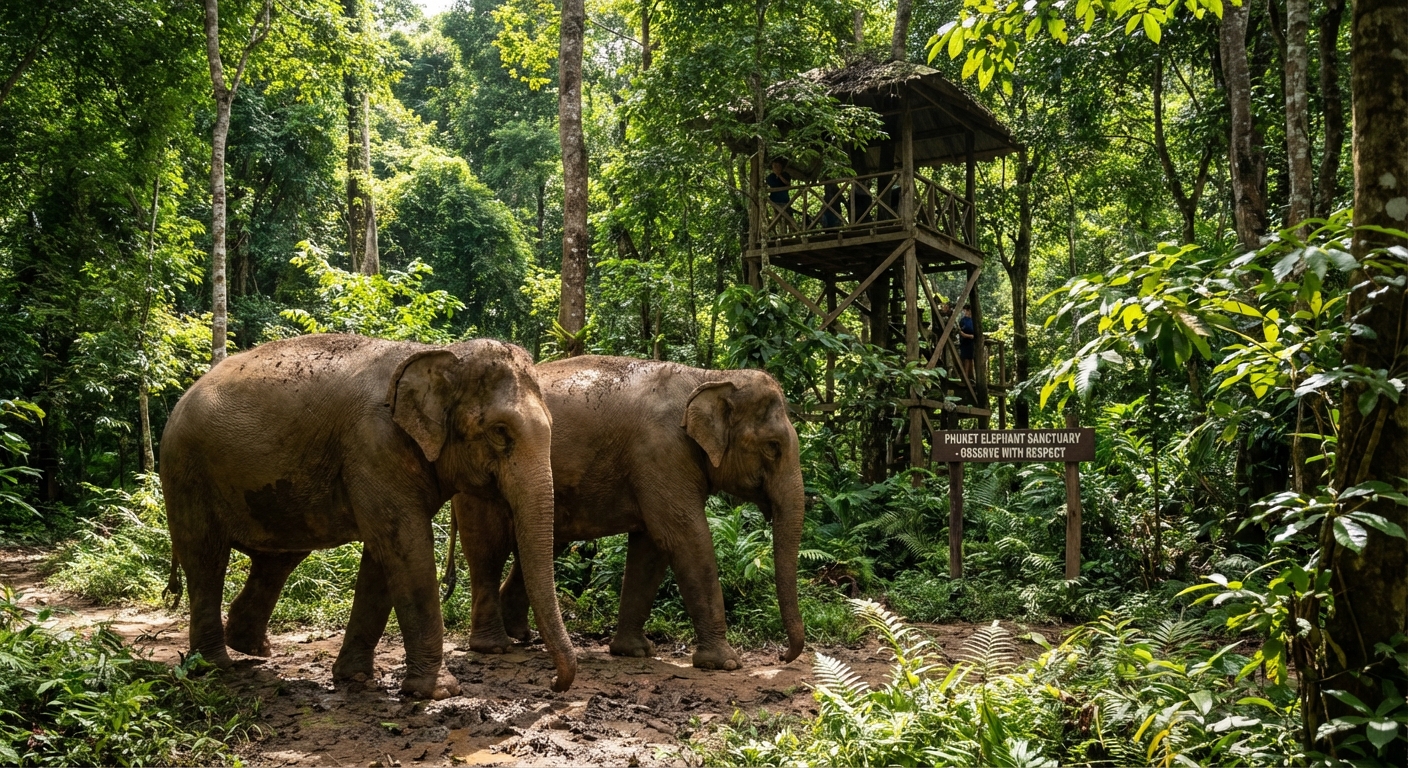
If you want to see elephants, be very selective. The word “sanctuary” gets slapped on places that absolutely don’t deserve it.
The golden rule: if a place lets you ride elephants, bathe them, or crowd around them for photos, it’s not genuinely ethical. Real sanctuaries operate on an observation-only model where you watch the elephants from a distance in a semi-natural habitat.
Phuket Elephant Sanctuary (PES) in Paklok is the most recommended ethical facility. You observe rescued elephants from viewing platforms while they walk, eat, and bathe at their own pace.
Guides tell the story of each elephant, and the experience is educational rather than staged. Hidden Forest Elephant Reserve is also recommended for its ethical standards. Both cost more than exploitative operations (typically 3,000 to 5,000 THB, or 78 to 130 EUR), but the price difference is what funds proper care for the animals.
Splash Jungle Water Park
A water park near Mai Khao Beach in the island’s north. Decent slides, a lazy river, and a wave pool. Nothing exceptional compared to major European water parks, but it fills a half-day for families with children under 12 who need a break between beach-temple-boat days.
Soi Dog Foundation
An unusual recommendation but a surprisingly popular one. The Soi Dog Foundation is an animal shelter where visitors can walk rescued dogs and play with cats. It’s free (donations welcome) and enjoyable for animal lovers and children. The shelter is located in Mai Khao in northern Phuket.
Nightlife and Going Out
Bangla Road
Walk through it once. That’s the advice you’ll hear from just about everyone. Bangla Road in Patong is a neon-splashed strip of bars, clubs, and cheerful chaos that has been the center of Phuket’s nightlife for decades.
It’s loud, it’s tacky, and it’s an experience in itself. Whether you stay for one drink or five hours depends entirely on the kind of night you’re after. Don’t expect anything refined. Expect to be accosted by bar touts every ten meters. The entire street goes pedestrian in the evening, so you can stroll down the middle of the road taking in the atmosphere without committing.
Beach Clubs
If you want a party atmosphere without feeling like you need a shower when you get home, Catch Beach Club in Bang Tao is the standard-bearer. DJs, pool, beach views, cocktails that cost five times what you’d pay at a Patong bar. It’s the closest thing Phuket has to the Bali beach club scene, drawing a mix of expats, tourists, and Bangkok weekenders.
Dress code leans toward smart casual. Cafe Del Mar, also in the Bang Tao area, offers a similar concept with its own pool and regular DJ nights.
Simon Cabaret
A long-running cabaret show in Patong, featuring lavish costumes, polished choreography, and slick production. It’s been a Phuket institution for years and the audience is surprisingly diverse: couples, families, solo travelers.
Good indoor entertainment that works as a rainy-night backup or to fill the gap between dinner and a late night out. Shows run several times per evening and tickets can be purchased on-site or online.
Nightlife in Old Town
For a radically different vibe, spend an evening in Old Town. The Library is a speakeasy-style cocktail bar that’s light-years from Bangla Road. Small, intimate, with well-crafted cocktails made by bartenders who know their craft.
Bookhemian, nearby, doubles as a cafe and bar in a converted shophouse. Several other spots along Old Town’s streets offer a low-key alternative for those who prefer conversation over bass. If you’re staying in the Kata or Karon area, Old Town is about a 30-minute drive, but it’s worth the trip at least once.
What Most People Get Wrong
A few blunt observations to save you unnecessary spending and frustration.
For more adventures in Asia, check out our must-do activities in Bali.
Combined excursions (Phi Phi plus James Bond, or Similan plus anything) look like a good deal but are almost always a bad trade. You spend most of the day on a boat for 30 minutes at each stop. Pick one destination per day and enjoy it fully.
Booking online in advance is usually more expensive than booking on the ground. Walk into any small travel agency on the street and you’ll often get the same trip for half the price. They’re selling seats on the same boats from the same operators.
The early bird rule applies to nearly everything. Phi Phi at sunrise and Phi Phi at noon are two radically different experiences. Same for Big Buddha, same for the Similans. Set your alarm.
Use the Bolt app for getting around. It’s cheaper than Grab and significantly cheaper than haggling with tuk-tuk drivers. Scooter rental is common, but be aware that police checkpoints targeting tourists without an international driving permit are frequent.
Fines start at 500 THB (about 13 EUR) and your travel insurance won’t cover you in case of an accident without a valid license.
Phuket has far more depth than its beach resort reputation suggests. Between the southern Thai cuisine in Old Town, the Muay Thai culture, the Andaman Sea diving, and the dozens of islands reachable on day trips, you could spend two weeks there and still miss things.
The key is making deliberate choices and ignoring the touts outside the 7-Eleven trying to sell you an all-inclusive package.
For a complete picture of planning your trip, check out our complete Phuket guide.
Heading back to Bangkok? Check out our 20 must-do activities in the capital.
For more adventures in Asia, check out our must-do activities in Hanoi