


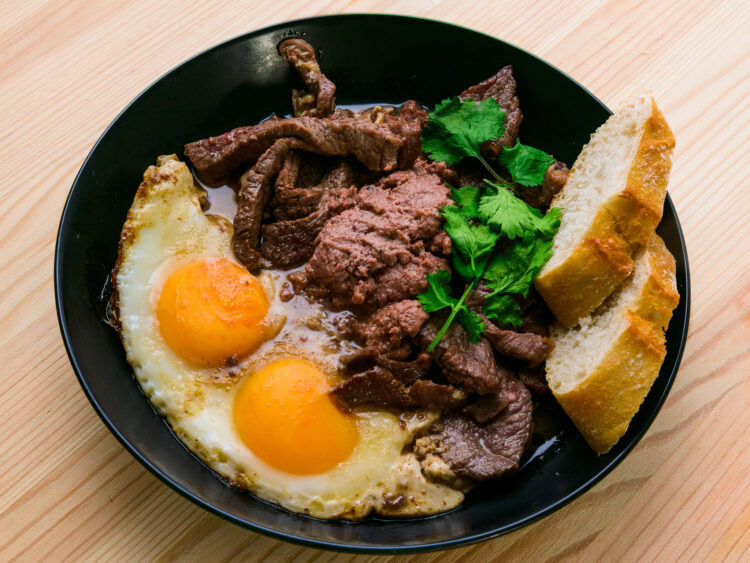
Discover this sizzling Vietnamese classic of thinly sliced pan-seared beef, sunny-side-up eggs, and warm pâté, perfect for dipping with a crisp baguette.
A server approaches with a smile and a friendly warning. He sets down a small individual cast-iron skillet that sizzles so loudly it even drowns out the hum of traffic around the café.
The butter crackles and spatters along the edges in little golden flecks, perfuming the air with caramelized fat and savory beef.
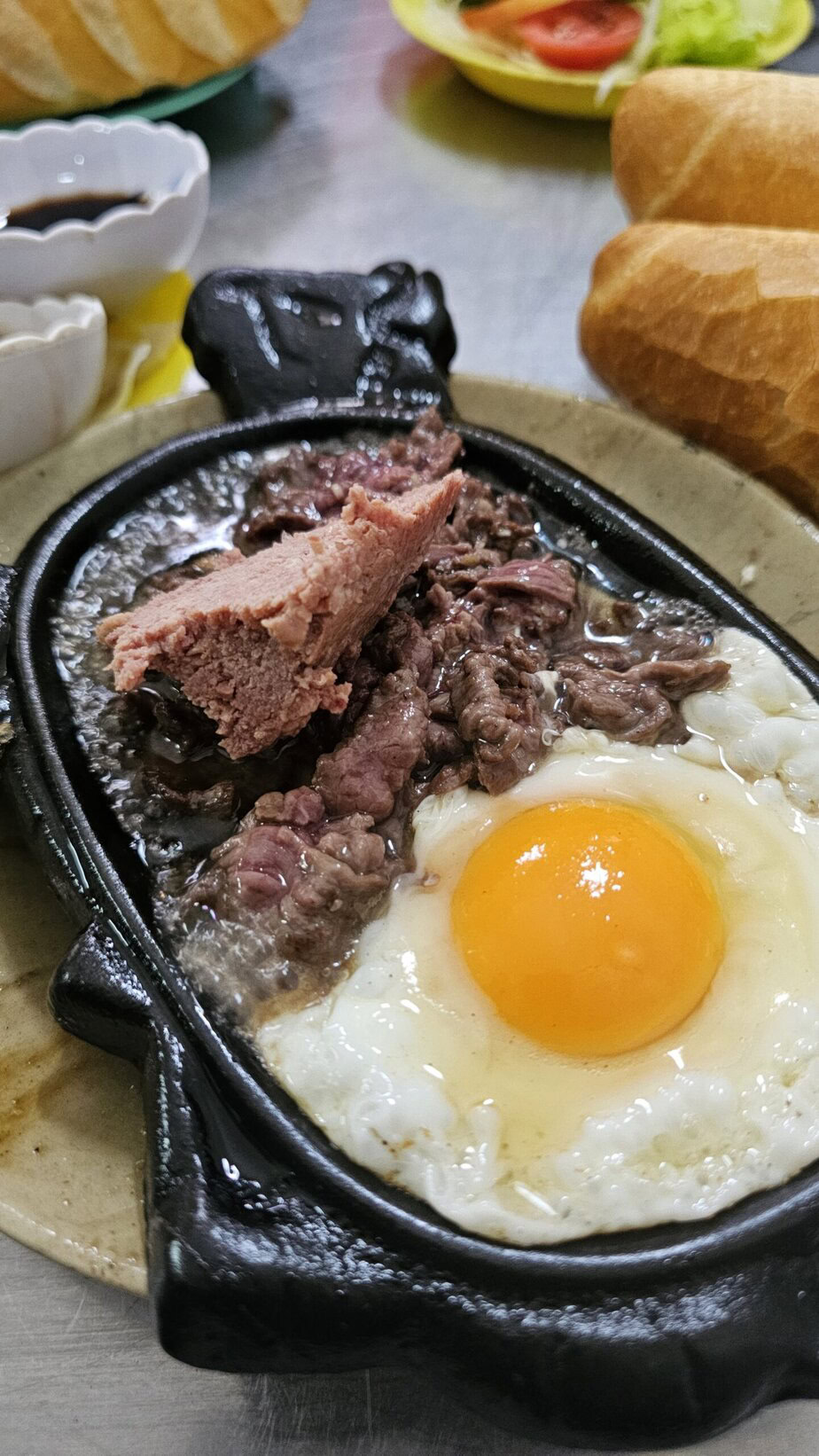
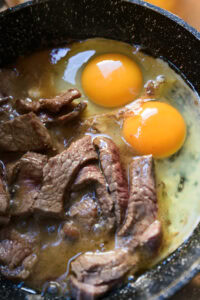
The egg yolks quiver in the heat, bright and glossy, ready to be pierced and spread across the pan with a piece of crusty baguette. This is Bò Né, the Vietnamese answer to “steak and eggs”: a sizzling, single-serving dish that feels both communal and decidedly indulgent.
Even its name hints that the theatrics of this breakfast are baked into its identity.
What is Bò Né ?
In Vietnamese, bò means “beef,” while né evokes the idea of “dodging or drawing back” (a playful nod to how diners instinctively lean in, then pull away from the spatters of fat from a just-served pan). The name sums up the essence of the dish: beef so hot and lively it must be handled with care.
At its core, Bò Né is a Vietnamese sizzling beef dish served in a small individual cast-iron pan, typically pairing thin slices of beef, eggs, a rich pork liver pâté, and a generous knob of butter.
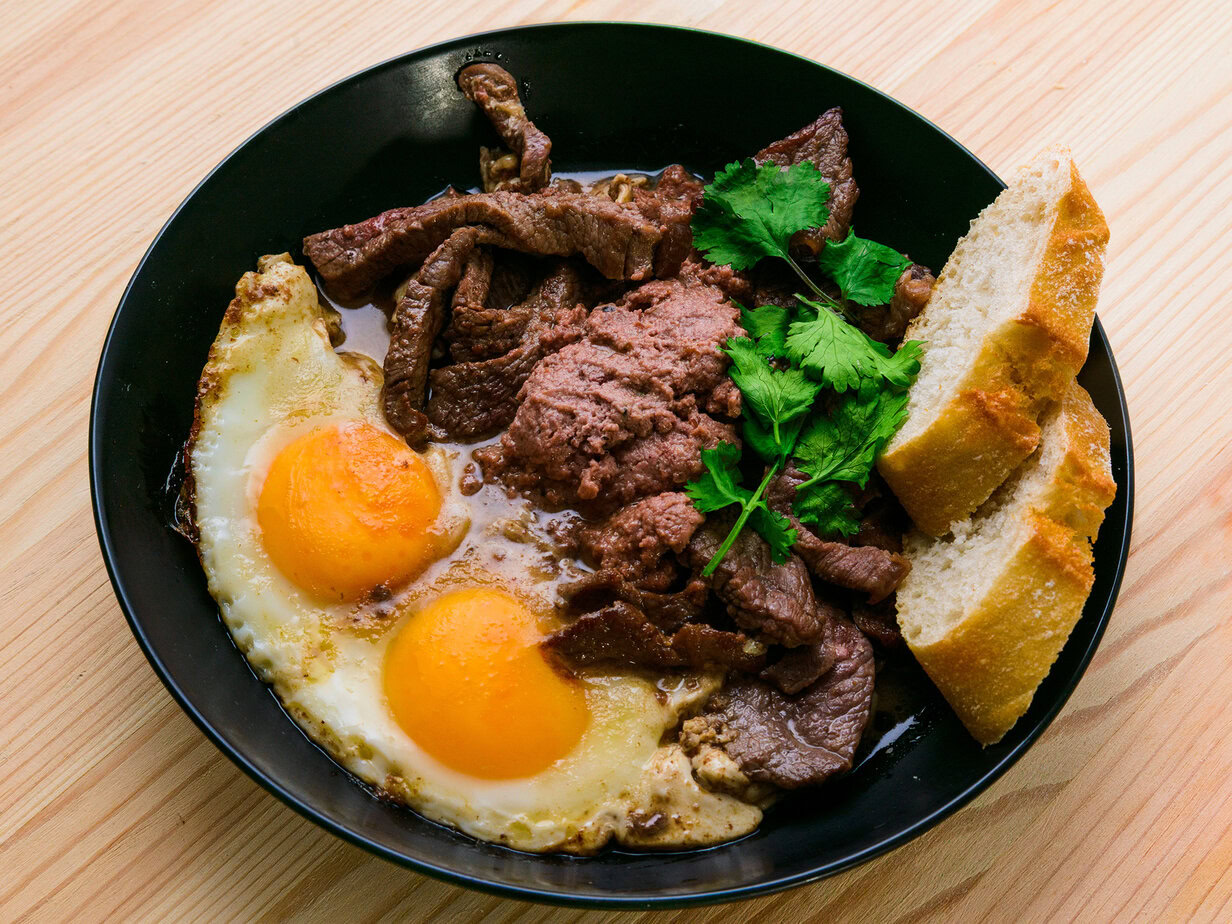
In the pan you’ll usually find seared beef, fried eggs with runny yolks, a compact block of pâté just beginning to melt, and a thin sheen of bubbling fat, all served with a light, crackly baguette for dipping.
Unlike a Western plate of steak and eggs, Bò Né leans on French-style pâté and baguette, but it’s seasoned the Vietnamese way: a touch of Maggi-style seasoning or soy sauce, a bit of fish sauce–based dipping sauce, and some fresh chili or pepper. Really, just a touch—I often skip it altogether.
Origins and cultural context of Bò Né
The origin of Bò Né is undeniably tied to the French colonial era, when beef, butter, pâté, and crusty baguettes began making their way into Vietnamese kitchens. What started as a European-inspired steak and charcuterie gradually evolved into something quicker and more informal.
Instead of a single large steak, cooks turned to finely sliced beef that cooks in seconds, transforming an expensive ingredient into a more accessible pleasure.
Vietnamese creativity did the rest. The French pan became a small individual cast-iron pan; the formal plated meal turned into a smoking, street-side breakfast. Cooks paired thin ribbons of beef with fried eggs with soft yolks and a generous slab of pork liver pâté, all nestled in buttery fat and served with bánh mì to mop up every last trace.
Today, Bò Né is most often associated with hearty mornings and brunch, enjoyed at specialty stalls or modest curbside stands where rows of little pans are already waiting. Orders fly, and the hissing pans keep pace with the rush-hour crowd—the whole show powered by the precise balance of just a few essential ingredients.
How Bò Né Comes Together
The signature sizzle of Bò Né starts well before the pan reaches the table. A small cast-iron skillet is heated to the edge of smoking, so hot a drop of water would dance across its surface. Only then do cooks pour in a mix of neutral oil and butter, letting the butter foam and scent the air. Then thinly sliced beef hits the metal.
The meat sears in moments, picking up color without losing tenderness. It’s then pushed to the side to make space for the eggs and pâté. The eggs spread just enough for the whites to set while keeping the yolks liquid, and the pâté warms until its edges turn supple and spreadable rather than dry.
When the pan comes off the heat, everything is technically cooked yet still in motion: the fat bubbles, the juices mingle, and the dish arrives at the table still audibly sizzling, ready for the diner to take over.
How to Eat Bò Né Like a Local
Part of the pleasure of Bò Né lies in how you eat it. Diners tear pieces of bánh mì and use them as both spoon and sponge, sliding the bread through sunny yolks, pan juices, softened pâté, and golden bits of beef. Each bite is customizable: more egg here, an extra smear of pâté there, or a piece of bread simply dipped in butter.
The meal finds a natural rhythm: a fold of beef over the bread, a dab of chili sauce to cut through the richness, then a bite of pickles or fresh cucumber to reset the palate.
On neighboring tables, glasses of strong Vietnamese coffee, iced tea, or sweetened milk coffee anchor the start of the morning. The atmosphere is lively and social: friends and families huddle over their own sizzling pans, leaning into the steam and chatter before the dish cools and the magic fades.
Variations and ideas for adapting Bò Né
Across Vietnam, the base of seared beef, eggs, and bread often expands into a kind of mini mixed grill. Some places add sausages, meatballs, or different cuts of beef, turning the pan into a busy cast-iron stage while keeping eggs and pâté as the central duo.
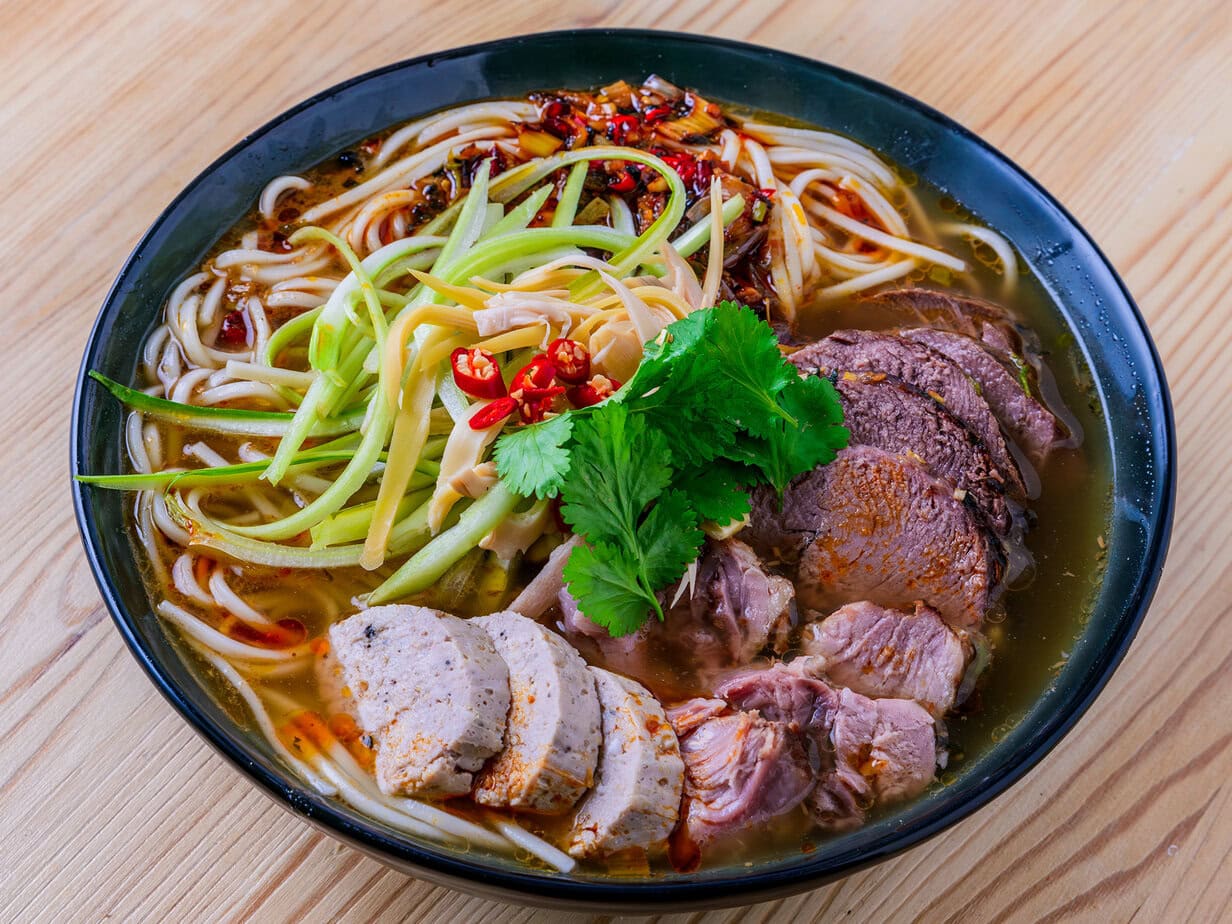
Others dial back the butter or reduce the portion of pâté, balancing the dish with more vegetables—onion, wedges of tomato, even sautéed greens—to suit lighter appetites or certain diets. You’ll find the same love of beef in other Vietnamese classics like bò kho, bún bò Huế, or bò bún.
At home, you can adapt Bò Né freely by changing the type of bread or using your favorite hot sauces, as long as you preserve its spirit: a scorching-hot pan topped with sizzling beef, runny eggs, and, alongside, something sturdy and crisp to catch every last drop of flavor.
To explore Vietnamese cooking, you might also think of lighter dishes like spring rolls or a steaming bowl of Vietnamese pho.
Ingredients
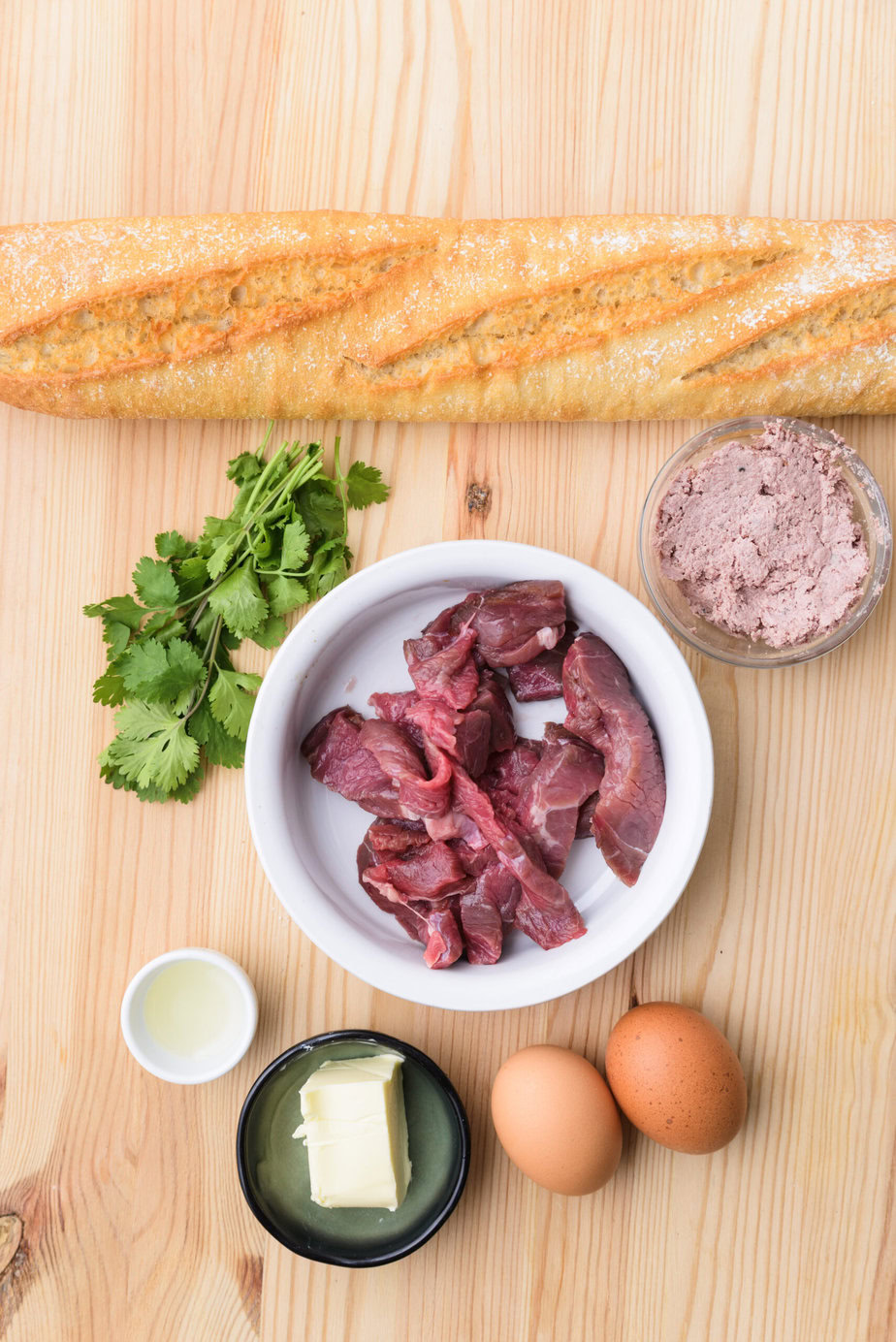
- 200 g beef thinly sliced
- 2 eggs
- 50 g pork liver pâté
- 30 g butter unsalted
- neutral cooking oil as needed
- baguette for serving
- fish sauce optional
- light soy sauce optional
Instructions
- Preheat a small cast-iron skillet until very hot.
- Add a little neutral oil and the butter. When the butter is foaming, add the thinly sliced beef and sear quickly until just cooked.neutral cooking oil, 30 g butter, 200 g beef

- Push the beef to one side of the pan. Crack in the eggs and fry, keeping the yolks runny.2 eggs
- Place the pâté in the pan to warm through.50 g pork liver pâté
- Serve immediately, still sizzling, with baguette for dipping.baguette
Notes
- Sear the beef quickly to keep it tender.
- Keep the egg yolks runny for extra richness.
- Serve straight from the hot pan to enjoy the sizzling flavors.
- Traditionally served with bánh mì (Vietnamese baguette).
Nutrition
Culinary sources
• Bò né: the breakfast where French influence meets Vietnamese flair – Vietcetera (English)
• Bò né, the Vietnamese steak-and-eggs dish you should know – Tasting Table (English)
• Bò né – Wikipedia (Vietnamese)
• How to make bò né: detailed guide and keys to success – Trí Hưng (Vietnamese)
• An international food column impressed by a Vietnamese dish with a distinctive name – Kênh14 (Vietnamese)
• How to marinate bò né beef so it’s tender and seasoned just right, like at a restaurant – Yêu Trẻ (Vietnamese)
• “I ate”: Vietnamese barbecue with rice and egg – Reddit (English)
• Two of Swords – Bò né – sizzling beef steak – Măm Tarot (Vietnamese)
• Bò né – a dish with a funny name for Saigonese – VnExpress (Vietnamese)
• Hẻm Gems: Cô Thủy and 25 years of bò né breakfasts in D4 – Saigoneer (English)
• Bò né, a popular dish in Vietnam served on a still-sizzling cast-iron pan – Facebook (Vietnamese)
• Top 15 bò né restaurants in Nha Trang, tasty and authentic, love at first bite – Evertrip (Vietnamese)
• Vietnamese dish bò né praised in a prestigious American newspaper – Người Hà Nội (Vietnamese)
• Bò né – Reddit, r/vietnamesefoodie (English)
• A local favorite for good reason: Bo Ne Ba Nui, Ho Chi Minh City – Instagram (English)


The kids went crazy for the sizzling beef and runny eggs, and the baguette dipping was a huge hit. Both cleaned their plates and immediately asked for seconds 😊
Made this for brunch and it tasted just like the cafe-style sizzle, especially with the runny yolks and pâté on baguette; intentionally cooked extra beef because the leftovers were honestly just as good the next day.
Made this on a rainy day and the sizzling beef, runny eggs, and melty pâté with crusty baguette was the ultimate comfort food, pure cozy vibes in a skillet. Every dip felt so warm and comforting 😊
So quick and easy to pull together on a busy weeknight when I was exhausted and short on time, and the sizzling beef with runny eggs and warm pâté felt restaurant-level with almost no effort!