


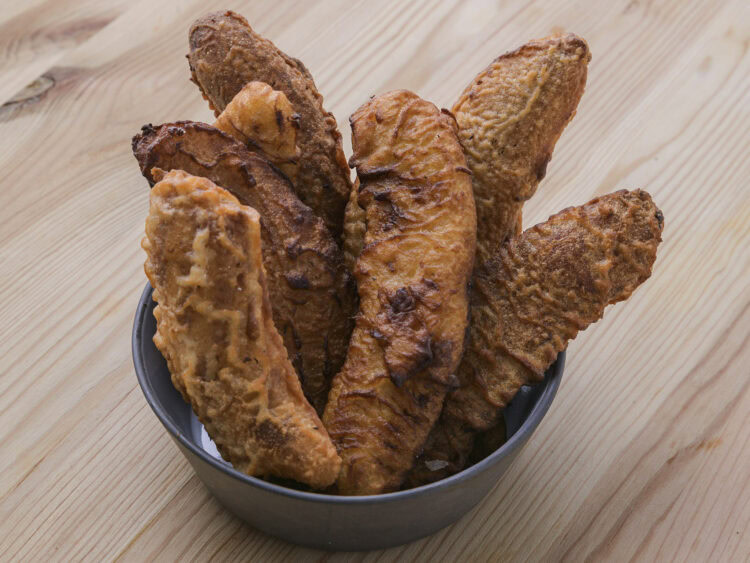
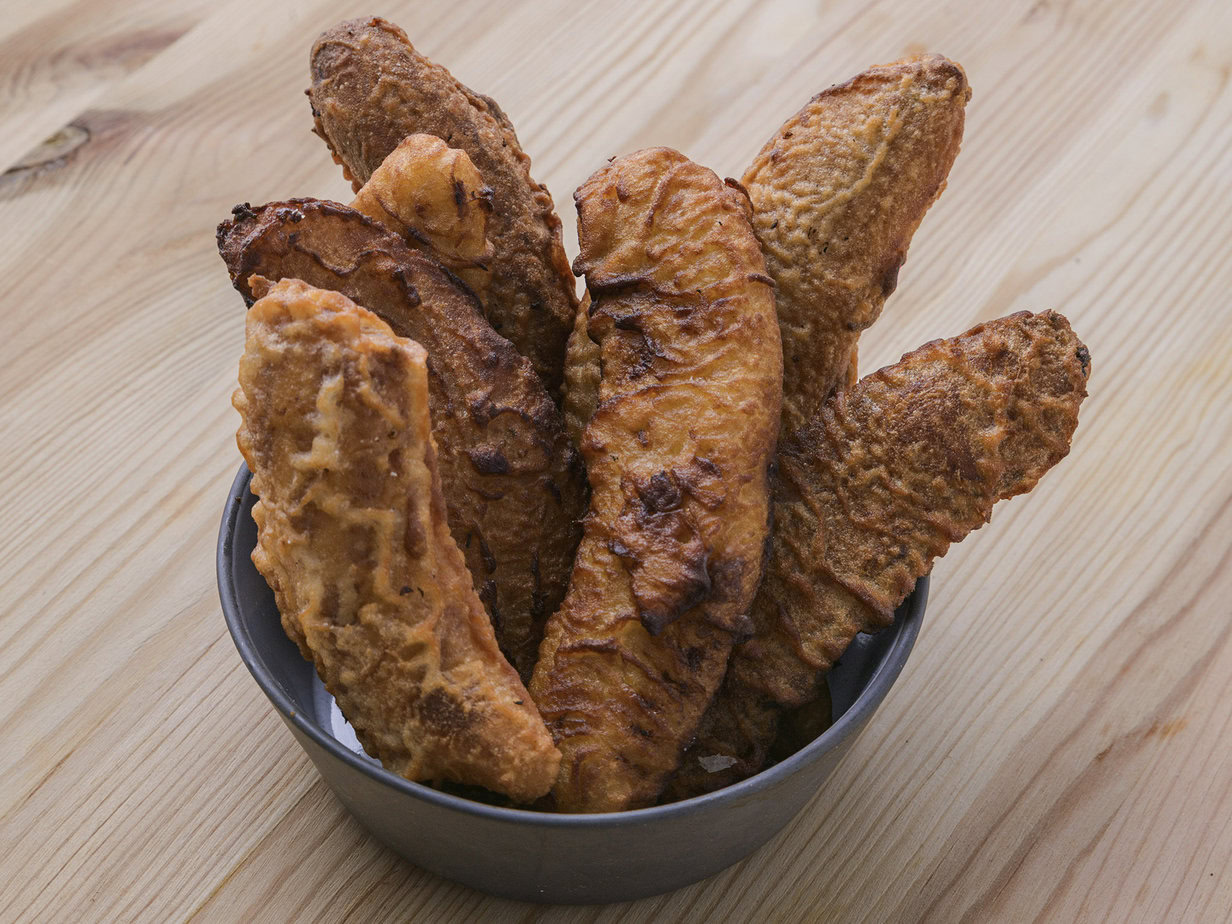
These double-coated banana fritters, perfumed with coconut milk, have a custardy center and an ultra-crispy crust.
The sizzle of hot oil briefly drowns out the roar of traffic. A wire skimmer lifts a raft of golden, crispy, caramelized fritters with ragged-edged crusts. One bite through that delicate shell releases a custardy banana center and a whisper of coconut.
This isn’t a plated restaurant dessert, but a street-side treat, like bánh cam, made for handheld eating on the sidewalk.
What is bánh chuối chiên ?
At heart, bánh chuối chiên is simply a Vietnamese-style banana « fritter ». Small, very ripe bananas are split and pressed into thin, elongated ovals. They’re then coated in a light rice-based batter before being plunged into oil until they puff, turn deeply golden, and become shatteringly crisp.
The name is very literal: bánh means cake or pastry, chuối banana, and chiên fried. Calling them “banana fritters” highlights their kinship with the broader French family of fritters, but their identity is fully Vietnamese, from the rice-forward crust to the coconut-scented batter.
Unlike Indonesian pisang goreng, Thai kluai khaek, or big Western-style banana fritters, these fritters are thinner, more lacy, almost brittle, with banana very much at the heart of every bite.
The origins of Vietnamese fried bananas
Bánh chuối chiên was born in the southern Mekong Delta, the lush riverlands of miền Tây where bananas and coconuts grow in abundance. Thrifty cooks, at home and on the street, turned very ripe bananas—too soft to sell fresh—into a hearty snack for schoolchildren and passersby of all ages by dipping them in batter and letting them slide into a wok of shimmering oil.
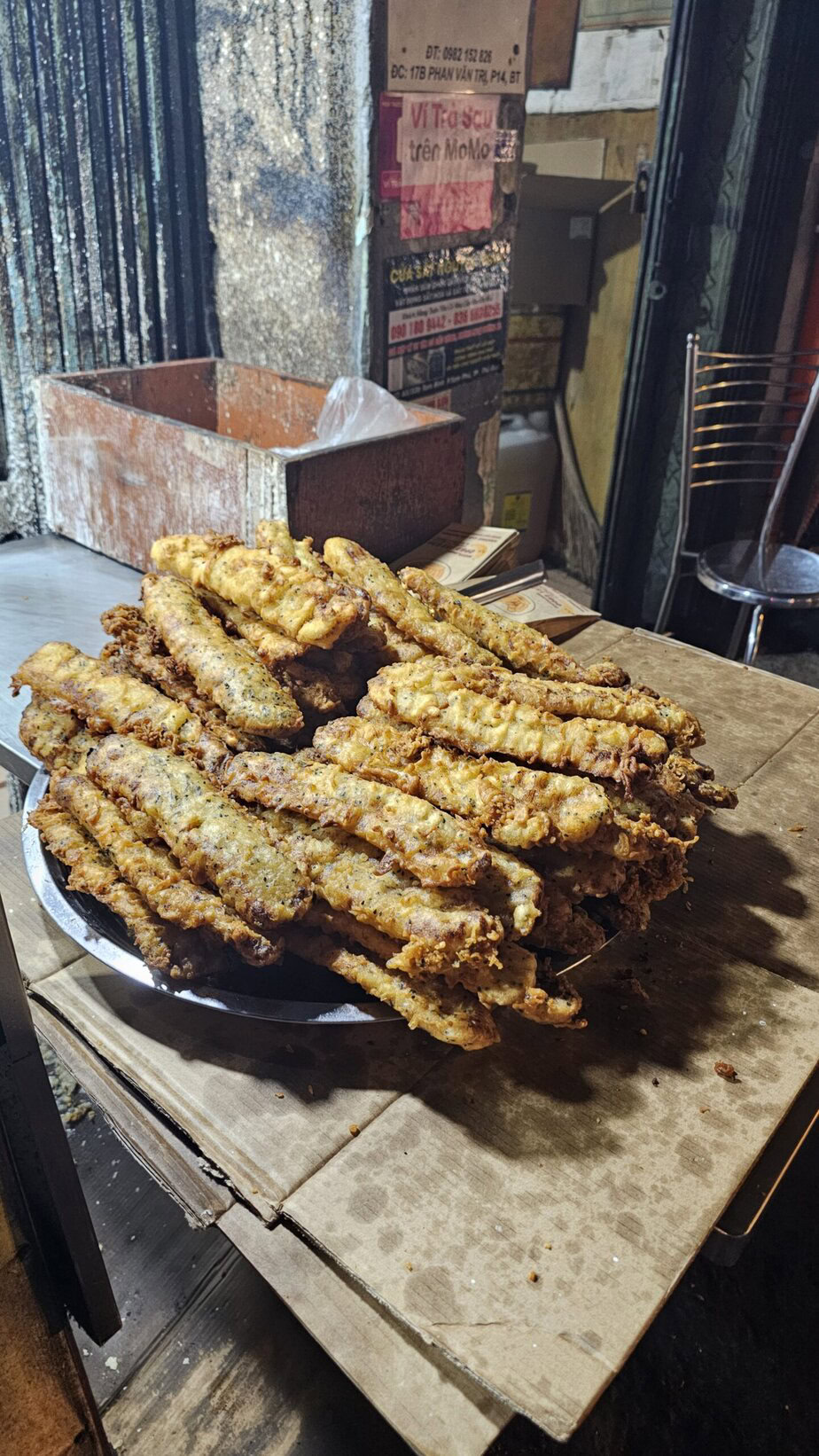
The archetypal scene: a small roadside cart, a squat burner, a blackened wok, trays of flattened bananas glistening with batter. A vendor flips the fritters constantly to brown them just right.
From the delta, this treat made its way up to Saigon, took its place in the city’s dense street food culture—from steaming bánh xèo to super-crunchy banana fritters—and became an anytime, year-round snack everywhere.
Further north, where the climate is cooler, fried bananas are most craved on winter afternoons, when the warmth of paper-wrapped fritters is as precious as their sweetness. In recent years, the southern style « chuối chiên Sài Gòn », long fritters nearly the length of a whole hand, with puff and crunch pushed to the extreme, draws queues in Hanoi every winter—just like a good sidewalk bún chả.
Let’s talk ingredients
Authenticity starts with the banana. Vendors choose small, ripe bananas, chuối sứ or chuối xiêm, varieties of the “fig-banana” type—starchy enough to hold their shape and sweet enough to caramelize without turning to jam. Their flavor is gentle without being cloying, so the fritter tastes like roasted banana, not like candy.
The batter relies on rice flour (bột gạo), which fries into a thin, crackly shell rather than a thick “bread” coating. Another flour or starch fine-tunes the texture: a touch of wheat flour adds structure and lightness, while tapioca starch gives that slightly elastic crunch Vietnamese cooks favor—though it does tend to soften as it cools. Sugar, or even sweetened condensed milk, lightly sweetens the batter and encourages browning, while a bit of coconut milk adds fat and aroma, infusing the crust with a gentle tropical note.
A pinch of salt sharpens the sweetness. Turmeric and custard powder (bột sư tử) mainly boost the golden color. Black sesame seeds, sprinkled between the first and second fry, toast on the surface and dot each cake with a nutty aroma. And all of this depends on clean, neutral oil held at the right temperature: hot enough to set the batter into crackly ripples, but not so hot as to burn the banana to the core… or leave it raw.
Regional styles and banana fritter variations
In the south, the archetype is « chuối chiên phồng », a flattened yet puffed fritter that stretches across your whole palm. These handheld cakes sport a spectacular armor of crunchy ridges thanks to a two-stage fry. Here, coconut milk in the batter is virtually mandatory, and many Saigon vendors add a spoonful of honey for floral sweetness and deep color. The result is generous and exuberant: good-sized, very crunchy, and intensely fragrant.
Further north, the everyday style has long been « chuối rán », a simpler fried banana. Small whole bananas or thick rounds are dipped in a very simple batter, then fried once to a light, crisp crust—a result closer to Japanese tempura than a puffed fritter. In Hanoi, they often share trays with sweet potato and corn fritters, all sold as comforting winter snacks from simple sidewalk stands, as consoling as a steaming bowl of bún bò Huế.
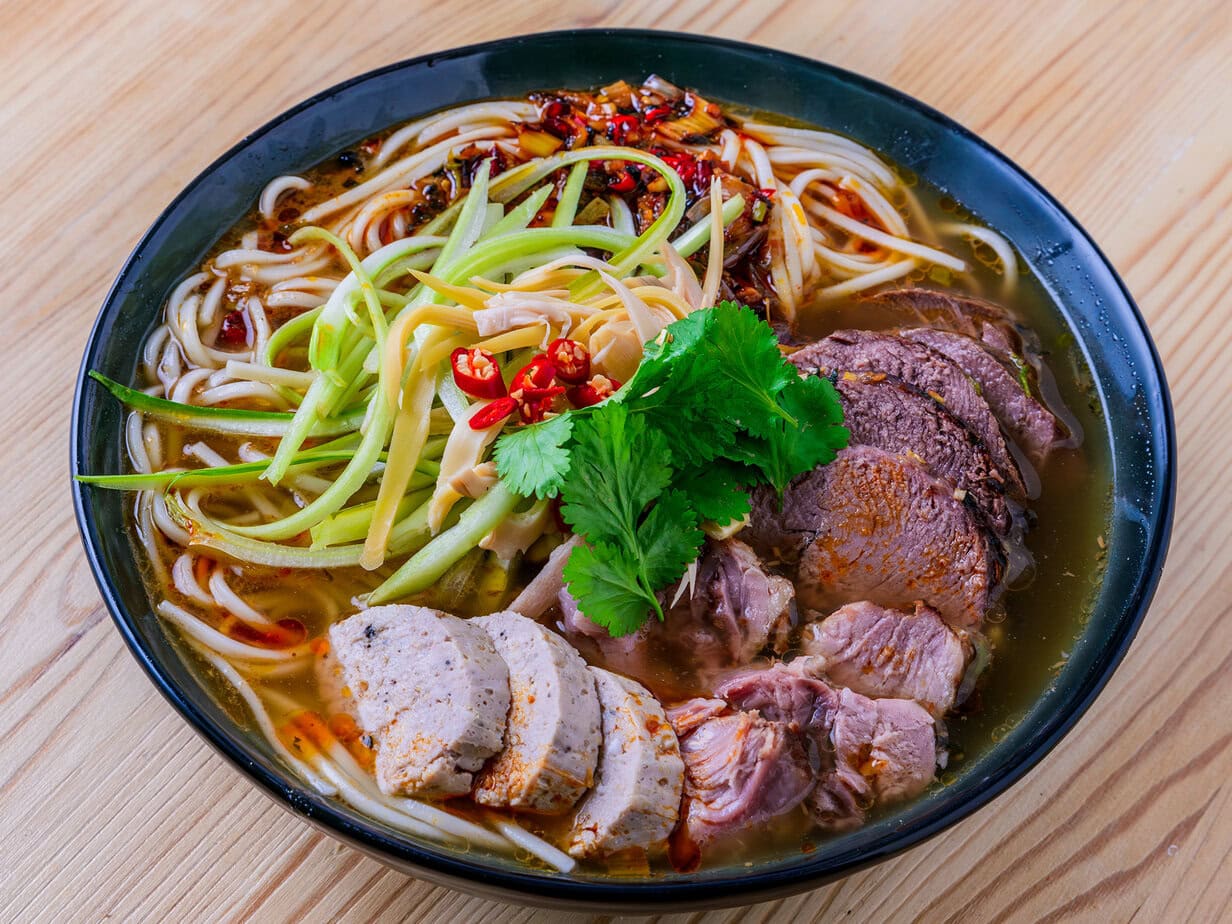
Within these traditions are fully authentic variants like bánh chuối khoai, where slices of sweet potato, and sometimes taro, nestle against the banana in the same fritter. Others press grated coconut directly onto the fruit or mix it into the batter to deepen the aroma. Modern reinterpretations abound: bananas wrapped in spring rolls, coated in panko, or flat-out buried under chocolate sauce and ice cream in some cafés.
The “healthier” versions cooked with hot air (in an air fryer, for example for a Vietnamese roasted chicken) trade some oil for convenience, but inevitably lose some of that shell that shatters cleanly. As tasty as they sometimes are, most Vietnamese food lovers file them under biến tấu, that is, creative variations—just not the street bánh chuối chiên that lives in collective memory.
How to enjoy a real bánh chuối chiên
All over Vietnam, fried banana is as much about the scene as the flavor: children clustering around a small cart after school, the scorching-hot fritters balanced on fingertips; office workers pausing for a few minutes on the sidewalk for a quick, cheap bite—much like stopping for a bowl of bò bún or Vietnamese phở; and families sharing a small bag on an evening stroll when the air cools.
On the street, the fritters almost always come plain, slipped into a paper sleeve still slightly translucent with grease, the vendor often calling out: « Cẩn thận nóng ! » (“Careful, it’s hot!”). At home, people sometimes add a light drizzle of sweet coconut sauce or a dusting of sugar, but embellishments stay discreet, as with bánh bò nướng served warm. The perfect time to bite into one is simply whenever you want a bit of instant comfort—during an afternoon slump or as a nostalgic weekend snack.
Equipment
Ingredients
Banana Fritters
- 6 bananas ripe, small (or 3 regular bananas, halved)
- 100 g all-purpose flour
- 200 g rice flour
- 250 ml coconut milk
- 0.5 teaspoon salt
- 1 teaspoon lemon juice
- 30 g sugar
- 170 ml water boiled and cooled
- neutral oil for frying (sunflower, etc.)
Instructions
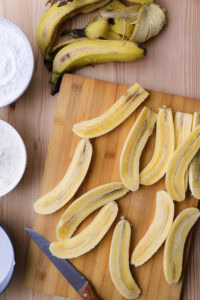
- Choose very ripe bananas; peel, then halve lengthwise.6 bananas
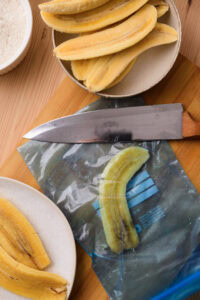
- Place each banana half in a clean plastic bag and gently flatten it with the flat side of a knife or a board.
- In a large bowl, whisk together the all-purpose flour, coconut milk, rice flour, water, salt, sugar, and lemon juice.100 g all-purpose flour, 250 ml coconut milk, 200 g rice flour, 170 ml water, 0.5 teaspoon salt, 30 g sugar, 1 teaspoon lemon juice

- Whisk until the sugar and salt dissolve and the batter is smooth and medium-thick for coating.
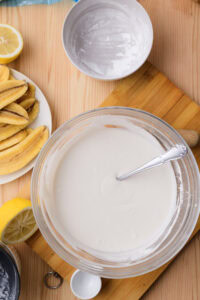
- Heat a deep pot with plenty of oil until hot.
- Dip each banana piece into the batter to coat evenly, then carefully lower into the hot oil.
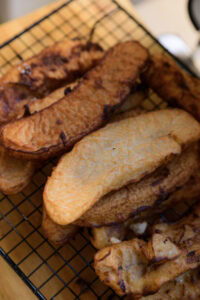
- Fry until the coating is pale golden, then remove and drain briefly.
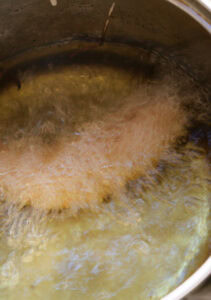
- Dip the fried banana back into the batter for a second coating, then return to the oil.
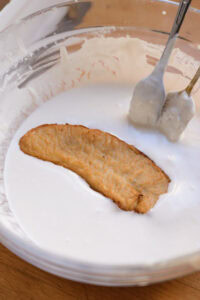
- Fry until deep golden brown and very crisp, then drain on paper towels.

- Arrange the fritters on a plate and serve hot.
Notes
- A double dip creates a thicker, crunchier crust.
- Inside, the banana stays soft and fragrant.
- Perfect for a family snack on weekends or rainy days.
Nutrition
Culinary sources
• Fried banana (Chuối chiên) – Wikipedia (Vietnamese) (vi.wikipedia.org)
• Banana fritters that awaken memories – Ủy ban Nhà nước về người Việt Nam ở nước ngoài (Vietnamese) (scov.gov.vn)
• Secrets for making fragrant, crispy, nicely puffed banana fritters like at the shop – Beemart (Vietnamese) (beemart.vn)
• Vietnamese comfort food: fried banana (bánh chuối chiên) – Vietnamese Soul Food (English) (kimpham5.blogspot.com)
• Vietnamese fried banana recipe (bánh chuối chiên) by Quyen Nguyen – Cookpad (English) (Cookpad)
• Fried banana (chuối chiên / bánh chuối chiên) – Helen’s Recipes (English) (helenrecipes.com)
• Saigon fried bananas “arrive” in Hanoi, each one as long as a hand – VnExpress (Vietnamese) (vnexpress.net)
• Fried banana fritters (bánh chuối chiên) – VietnameseFood (English) (vietnamesefood.com.vn)
• Banana cake (bánh chuối) – Wikipedia (English) (Wikipedia)


That double-coat crunch with the soft, coconut-scented banana center is ultimate comfort food, the kind that makes the whole kitchen feel cozy. Perfect rainy-day vibes with a cup of tea, warm and so comforting 🙂
Such a delicious recipe, and it feels surprisingly balanced for a fried treat thanks to the fruit-forward filling and the light rice-flour crust with just a touch of coconut milk. Draining well kept it from feeling heavy, so it tasted indulgent but still lighter than expected 🙂
That double-coating really nails the ultra-crispy shell with a custardy banana center, and the coconut milk aroma is spot on. Honestly, these tasted as good as or better than the banana fritters I’ve had from street stalls and restaurants.
Never thought my picky partner, who usually turns down anything with banana, would go back for seconds, but the double-coat crunch and that coconut scent totally won them over 🙂