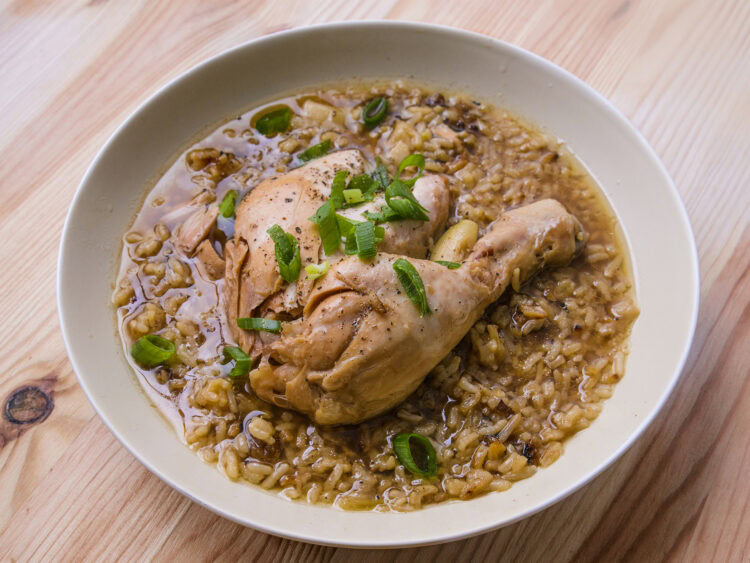
A soothing Korean broth in which a whole chicken simmers low and slow, then gets a final flourish of crispy nurungji added at the last minute.
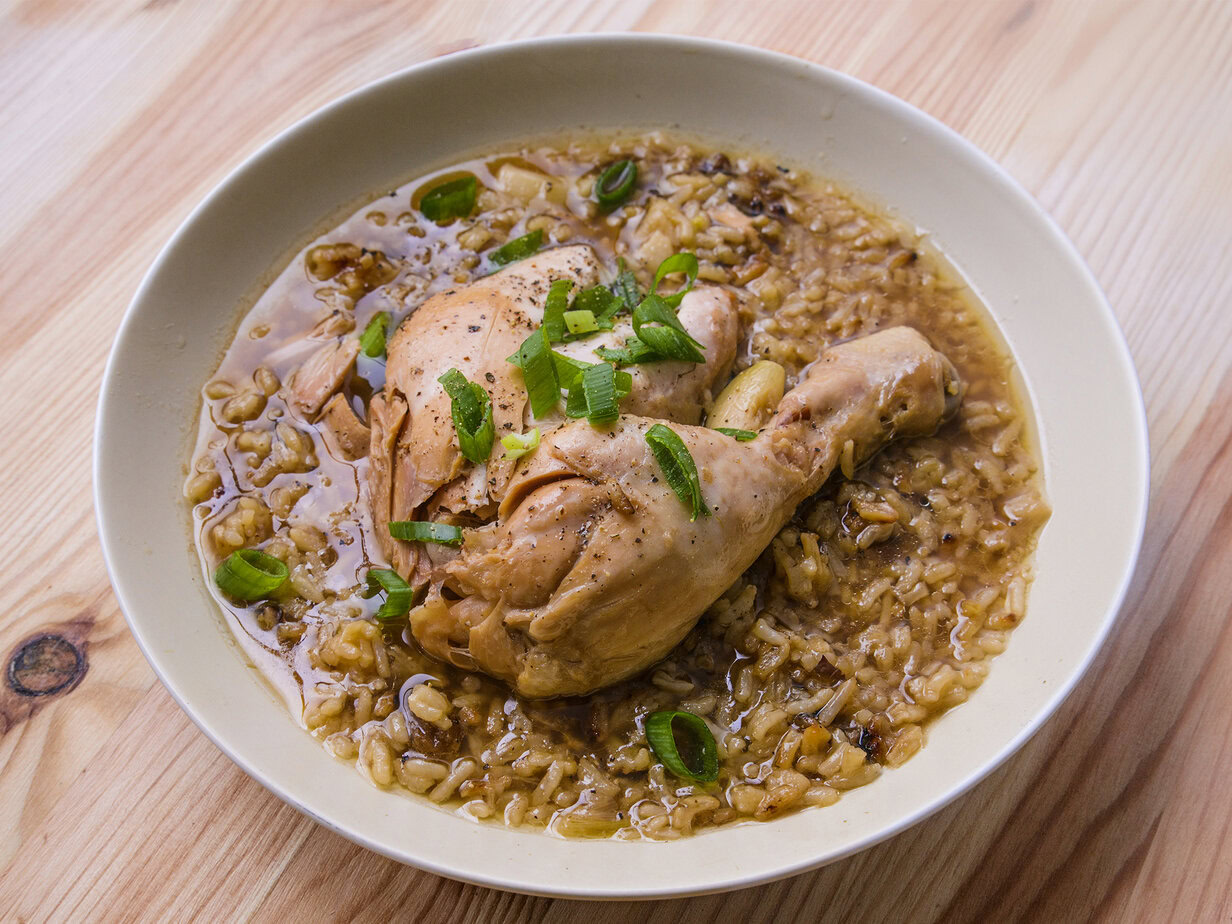
Nurungji baeksuk is the kind of soup that comforts from the very first spoonful. A whole chicken simmers until the broth turns silky and aromatic. Irregular pieces of nurungji, that golden, ultra‑crisp rice crust, are then added and gently stirred in.
These shards of rice reach the table with crisp, lacy edges, then gradually turn tender as they soak up the broth. It’s a complete one‑pot meal—both rustic and quietly luxurious. It’s perfect on a biting winter night or when someone needs a deeply restorative bowl.
About the dish
Name, meaning, and what’s in the bowl
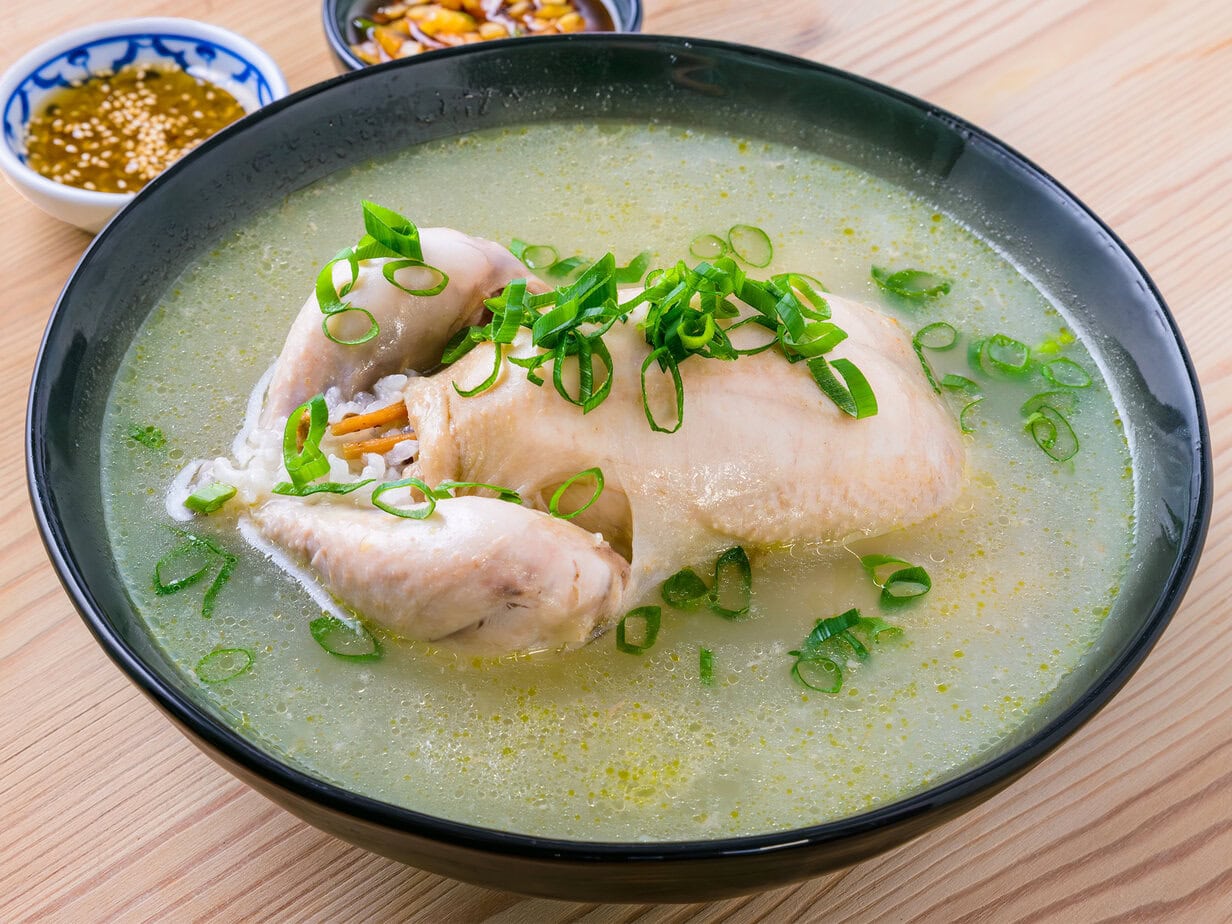
Nurungji baeksuk is a Korean soup built on a whole chicken, simplicity, and time, then finished with scorched rice for flavor and texture. While many chicken soups rely on bold seasoning or creamy richness, this one stays pale and just slightly cloudy. Its depth comes from a long, gentle simmer and a handful of aromatics.
Nurungji is the defining element: the toasted, scorched rice crust you usually scrape from the bottom of the pot to nibble as a crunchy little snack. Here, it takes the lead in the broth.
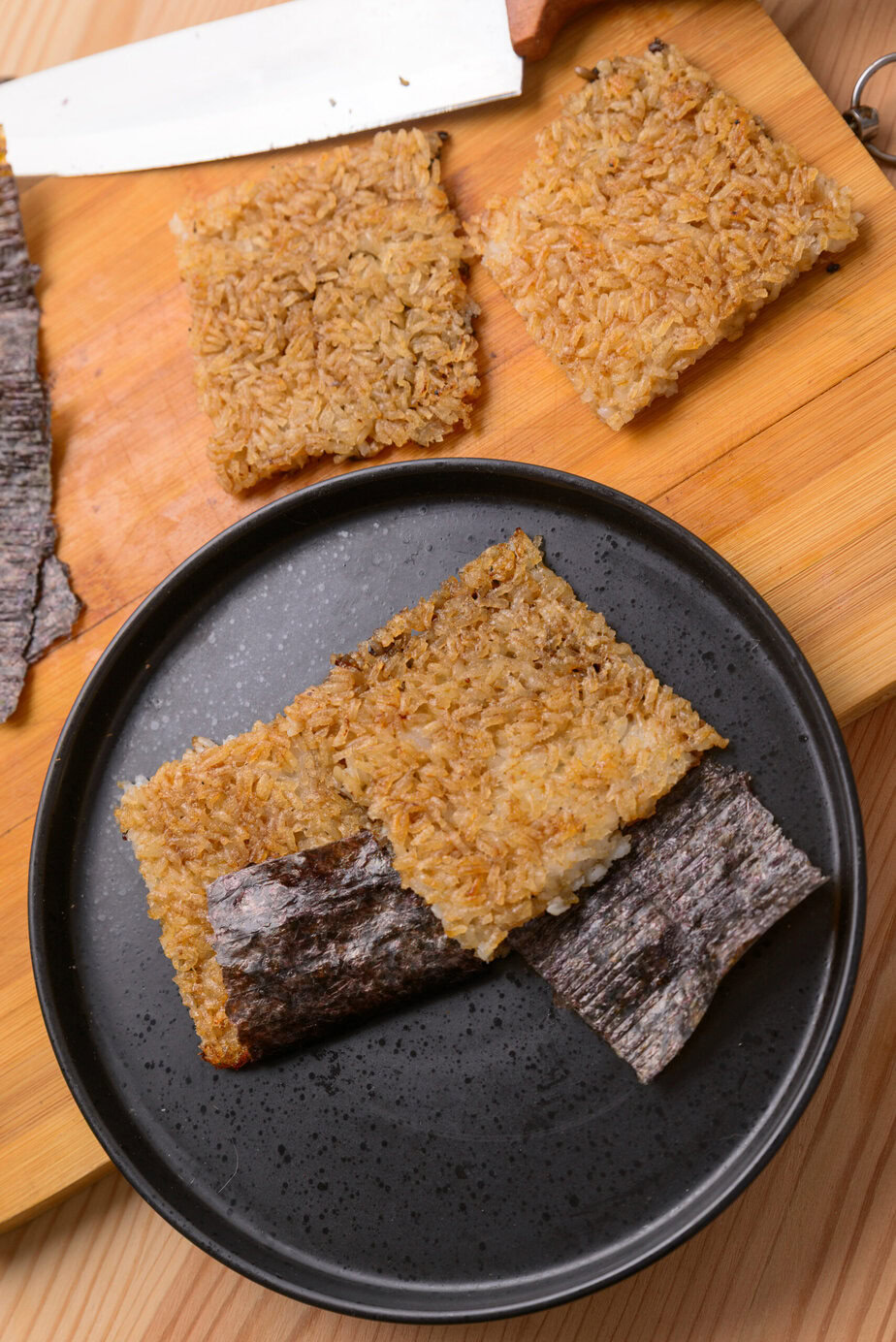
We’ve defined nurungji, but Baeksuk literally means “simply boiled” or “cooked white,” and refers to meat gently simmered in water without heavy sauces.
Together, “nurungji baeksuk” is essentially “boiled chicken with scorched rice.” It’s a whole chicken cooked with scallions, garlic, ginger, onion, and jujubes, with the optional addition of other Korean medicinal roots like licorice or astragalus, and finished with medium‑sized shards of nurungji.
At the table, the chicken may arrive whole or already shredded, floating in a broth lightly thickened by the rice and topped with a shower of finely sliced scallions and, sometimes, a dusting of nutty perilla seed powder. Unlike the clear, simple version of baeksuk, this one is marked by those pieces of scorched rice, which turn the soup into a heartier meal with far more texture.
Origins of nurungji baeksuk
Baeksuk was born from a modest approach. Rather than relying on strong marinades or assertive sauces, it leans on time and gentle heat to draw out the flavor of a chicken that simply simmers with aromatics and water. When nurungji and chicken baeksuk meet in the same pot, the result feels like the natural evolution of these two traditions.
Jujubes are a common addition, and some cooks also slip in, optionally, medicinal roots such as licorice or astragalus, tying the dish to the very Korean idea of food as gentle medicine—made to strengthen rather than to jolt.
With a generous handful of garlic—often around 15 whole cloves—and about a 2 cm piece of ginger, you get a soup widely regarded as a feel‑good meal. Some households make it without roots, others add them generously, but the reputation of nurungji baeksuk as a gentle, restorative pot is remarkably consistent.
Key ingredients
The ingredient list for nurungji baeksuk looks short, but each part plays an essential role. Together, these ingredients create a clear broth with multiple layers of flavor, and a rice crust that keeps its crunch just long enough before becoming pleasantly tender.
- Whole chicken (1–1.2 kg): provides a flavorful broth and tender meat; this manageable size cooks evenly and concentrates flavor.
- Nurungji (scorched rice), store‑bought or homemade: brings a toasted, lightly smoky aroma and a texture that’s crisp at first, then tender—defining the dish.
- Perilla seed powder (optional garnish): offers a nutty, slightly earthy note that echoes the grain‑centered heart of the dish.
Ingredients
- 1 whole chicken 1 to 1.2 kg
- 1 bowl nurungji store-bought or homemade, cut into medium pieces
- 3 stalks scallions cut into segments
- 15 cloves garlic whole
- 1 piece ginger 2 cm piece
- 1 onion
- 2 L water
- salt to taste
- ground black pepper to taste
Korean medicinal herbs
- 1 handful jujubes
- licorice root optional
- astragalus root optional
Garnish
- scallions thinly sliced
- perilla powder optional
Instructions
Broth & Chicken
- Rinse the chicken thoroughly under running water.1 whole chicken
- Pour the water into a large pot.2 L water
- Add the scallions, garlic, ginger, onion, and, optionally, the medicinal herbs.3 stalks scallions, 15 cloves garlic, 1 piece ginger, 1 onion, 1 handful jujubes, licorice root, astragalus root
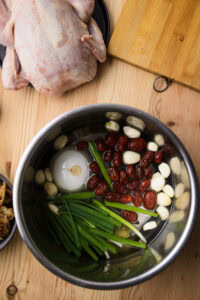
- Bring to a boil over high heat.
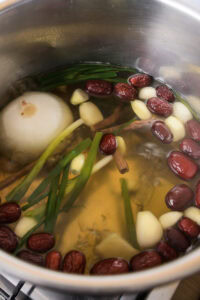
- Reduce heat to medium-low and simmer for 30 minutes to develop the broth.
- Submerge the prepared chicken in the broth.
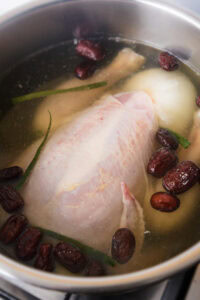
- Cover and simmer over medium heat until the chicken is fully cooked, about 40 to 120 minutes, depending on size.
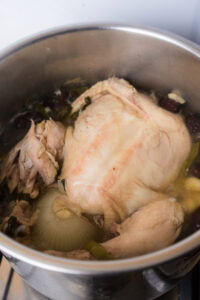
- Check for doneness by piercing the thickest part; the juices should run clear.
Nurungji & Finish
- Flatten cold rice in a lightly oiled pan to make homemade nurungji.1 bowl nurungji
- Toast the rice over medium-low heat until the layer is thin and crisp.
- Add the nurungji to the pot when the chicken is cooked.
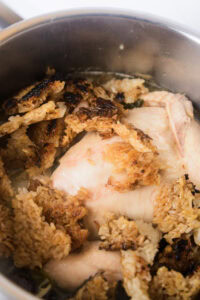
- Cook uncovered for 5 minutes so it absorbs the broth without falling apart.
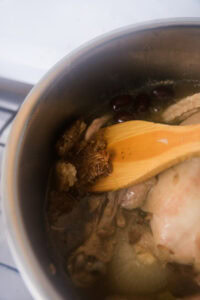
- Season with salt to taste.salt
- Add ground black pepper to taste.ground black pepper
- Shred the chicken for serving, if desired.
- Sprinkle with scallions or perilla powder, as desired.scallions, perilla powder
Notes
- Add the nurungji last to preserve its toasty character.
- Properly cooked chicken yields a rich, clean broth.
- Pressure cooker: Cook the chicken under pressure first, then add the nurungji and finish for 5 minutes without pressure.
- You can use duck, but it will be fattier.
Nutrition
Culinary sources
- Nurungji Baeksuk (Boiled Chicken with Rice) – Korean Bapsang (English)
- “Korean Cooking Stories”: Dakbaeksuk – 대한급식신문 (Korean)
- “A baeksuk that takes three days to prepare one bowl?” – Hotplace Hunter (Korean)
- Rejuvenate with a Nurungji Dakbaeksuk recipe – Tistory (Korean)
- Nurungji Baeksuk in the Instant Pot – Reddit (r/KoreanFood) (English)
- 14.178 Nurungji Baeksuk – Give Me This Day (English)
- Cheonggye Nurungji Baeksuk – 지역N문화 (Korean)
- “2TV Saengsaeng Jeongbo”: Crab dish, Cheongsong’s Nurungji Dakbaeksuk – 비즈트리뷴 (Korean)
- “Nurungji Baeksuk”: a summer flavor to savor by the stream! – YouTube (Korean)
- Nurungji Dakbaeksuk: the secret to 34 years of rustic flavor is “spring water” (Saengsaeng Jeongbo) – 네이트 뉴스 (Korean)
- When my friends come to visit, this is where I take them – Reddit (r/koreatravel) (English)
- Buckwheat Pancake for the Winter Olympics in Korea! – Kimchimari (English)
- Scorched rice – Wikipedia (English)
- u/tooki72 – Reddit (English)
- Menu – 장수촌 (Korean)