Why Choose Ubud for Your Stay in Bali
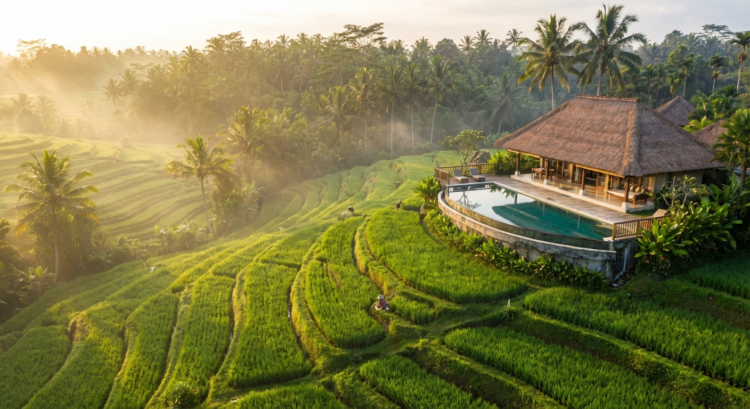
Ubud sits about an hour north of Ngurah Rai airport, inland, surrounded by jungle, terraced rice paddies, and Hindu temples. There are no beaches. No surf spots. The nearest ocean is Sanur, 45 minutes south by car. If your ideal Bali trip involves waking up to the sound of waves and spending your afternoons on sand, Ubud isn’t the right base. But if you want to wake up to mist rising over rice fields, attend temple ceremonies that happen for actual religious reasons rather than tourist entertainment, and eat some of the best food on the island for a fraction of Seminyak prices, then Ubud should be your first stop.
The town has been an artistic center since the 1930s, when European painters settled here and collaborated with local artists. That legacy is still very visible. You’ll find working studios, dance performances in temple courtyards, and galleries showing authentic Balinese art rather than mass-produced souvenirs. The Monkey Forest, Campuhan Ridge Walk, and trails through the rice fields around Kajeng and Sari Organik are the main attractions, but the real draw of Ubud is the pace. Here, everything slows down. Most restaurants close around 9 or 10 PM. The loudest sound at night is a tokay gecko calling from the roof.
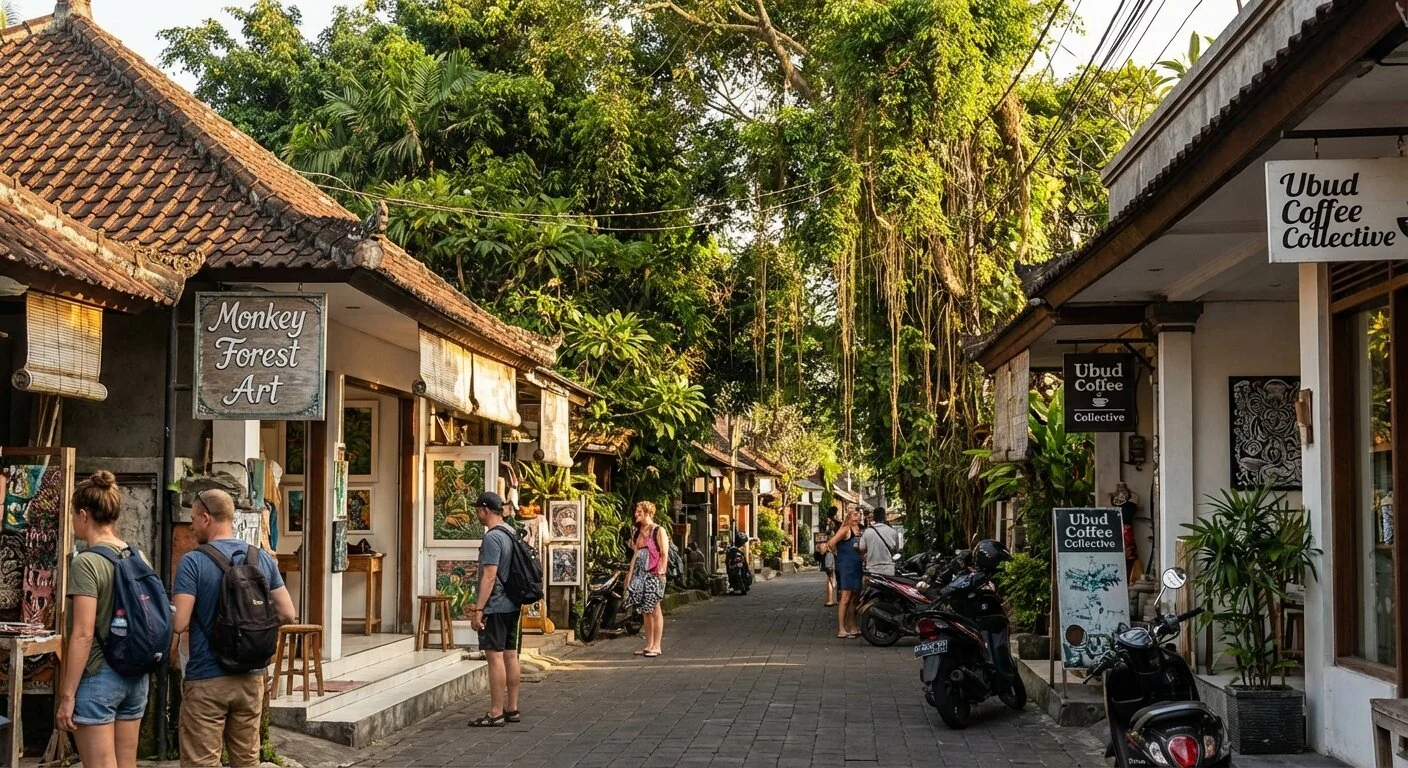
The downside: central Ubud has become crowded. The one-way loop around Jalan Raya Ubud, Hanoman, and Monkey Forest Road is completely gridlocked between 4 PM and 7 PM most days. Broken sidewalks, scooter fumes, and constant solicitations from drivers calling out “taxi, taxi” make walking the main streets less pleasant than you’d imagine. Travelers on Reddit regularly describe central Ubud as “a mini Disneyland.” But walk ten minutes outside the center, toward neighborhoods like Penestanan, Nyuh Kuning, or Sayan, and Ubud transforms into something much closer to the postcard version of Bali. This gap between center and periphery is the most important thing to understand when choosing where to stay, and this guide breaks it down neighborhood by neighborhood.
If you’re planning a wider Bali itinerary, our complete guide to visiting Bali covers the entire island, and our general guide on where to stay in Bali compares all the major areas, from Kuta to Uluwatu. Ubud also pairs very well with the local food scene. Warungs in the center and periphery serve dishes you won’t find in beach areas; check out our guide to eating in Bali, from warungs to restaurants for specific recommendations.
Ubud’s Neighborhoods: Which One to Choose?
Ubud isn’t one place. It’s a collection of villages and sub-areas spread along ridges, valleys, and rice fields, each with its own character, price range, and trade-offs. Choosing the wrong neighborhood can mean spending your vacation stuck in traffic or isolated in a jungle villa with nothing open after dark. Here’s what each area actually delivers on the ground.
Central Ubud (Monkey Forest Road, Jalan Hanoman, Ubud Palace)
This is the walkable core: restaurants, yoga studios, the Royal Palace, Ubud Market, and the Sacred Monkey Forest are all within a ten-minute walk of each other. The density of shops, cafes, and tour agencies is high. You can cover most main attractions on foot without ever renting a driver or scooter.
The problems are just as concentrated. Traffic on the one-way loop is bad during the day and terrible in late afternoon. Sidewalks are cracked, narrow, or nonexistent. Drivers park along the sidewalk calling out for rides. The noise level at rush hour is more reminiscent of a Southeast Asian city than a mountain retreat. You won’t find rice field views from a hotel on Monkey Forest Road. Several Reddit travelers use the phrase “DO NOT stay on Jalan Raya Ubud or Monkey Forest Road if you want peace.”
Central Ubud works for very short stays of one or two nights where walkability is the only criterion. If you’re passing through on a tight itinerary and need to hit the market, Monkey Forest, and a few restaurants without worrying about transport, the center does the job. For any longer stay, the neighborhoods below are better.
One exception worth knowing: Jalan Bisma runs parallel to Monkey Forest Road but is noticeably quieter. It has rice field views, good restaurants, and is five to ten minutes’ walk from the center. Travelers call it “the goldilocks zone” because you get some nature without sacrificing practicality. Bisma Eight (luxury, rooftop bar, around 180-250 EUR/night) and Komaneka at Bisma (high-end, quieter, 200+ EUR) are the premium options. Honeymoon Guesthouse on the same street runs around 30-50 EUR and gets solid reviews for the price.
Tegallalang and North Ubud (Terraced Rice Fields, Jungle Villas)
Tegallalang is the famous terraced rice field area, about 20 to 30 minutes north of the center by scooter. This is where the iconic photos of stepped rice paddies come from. Staying here means waking up to those views rather than fighting through crowds of tour buses at 10 AM. The morning light on the terraces, around 6 AM before the Instagram wave arrives at 9 AM, is the main reason to base yourself this far from the center.
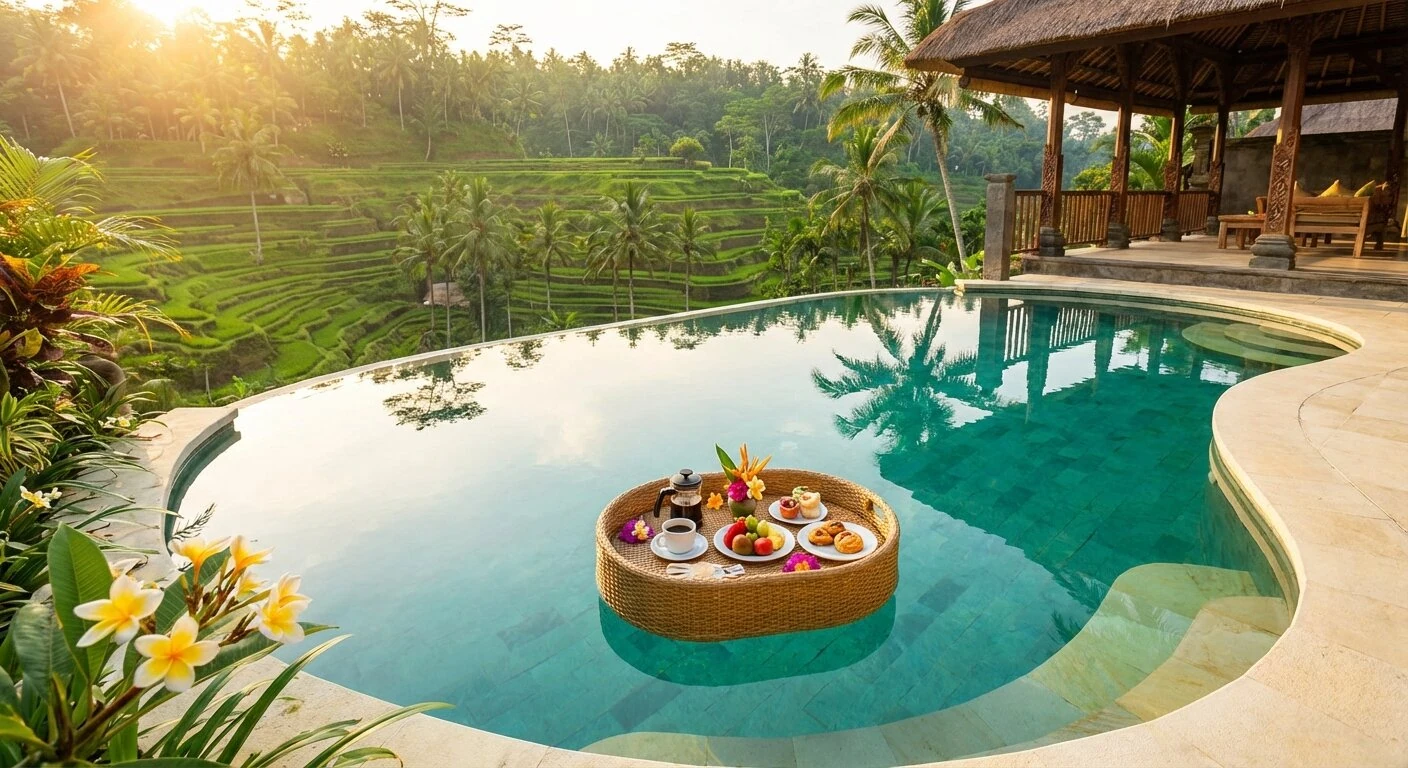
The trade-offs are real. Tegallalang is dead after sunset. No restaurants worth mentioning, no nightlife, dark winding roads with no lighting. If you don’t ride a scooter, you depend on your hotel shuttle or Grab/Gojek ride-hailing, which is unreliable this far north due to local taxi cooperatives resisting the apps. Aggressive stray dogs roam some roads at night. One Reddit user rated visiting Tegallalang as a day tourist 2 out of 5, but called staying overnight there “magical for morning views.” That sums it up well.
Kampung Resort is a popular choice here: a quieter, cheaper luxury alternative to Sayan resorts, around 80-150 EUR/night. Puri Sebali Resort has rice field views from the ridge. Alam Ubud Culture Villas pushes even further into jungle atmosphere at 40-70 EUR. All require transport to reach anything beyond their own restaurant.
If you want rice field views without the isolation, look at Jalan Kajeng and Juwuk Manis, two pedestrian trails accessible from central Ubud that cross rice fields. Dragonfly Village sits on one of these paths: hidden but actually five minutes from the main road. The Sari Organik walk near the center gives you a taste of rice field scenery without riding 30 minutes north.
Penestanan and Sayan (Artist Village, Ayung River Gorge)
Penestanan sits west of the center, across the Campuhan ridge. It’s an artist village that has become the go-to area for digital nomads, long-term travelers, and anyone who wants a quieter Ubud without total isolation. Some paths here are pedestrian-only, no cars, just narrow lanes winding between guesthouses, small cafes, and rice fields. The Penestanan Kaja sub-area is scooter-accessible only (too narrow for cars), which keeps it quiet in a way central Ubud hasn’t been for years.
The walk to the center takes 15 to 20 minutes, partly downhill through the Campuhan ridge area. The return uphill is more of a workout. A scooter makes Penestanan much easier, but it’s manageable on foot if hills and steps don’t bother you. Clear Cafe and Zest are the well-known healthy food spots in the area. Alam Indah (mid-range, 50-80 EUR, nice views) and In Da Lodge (social hostel, 8-15 EUR for a dorm bed) represent the two ends of the budget spectrum. Airbnb villas in Penestanan have the best value for groups of three or four. The Reddit consensus calls this neighborhood number one for “village vibes within walking distance of the center but quiet.”
Sayan is further west, along the Ayung river gorge. This is ultra-luxury territory. The views here look out over the deep valley and dense jungle canopy, not rice fields. Four Seasons Sayan (500+ EUR/night) is the benchmark. The Mandapa, a Ritz-Carlton Reserve, is right next door. Amandari and Capella Ubud (the latter markets itself as glamping, but at prices that make the word absurd) complete the picture. If money isn’t a constraint and you want total privacy with spectacular natural setting, Sayan is the answer. Everyone else needs to know that Sayan isn’t walkable from the center, isn’t near restaurants, and isn’t a base for exploring. It’s a destination in itself.
Viceroy Bali sits slightly north of Sayan with equally spectacular views and a helipad, which says something about the clientele. Count on 300-500 EUR/night depending on season.
Campuhan and West Ubud (Ridge Walk, Boutique Hotels)
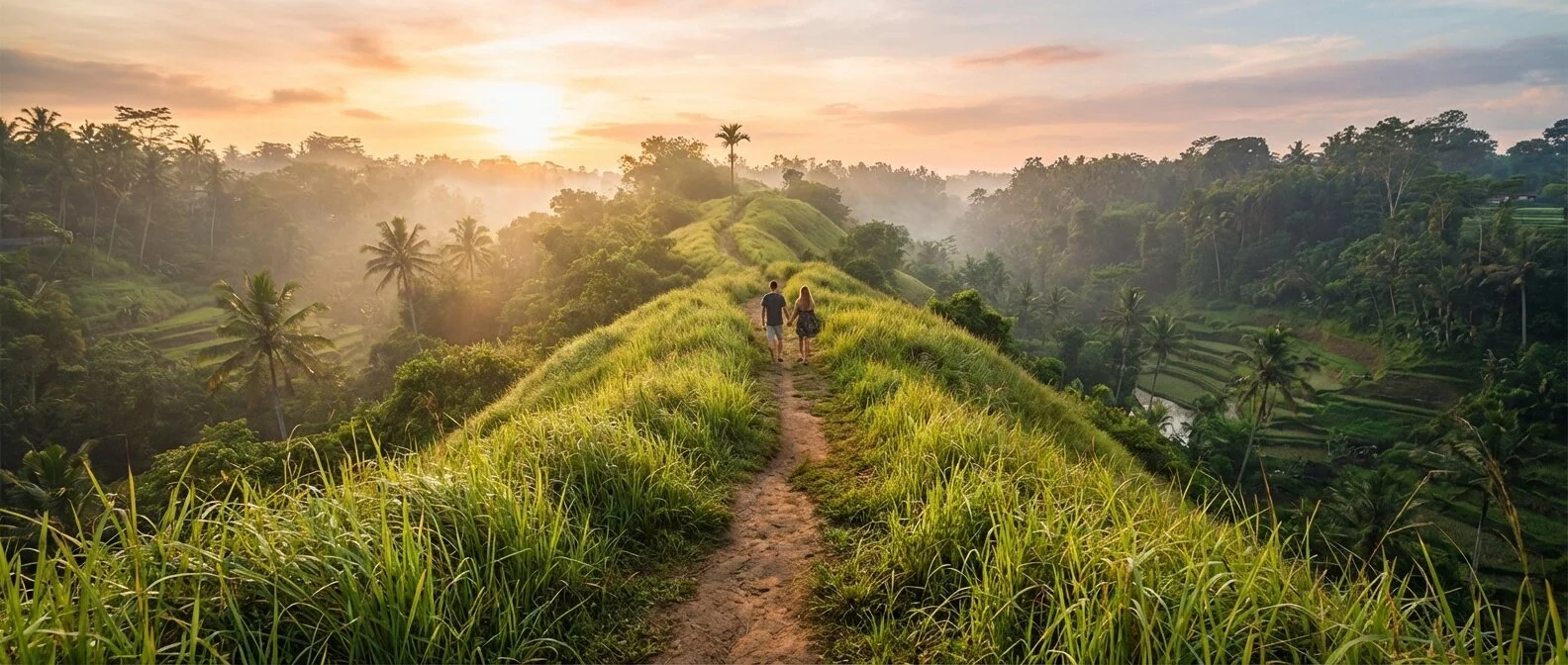
Campuhan is the transition zone between the center and Penestanan, defined by the famous Campuhan Ridge Walk. The walk itself is a narrow path along a grassy ridge between two valleys, best done at sunrise (6:30 AM, before it gets hot and crowded) rather than mid-morning when tour groups arrive. The area has a few boutique hotels and guesthouses that benefit from proximity to the ridge walk and center without being on noisy roads.
Campuhan works as a compromise. You’re close enough to walk to the center in ten minutes, and the quieter streets of Penestanan are just across the ridge. It’s less isolated than Sayan or Tegallalang, but noticeably quieter than Monkey Forest Road. If your priority is doing the ridge walk every morning and having easy access to town, it’s a smart base.
Nyuh Kuning, Pengosekan and South Ubud (Quiet Village, Yoga Hub)
Nyuh Kuning is a clean, quiet village directly south of the Monkey Forest. You can walk through the forest itself to reach the center, which makes it feel closer than the map suggests. The streets are pedestrian-friendly, the village atmosphere is real, and it’s one of the few Ubud neighborhoods where you really don’t need a scooter. The trade-off is fewer restaurant choices and no nightlife, but if your evenings end at dinner with a book, that’s not really a trade-off.
Pengosekan, a bit further south, has established itself as Ubud’s yoga hub. The Yoga Barn and Radiantly Alive, the two most-cited yoga studios in Ubud, are both in or near this area. Adiwana Jembawan is a hotel that feels like a jungle retreat while remaining within walking distance of studios and restaurants. Ubud Aura Retreat is right next to the Yoga Barn if proximity to your morning class is the deciding factor.
Mas, even further south, is a traditional woodcarving village on the road between Ubud and southern Bali. It’s cheaper and less touristy than anything closer to the center. The downside is that it feels more like a transit stop than a neighborhood to explore. Unless you’re specifically interested in artisan culture or need a budget base between Ubud and beach areas, the other southern neighborhoods work better for most travelers.
Best Hotels and Accommodations by Budget
Ubud has some of the best value on the island. Private pool villas that would cost 200+ EUR in Seminyak or Uluwatu start at 60-90 EUR here, especially on the periphery. The catch is that cheaper accommodation tends to be further from the center, which means factoring in transport costs or scooter rental (about 5-7 EUR/day).
Budget: 15-50 EUR/Night
Tegal Sari Accommodation is the most recommended budget accommodation on Reddit, period. Travelers describe it as “five-star service at two-star prices.” A huge property overlooking rice fields, an entrance directly into the town center, and it books up months in advance. Reserve early or you’ll miss it. Count on 25-40 EUR/night depending on room type and season.
Traditional homestays, bungalows in family compounds with breakfast included, cost 15-25 EUR/night and are generally cleaner and more welcoming than budget hotels in the same price range. Merthayasa Bungalows and Indraprastha Home Stay (on Jalan Hanoman) are often cited. For solo travelers, In Da Lodge and Puri Garden Hotel and Hostel both have pools, social atmosphere, and dorm beds from 7-12 EUR. Puri Garden adds free yoga classes.
A firm piece of advice that comes up in many Reddit discussions: don’t book a room without air conditioning. Ubud is at slightly higher elevation than the coast, but humidity remains high, especially during rainy season (October to March). Ceiling fans alone aren’t enough for most people.
Mid-Range: 50-150 EUR/Night
This is the sweet spot in Ubud. For 50-100 EUR, you get boutique hotels with pool, breakfast, and often rice field or jungle views. Alaya Resort on Jalan Hanoman has rice fields directly on the property while being on the main restaurant street. Calma Ubud is consistently described as a “hidden gem” with elegant design and quiet setting. Beehouse Dijiwa uses bamboo architecture in the middle of rice fields. Nefatari Villas works well for travelers who want the security of a compound and some privacy.
Alam Indah in Penestanan (50-80 EUR) is praised for its views. Gita Maha, also in the area, is quieter and more affordable. In the upper mid-range, Komaneka properties (around 120-150 EUR) and Adiwana Jembawan combine central locations with a real sense of escape.
Luxury: 150-500 EUR/Night
Bisma Eight on Jalan Bisma is the popular modern luxury choice: industrial-chic design, a good rooftop bar, and a location that balances quiet and accessibility. Around 180-250 EUR/night. Kayon Jungle Resort has a three-level infinity pool that made it Instagram-famous. Some reviews warn that means the pool area is overrun with people taking photos, but the views are real. Padma Resort, further north, has a heated pool and more resort atmosphere, around 200-300 EUR.
Kampung Resort near Tegallalang gives you luxury rice field views without paying Sayan prices: 80-150 EUR depending on room, making it the best value in the luxury-with-views category.
Ultra-Luxury: 500+ EUR/Night
Four Seasons Sayan, Mandapa (Ritz-Carlton Reserve), Amandari, and Capella Ubud occupy their own category. These are properties where private infinity pool, personal butler, and Ayung river gorge views combine to create an experience that justifies the price for a honeymoon or special occasion. Four Seasons starts around 600-800 EUR/night in high season. Mandapa is above that. These properties also have shuttles to town, which matters because none of them are walkable.
Ubud for Couples, Yogis and Families
Honeymoon and Couples
Ubud is one of the most popular honeymoon destinations in Southeast Asia, and for good reason. The combination of private pool villas, jungle setting, and relative isolation creates exactly the kind of atmosphere couples look for. The question is what tier to aim for.
For a once-in-a-lifetime splurge, Sayan is the obvious answer. Four Seasons, Mandapa, or Viceroy Bali are an experience difficult to replicate elsewhere at this price point. For couples who want romance without the five-star rate, look at private villas in Penestanan or the Tegallalang area. A one-bedroom villa with private pool, breakfast service, and rice field views runs around 70-120 EUR/night if you book via Airbnb or contact the host directly (often 15-20% cheaper than platform prices). The “mullet strategy” that Reddit travelers recommend works well for couples: spend two nights in a central walkable location to do Monkey Forest, market, and restaurants, then move to a jungle villa for two nights doing nothing but floating in your pool.
Yoga and Wellness
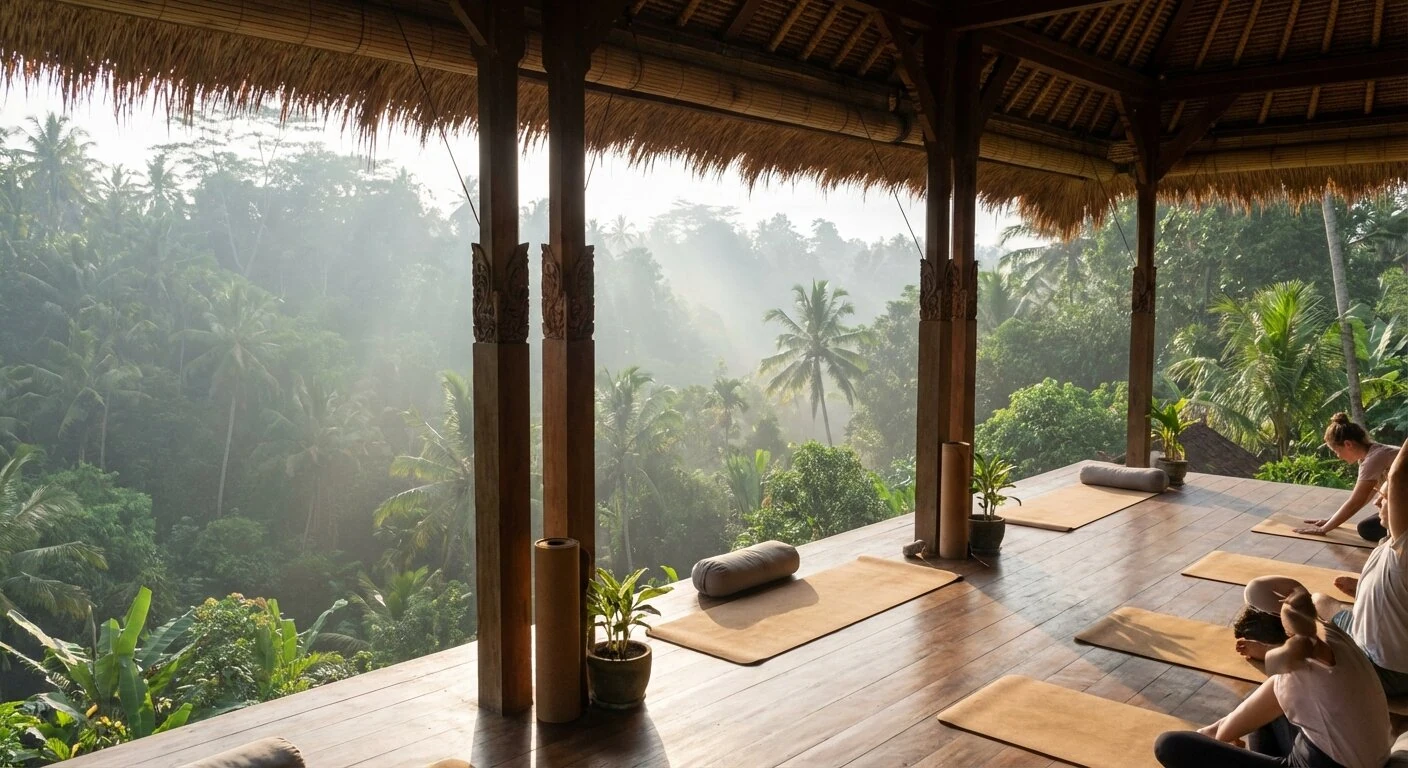
Pengosekan is the logical base if yoga guides your trip. The Yoga Barn has daily classes in multiple styles and is the most-cited yoga space in all of Bali. Radiantly Alive, also in the area, gets equally enthusiastic recommendations for teaching quality. Staying in Pengosekan or along Jalan Jembawan puts you within walking distance of both.
Penestanan attracts a more diffuse wellness community: cafes lean healthy (Clear Cafe, Zest), the atmosphere is calmer, and you’ll find more intimate yoga studios and meditation sessions alongside the coworking community. If your version of wellness is morning yoga then afternoon work from a cafe, Penestanan is the better choice. If you want structured daily practice in a dedicated center, Pengosekan is closer to the action.
Digital Nomads
Penestanan is the digital nomad neighborhood. The density of cafes with reliable WiFi, coworking spaces (Outpost and Roam are the main ones), and mid-range monthly rentals makes it the infrastructure hub for remote workers. The community is real: you’ll meet other nomads without even trying. Monthly villa rentals with kitchen run around 400-800 EUR, significantly cheaper than Canggu. A recurring piece of Reddit advice: always ask for a WiFi speed test screenshot before booking a long-term Airbnb in Ubud. Speeds vary enormously from property to property, even on the same street.
A practical note: stay within 5 km of the center if you don’t ride a scooter. Nomads based further out report frustration with commutes eating into their workday.
Families
Ubud isn’t the easiest Bali area for families with young children. The steep terrain, lack of sidewalks, open drains along many roads, and absence of flat areas to stroll create logistical problems that beach areas like Sanur avoid. Families with children under five generally do better in Sanur, where the flat beachfront promenade and calm shallow water simplify daily life.
That said, families with older kids (say seven and up) who are interested in culture, animals, and nature can have a great time in Ubud. The Monkey Forest is genuinely captivating for children. Rice field walks, painting classes, and cooking lessons compose a full itinerary. Base yourself in Nyuh Kuning for quiet streets and walkability, or in a resort with pool and shuttle so you don’t have to navigate traffic with kids on a scooter.
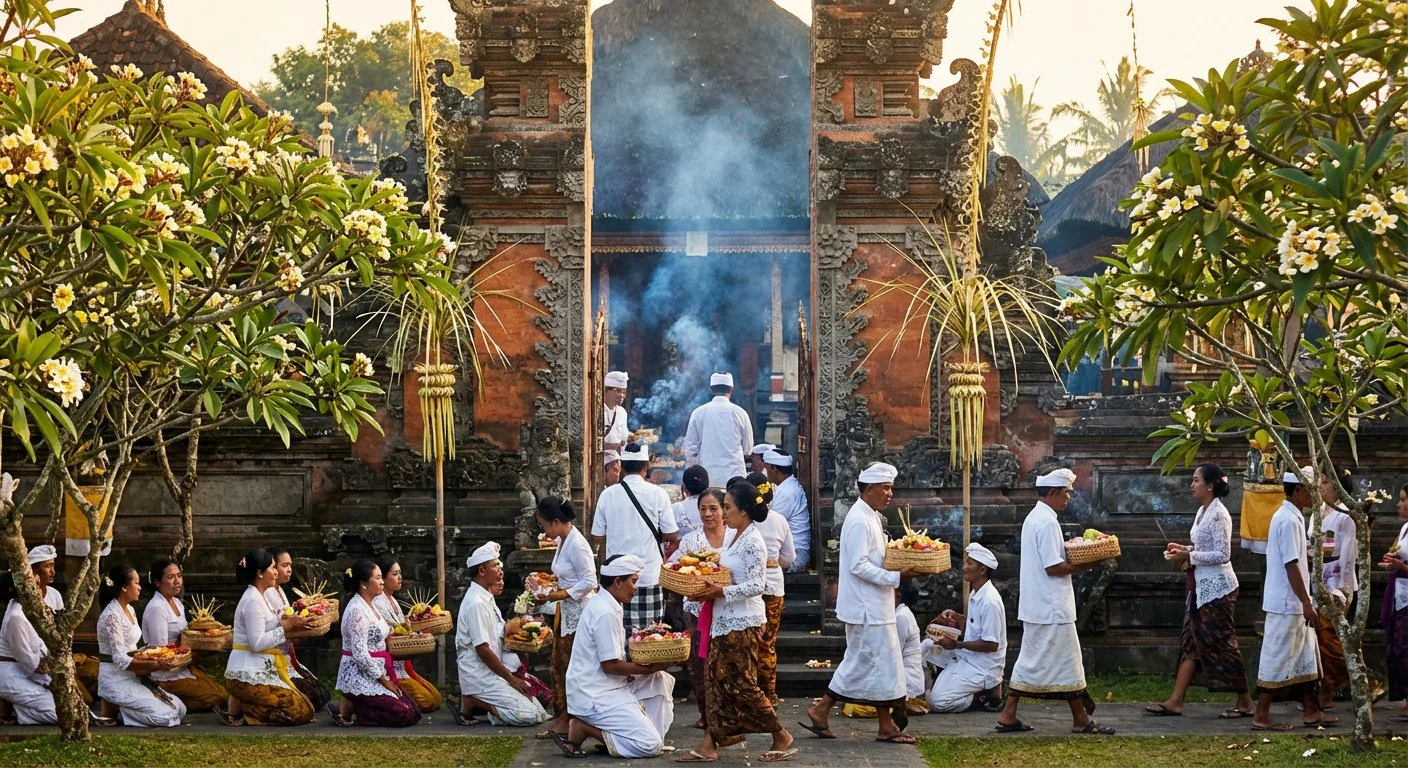
Temples, Rice Fields and Culture Around Ubud
One of the main reasons to base yourself in Ubud rather than the coast is proximity to Bali’s cultural and natural sites. For a complete overview of activities across the island, check out our guide to activities and excursions in Bali. Here’s what’s accessible from each Ubud neighborhood.
The Sacred Monkey Forest Sanctuary sits at the southern end of the center, a ten-minute walk from the palace. It’s a real conservation area with three Hindu temples, massive banyan trees, and hundreds of long-tailed macaques. Reddit travelers who expected a tourist trap often come out surprised by how well-maintained and atmospheric it is. Plan about 90 minutes and keep your water bottle zipped inside your bag (monkeys will grab anything hanging out).
Tegallalang terraced rice field is Ubud’s most photographed site and also its most controversial. The main entrance is a commercial operation: entry fees, additional charges to walk certain sections, vendors at every turn, and “Instagram swings” that charge 15-25 EUR for a photo. If you’re staying near Tegallalang, the trick is to go at sunrise (around 6 AM) before the day-trippers arrive from the south. From outside, the terraces are genuinely beautiful. But if you’re based in the center and visiting as a tourist, the Kajeng rice fields and Sari Organik walk give a similar experience without the commercial machinery.
Tirta Empul, the holy water temple about 15 minutes northeast of the center, is an active religious site where Balinese Hindus come for purification rituals. Visitors can participate. The experience is real and moving if you approach it with respect. Go early morning to avoid midday tour bus crowds.
Campuhan Ridge Walk at sunrise (aim for 6:30 AM, no later) is a 2 km trail along a grassy ridge between two valleys. By mid-morning, the heat and crowds arrive and the magic dissipates. At dawn, you’ll share it with a handful of joggers and the occasional farmer. It works from any neighborhood west of the center, including Campuhan, Penestanan, or Sayan.
Gedong Rai Museum of Art (ARMA) and Neka Art Museum are the two serious art institutions. ARMA has a permanent collection of traditional and contemporary Balinese art in pavilions amid gardens. Neither gets the foot traffic of the Monkey Forest, which is part of the charm. If temple architecture interests you beyond Bali, comparing it with Bangkok’s temples or Hanoi’s cultural heritage gives interesting perspective on how different Southeast Asian cultures express religious devotion through architecture.
Mount Batur sunrise hike is one of Bali’s signature experiences, and Ubud is the best base for doing it. Pickup is typically at 2:30 AM from Ubud (versus 1 AM from beach areas) because you’re already closer to the mountain. The climb takes about two hours and you watch sunrise above the crater lake. It’s physically demanding but technically accessible. Book through your hotel or local agency rather than cheap online aggregators, as the latter sometimes overbook and you end up on a crowded trail with a guide managing 30 people.
Getting Around from Ubud
This is where it gets complicated. The town was built on narrow lanes between rice fields and river valleys, not on a grid designed for cars. The result is a permanent traffic problem that no one-way system has managed to solve.
Within Ubud
Scooter is the most efficient way to get around Ubud. Cars sit stuck in traffic 30 minutes to go 2 km. Scooters weave through. Rental costs about 5-7 EUR/day (60-80 EUR/month negotiating). But you need to be honest about your riding ability. Ubud roads are narrow, often unmarked, and traffic involves scooters, pedestrians, religious processions, dogs, and the occasional truck all sharing the same lane. At night, roads outside the center have no lighting. If you’ve never ridden a scooter, Ubud traffic isn’t the place to learn.
Gojek and Grab (motorcycle taxis) work for drop-offs anywhere, but pickups can be tricky. In the center and nearby neighborhoods like Penestanan or Pengosekan, it works fine. In Tegallalang, Sayan, or anywhere north of the center, local taxi cooperatives resist ride-hailing apps, and drivers may cancel or ask you to walk to a pickup point on a main road. Some resorts and hotels have shuttles to the center, which is a benefit to check when booking.
Walking is possible in the center but not enjoyable. Ubud isn’t a strolling town. Broken sidewalks, narrow shoulders, heat, humidity, and lack of shade make walks longer than 15-20 minutes exhausting. Think of it as a “destination town” where you move to specific points rather than wandering between them.
From Ubud to Beaches
Sanur is the closest beach to Ubud, about 45 minutes to an hour south depending on traffic. It has calm water and a beachfront promenade, making it the easiest day trip. Canggu is further west, about 1.5 to 2 hours in traffic. Don’t underestimate this drive. Google Maps might say 50 minutes, but in practice, the route via Denpasar is completely gridlocked most of the day.
For Bali’s beaches, especially the white sand coves at Uluwatu and Padang Padang on the Bukit peninsula, count on 1.5 to 2 hours each way from Ubud. This is why most experienced travelers suggest splitting your Bali stay between Ubud and a coastal base rather than doing day trips from here.
If you’re heading to Kuta and its surf beaches, the drive from Ubud takes about 1 to 1.5 hours depending on traffic. Kuta is right by the airport, so some travelers do Ubud first, then transfer to Kuta or the south coast for their last night or two before flying out.
Airport Transfer
Ngurah Rai airport is 1 to 1.5 hours from Ubud in normal conditions, and up to 2 hours during afternoon traffic. Book a private driver in advance through your hotel (typically 20-30 EUR one-way) rather than dealing with the taxi mafia on arrival. Otherwise, Grab from the airport works but you must walk to the designated pickup zone outside the terminal. For very early morning flights, leave Ubud at 4 AM to be safe. The drive at that hour takes about 50 minutes with empty roads.
Our Practical Tips for Ubud
When to Go
Dry season (April to October) is better for Ubud than for the coast, as humidity and mosquitoes decrease noticeably. July and August are peak tourist season with higher prices and more crowded sites. The sweet spots are April-June and September-October: dry enough to explore comfortably, fewer crowds, and lower accommodation prices.
Rainy season (November to March) brings daily late afternoon showers that can last one to two hours. Rice fields are at their most vivid green during this period, but rain means outdoor activities are regularly interrupted. Dirt paths around rice fields become muddy and slippery. Mosquitoes are at their worst during wet season, so bring DEET repellent and consider long sleeves at dusk.
Mosquitoes and Insects
Ubud has more mosquitoes than the coast. The combination of standing water in rice fields, jungle vegetation, and higher rainfall creates ideal conditions. Any accommodation with rice field views or an outdoor bathroom (which photographs great) comes with guaranteed visitors: mosquitoes, geckos, occasional frogs, and various crawling insects. Hotels have better pest control than private villas. If bugs really bother you, choose a closed hotel room rather than an open-walled villa. Geckos are harmless and eat mosquitoes, making them useful roommates, but the tokay gecko’s nighttime call is surprisingly loud if you’re not expecting it.
Booking Strategy
Agoda tends to have the best hotel prices in Southeast Asia, often cheaper than Booking.com for the same property. For villas, a well-known strategy: find the property on Airbnb or Booking.com, then search for it on Google Maps to find the owner’s WhatsApp number. Booking direct saves 15-20% versus platform prices. For stays of a month or longer, never book online before arriving. Prices are inflated for remote bookings. The best approach is to book a hotel for three to five days, rent a scooter, and look for “Terima Kos” (room for rent) signs in person. Online prices of 1,800-2,800 EUR/month for villas regularly drop to 900-1,500 EUR when negotiating face-to-face.
For a deeper look at budget, transport logistics, and scams to avoid, our practical tips guide for Bali covers the details.
Hotels vs. Private Villas
Choose a hotel if bugs bother you, if you want a shuttle to town, if you’re traveling alone and appreciate the security of a compound, or if you need sound insulation from nature (roosters at 4 AM, frogs during rainy season, geckos at night). Choose a villa if you’re in a group of four or more (a large villa with private pool costs less than two hotel rooms), if you want total privacy, and if you’re comfortable getting around by scooter. The best value for villas is in Penestanan and on the periphery toward Tegallalang. A useful Reddit reminder: “outdoor bathrooms photograph well but mean showering with mosquitoes.”
How Many Nights
Three to four nights is the ideal length according to unanimous Reddit feedback. Two nights feels rushed because you lose time in transport. With three nights, you can do Monkey Forest, Campuhan Ridge Walk at sunrise, a day trip to waterfalls or Mount Batur, and still have time for a lazy afternoon at your villa. Five nights or more works if you’re using Ubud as a base for excursions (waterfalls, north Bali, Tirta Empul, east coast). Don’t visit Ubud as a day trip from southern Bali. The four-hour round-trip drive leaves you barely enough time to see one site before heading back into traffic.
Ubud vs. Other Bali Neighborhoods
Each Bali neighborhood attracts a different type of traveler. Here’s how Ubud compares to the alternatives.
Ubud vs. Canggu
Canggu is Ubud’s opposite: beachfront, extroverted, Instagram-saturated, and oriented toward digital nomads who want a social scene alongside their work. Cafes are slicker, nightlife louder, and the clientele younger. Ubud is calmer, more introspective, and cheaper. Both have terrible traffic, just different kinds. If you have less than five days in Bali, don’t try to do both. The drive between them takes 1.5 to 2 hours in traffic, and splitting a short stay between the two means spending too much time in cars.
Ubud vs. Seminyak
Seminyak is Bali’s upscale side: boutique shopping, high-end restaurants, beach clubs, and actual sidewalks. It’s the most walkable beach area on the island. Ubud is its cultural counterpart with better prices and worse infrastructure. Choose Seminyak if restaurants and nightlife matter most; choose Ubud if temples, rice fields, and a slower pace matter more.
Ubud vs. Kuta
Kuta is near the airport, cheap, and loud. It works as a one-night transit stop or a budget base with nightlife. Ubud is everything Kuta isn’t: inland, quiet (outside the center), and culture-oriented rather than bar-focused. If you’re choosing between the two as a base, it depends entirely on whether you want beach access or nature immersion. For a detailed look at what Kuta actually offers, check out our guide to staying in Kuta.
Ubud vs. Uluwatu
Uluwatu has mainland Bali’s most beautiful beaches (white sand, clear water, dramatic cliffs) and a booming food scene. It requires a scooter even more than Ubud. The vibe is laid-back and surf-oriented. Ubud and Uluwatu make an excellent two-base itinerary: do culture and temples in Ubud first, then transfer to Uluwatu for beaches, and fly out from nearby Ngurah Rai on the last day.
Ubud vs. Sanur
Sanur is flat, calm, and family-friendly with a beachfront promenade and calm shallow water. It’s the best area for families with young children and for older travelers who want walkability without chaos. Ubud is hillier, less stroller-friendly, and more adventurous. If you need easy daily beach access and a relaxed pace, Sanur wins. If you want rice fields, temples, and the feeling of being somewhere culturally distinct, Ubud wins.
The comparison logic also applies to accommodation choices in other Southeast Asian destinations. If you’re deciding between Bangkok neighborhoods, our Bangkok neighborhoods guide follows the same logic of matching your travel style to a specific area. The same approach works when looking at Phuket neighborhoods, where the Patong-vs-quieter-areas debate echoes the central-Ubud-vs-periphery question. For a completely different cultural destination, choosing where to stay in Hanoi presents a similar set of trade-offs between central convenience and atmospheric quiet. And if you’re planning a wider Southeast Asia itinerary, our complete Phuket guide can help you decide if you add another island stop to your trip.