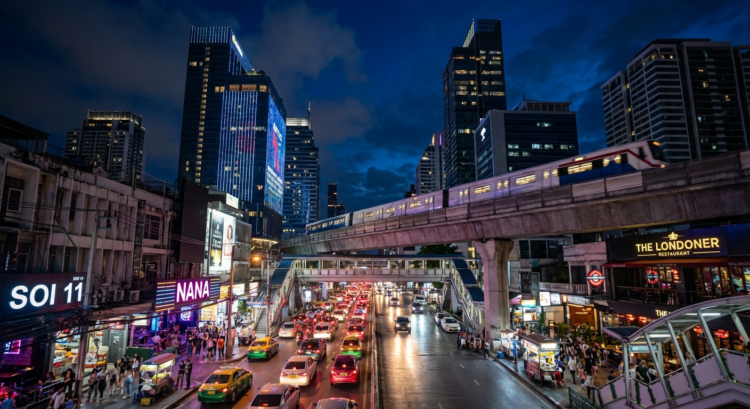
Bangkok covers more than 1,500 square kilometres, and 2 hotels of the same standard can make for radically different stays depending on their location. A gorgeous boutique hotel 20 minutes from the nearest BTS station will cost you hours in traffic every week; a simple but clean budget hotel a short walk from the Asoke interchange lets you get everywhere in 30 minutes at most.
Here are my neighbourhood picks, with the hotels I recommend and their nightly prices in baht and euros. For an overview, start with my complete guide to Bangkok.
- Where should you stay in Bangkok for your type of trip?
- Where should you stay on a first visit?
- Where should you stay for great food?
- Where should you stay as a backpacker, near the temples?
- Where should you stay for luxury?
- Where should you stay with a family?
- Where should you stay for a longer trip?
- How much does it cost?
- How do you get between neighbourhoods?
- My other Bangkok guides
Where should you stay in Bangkok for your type of trip?
The BTS Skytrain, MRT metro, Chao Phraya boats and Saen Saep canal boats connect the neighbourhoods, and where you sleep determines which networks you can actually use: from how many temples you visit to how much you spend on taxis.
My rule of thumb: never sacrifice proximity to the BTS. A 20-minute walk in the heat to reach a station exhausts you before your day even starts, and a hotel less than 5 minutes from a BTS or MRT station is worth paying extra for over a prettier room farther away.
My short version: for a first visit, Asoke for convenience, Silom or Riverside (Centre Point Silom, Chatrium Riverside) for atmosphere. If you’re a solo backpacker under 25, spend 2 nights in Khao San (Mad Monkey or a guesthouse on Soi Rambuttri), then Asoke or Siam for the rest. If you’re a woman travelling solo, I recommend Ari (The Yard Hostel) or Silom (Lub d Silom), and avoiding lower Sukhumvit around Nana.
As for safety, Bangkok is a safe city, much safer than most major European cities. The safest neighbourhoods if you’re travelling solo or with a family are Siam/Ratchathewi, Ari, Phrom Phong and Silom during the day. Here’s my comparison at a glance:
| Neighbourhood | Transport access | Budget (THB/night) | Mid-range (THB/night) | Atmosphere | Best for |
|---|---|---|---|---|---|
| Asoke | BTS + MRT | 800-1,200 | 2,500-5,000 | Lively, concrete, convenient | First visit, convenience |
| Nana / Soi 11 | BTS | 500-800 | 1,500-3,000 | Intense nightlife, noisy | 20-year-old solo partygoers |
| Phrom Phong | BTS | n/a | 2,500-4,500 | Upscale, refined, Japanese | Families, couples |
| Thong Lor / Ekkamai | BTS | n/a | 2,000-4,000 | Trendy, expensive, local elite | Repeat visitors, nightlife (30+) |
| On Nut / Phra Khanong | BTS | 500-700 | 1,000-2,000 | Local, authentic, quiet | Tight budgets, long stays |
| Silom / Sathorn | BTS + MRT | 800-1,500 | 2,000-5,000 | Business by day, food by night | Food lovers, balanced stays |
| Khao San / Banglamphu | None | 200-500 | 1,500-3,000 | Backpacker chaos, partying | Young backpackers, temple visits |
| Riverside | Boat + BTS (Saphan Taksin) | 900-1,500 | 3,000-6,000 | Romantic, scenic, peaceful | Couples, luxury, short stays |
| Chinatown | MRT Wat Mangkon | 400-800 | 1,200-2,500 | Chaotic, sensory, food-focused | Dinner outings, sleeping elsewhere |
| Siam / Ratchathewi | BTS interchange | 700-1,500 | 2,500-5,000 | Modern, shopping malls, clean | Families, shopping |
| Ari | BTS | 500-800 | 1,500-3,500 | Hipster, walkable, local | Digital nomads, repeat visitors |
Where should you stay on a first visit?
Sukhumvit Road runs through modern Bangkok for more than 20 kilometres: a corridor of micro-districts connected by the BTS Sukhumvit line. Odd-numbered sois (side streets) tend to have more nightlife, even-numbered ones are quieter and more residential, and the higher the number, the more local and less touristy the neighbourhood.
A warning: Sukhumvit’s pavements are terrible (cracked concrete, vendors’ carts, motorcycle taxis parked across them, oppressive heat), so take the BTS even for short distances and cut through the sois.
Asoke (Soi 21)
Asoke sits at the intersection of the BTS (Asok station) and MRT (Sukhumvit station), the best-connected spot in the entire city. Terminal 21, a huge themed shopping mall, is directly above the interchange, handy for shopping, and I’ve eaten at its food court for less than 50 THB (around 1.30 EUR). If convenience is your absolute priority, this is the answer.
The neighbourhood isn’t pretty: concrete, traffic, office towers and crowded pavements, a bit like La Défense without the architecture. Soi Cowboy, a short street of hostess bars, is just off the main road: this proximity bothers some people, while others walk past without paying attention. Asoke sacrifices atmosphere for logistics, and for a short stay, that trade-off is usually worth it.
I stayed at Grande Centre Point Terminal 21 (3,500-6,000 THB per night, or 90-160 EUR), above the shopping mall and directly connected to the BTS and MRT: it’s my top hotel recommendation in Bangkok, and Agoda is the place to book for the best rates.
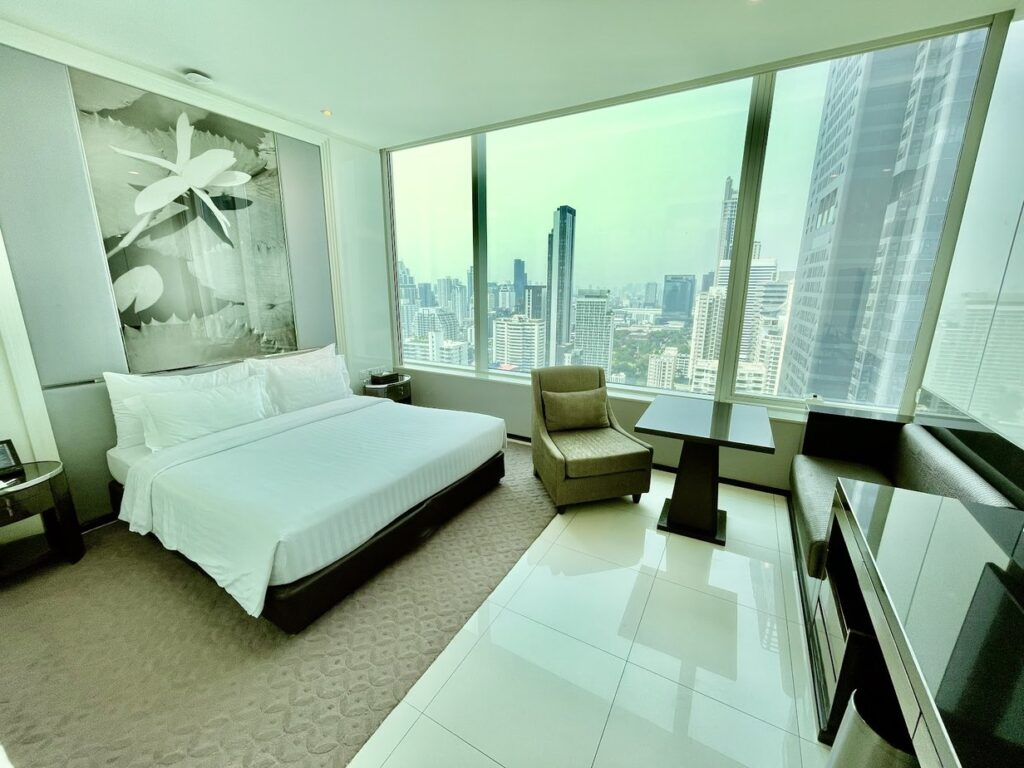
Sheraton Grande Sukhumvit (6,000-12,000 THB, or 160-315 EUR) has a covered walkway to the BTS and a “jungle pool” surrounded by tropical plants. Red Planet Asoke (800-1,200 THB, or 21-32 EUR) is my top budget pick: small, basic but clean rooms, with an unbeatable location at this price.
Nana (Soi 4-11)
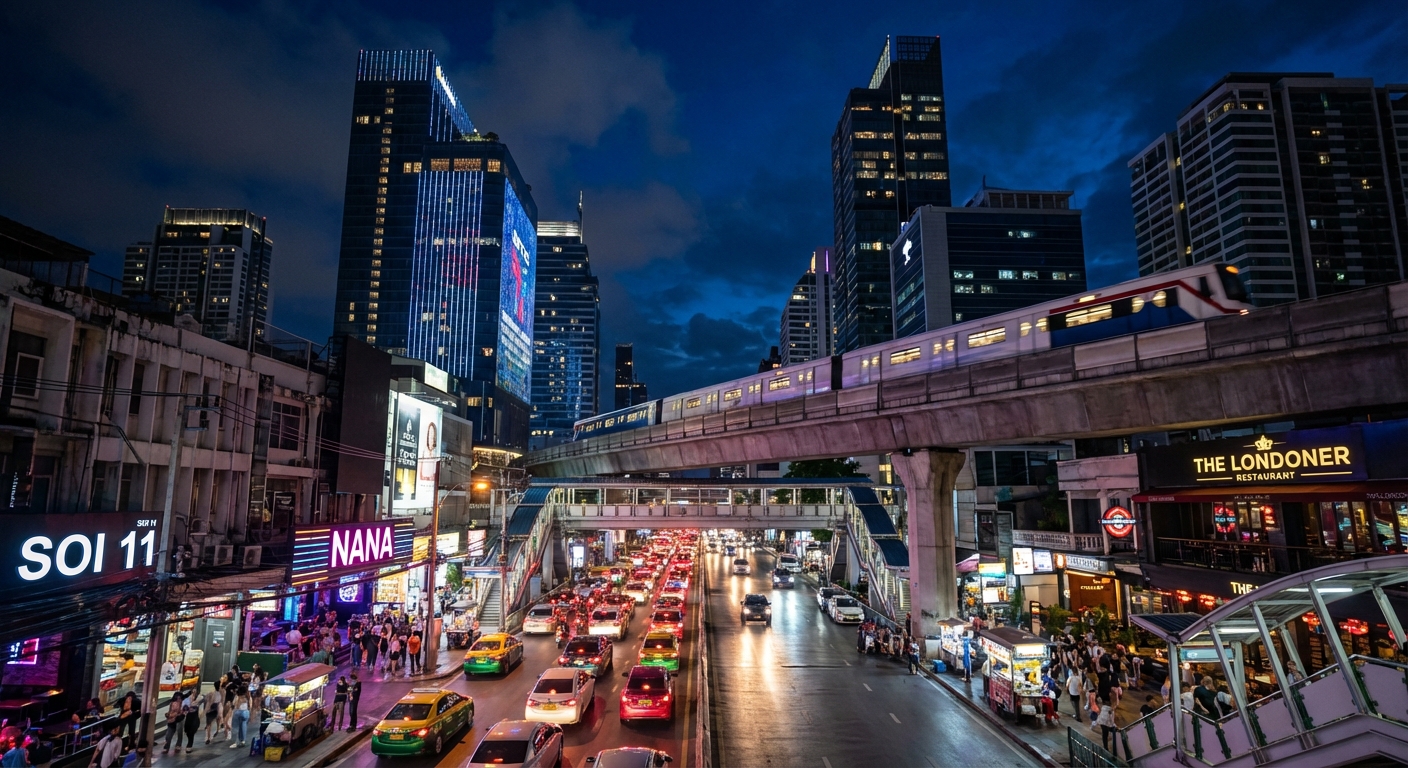
Lower Sukhumvit around Nana BTS station is Bangkok’s most divisive neighbourhood. Nana Plaza and Soi Cowboy are hostess-bar districts whose noise and touts spill out onto neighbouring streets, while Soi 11, between the 2, is another world: rooftop bars, clubs and late-night restaurants, catering to a younger, mixed crowd.
If you’re in your 20s and looking for lively nightlife, Nana fits the bill. With a family, or if you want to avoid persistent touts on your way back, give it a miss: past 30, I feel you’re “too old” for this neighbourhood. Lower Sukhumvit (Sois 1-20 around Nana and Soi Cowboy) is still safe, but its red-light district can make families uncomfortable.
Hotel Solo Soi 2 (1,500-2,500 THB, or 40-66 EUR) has a rooftop pool on a quiet soi near Nana BTS. The “teen” sois (15, 18, 20) have better-value hotels within walking distance of Nana and Asoke BTS stations, without the red-light district atmosphere: along with Silom, this is my recommendation for couples on a tight budget, and Dream Hotel on Soi 15 costs around 1,800 THB per night (47 EUR).
Phrom Phong, Thong Lor and Ekkamai
Phrom Phong, 1 BTS stop after Asoke, is the Japanese expat neighbourhood: refined cafés, luxury shopping malls (EmQuartier, Emporium), Benchasiri Park and no sleaze. To me, it’s the Beverly Hills of Sukhumvit, a tropical version of Paris’s 16th arrondissement, and the prices reflect that: 2,500-4,500 THB (65-120 EUR) for mid-range, 6,000-15,000 THB (160-395 EUR) for luxury.
Thong Lor (Soi 55) is where wealthy Thais and long-term expats eat, drink and spend: trendy cocktail bars (J Boroski, where I had a cocktail, and Tichuca Rooftop Bar), creative restaurants and community spaces like The Commons. Ekkamai is its slightly cheaper, more laid-back counterpart.
The catch: Thong Lor’s main road has dreadful pavements and heavy traffic, and the good spots are tucked away deep in the sois: on a first visit, you often feel cut off from the “real” Bangkok. My take: “Thong Lor is for spending and being seen; Ari is for living and relaxing”, the Champs-Élysées versus Oberkampf. Avoid these neighbourhoods on your first trip.
Where to stay for great food?
For a trip focused on Thai food, Silom is the best base, and Chinatown is the place to head in the evening.
Silom and Sathorn
Silom is Bangkok’s business district by day and a lively street food neighborhood by night. Sala Daeng BTS station and Silom MRT station form a 2nd interchange here, as well connected as Asoke.
Silom also has the advantage of the “boat strategy”: Saphan Taksin BTS station, 2 stops farther south, is the only place in Bangkok where the BTS connects to the Chao Phraya boat pier, with the train for the modern city and the boat for the old city’s temples.
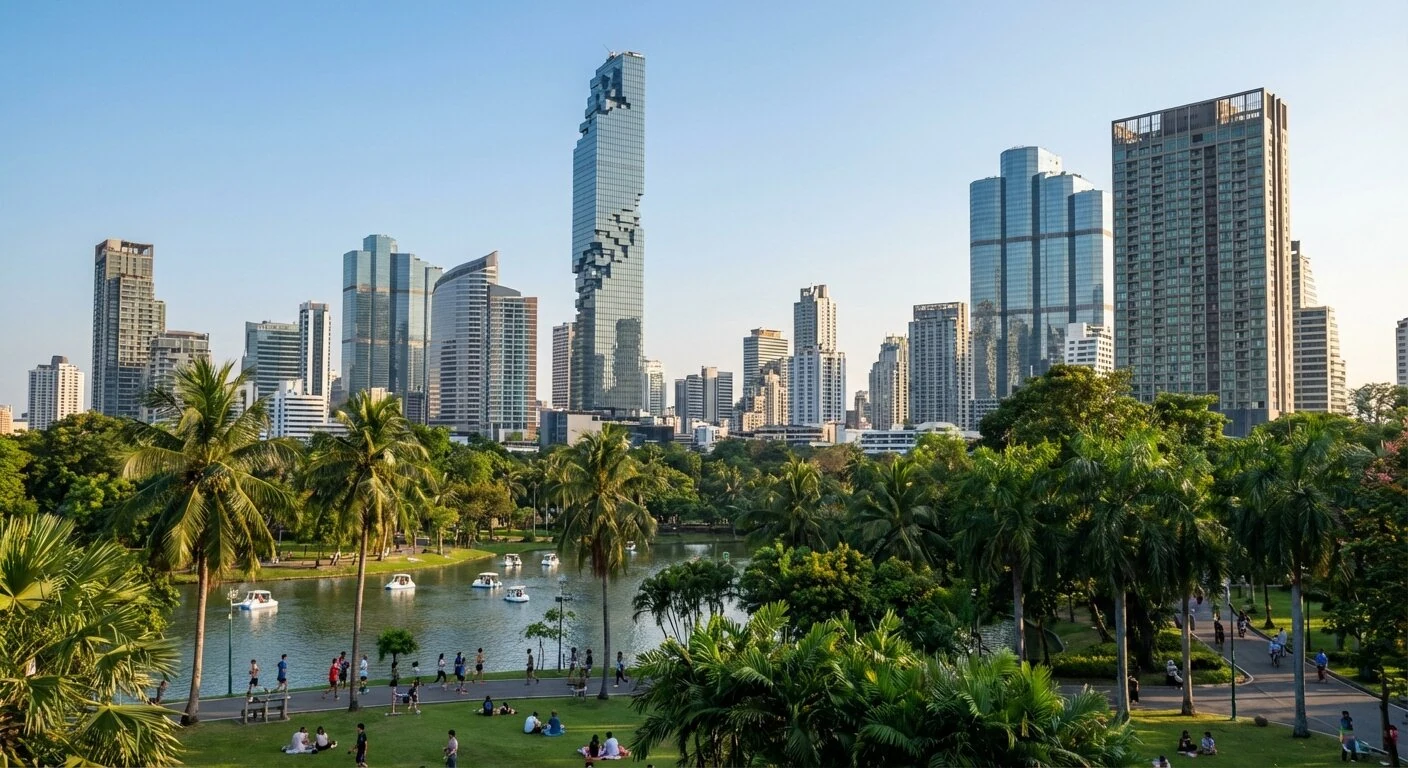
The neighborhood is more pleasant to explore on foot than Sukhumvit, more residential and more Thai, and on Silom Soi 20, I had one of the best street food breakfasts in the city. At the eastern end, Lumpini Park, Bangkok’s largest green space (a much bigger version of the Luxembourg Gardens), has monitor lizards basking along the paths.
Sathorn, the parallel road a block farther south, is quieter, and its business hotels, like those in Silom, often lower their rates on weekends. Soi Suan Plu hides tree-lined streets and good local food.
Centre Point Silom (2,500-5,000 THB, or 66-132 EUR), near the pier and the BTS, with a department store and a grocery store underneath, is my pick for a family wanting access to both the train and the boat. The Sukhothai Bangkok (8,000-18,000 THB, or 210-475 EUR) is surrounded by gardens, with a resort atmosphere right in the city center.
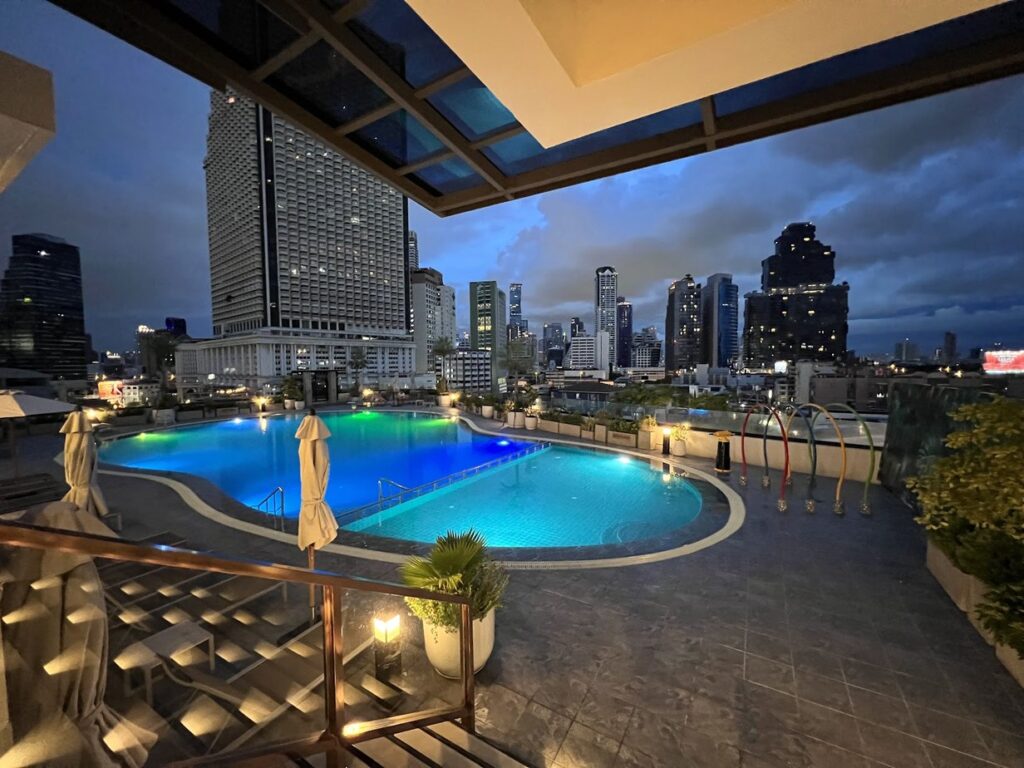
Lebua at State Tower (6,000-15,000 THB, or 160-395 EUR) is home to the famous Sky Bar, near Saphan Taksin BTS and the pier. Lub d Silom (600-1,200 THB, or 16-32 EUR), part of a professionally run, secure hostel chain, is ideal if you’re traveling solo, especially as a woman.
Chinatown and Yaowarat
For me, Bangkok’s Chinatown has the best street food in the city. Yaowarat Road at night means neon signs in Chinese and Thai, smoke from charcoal grills and crab omelet and roast duck vendors whose carts have occupied the same spots for decades.
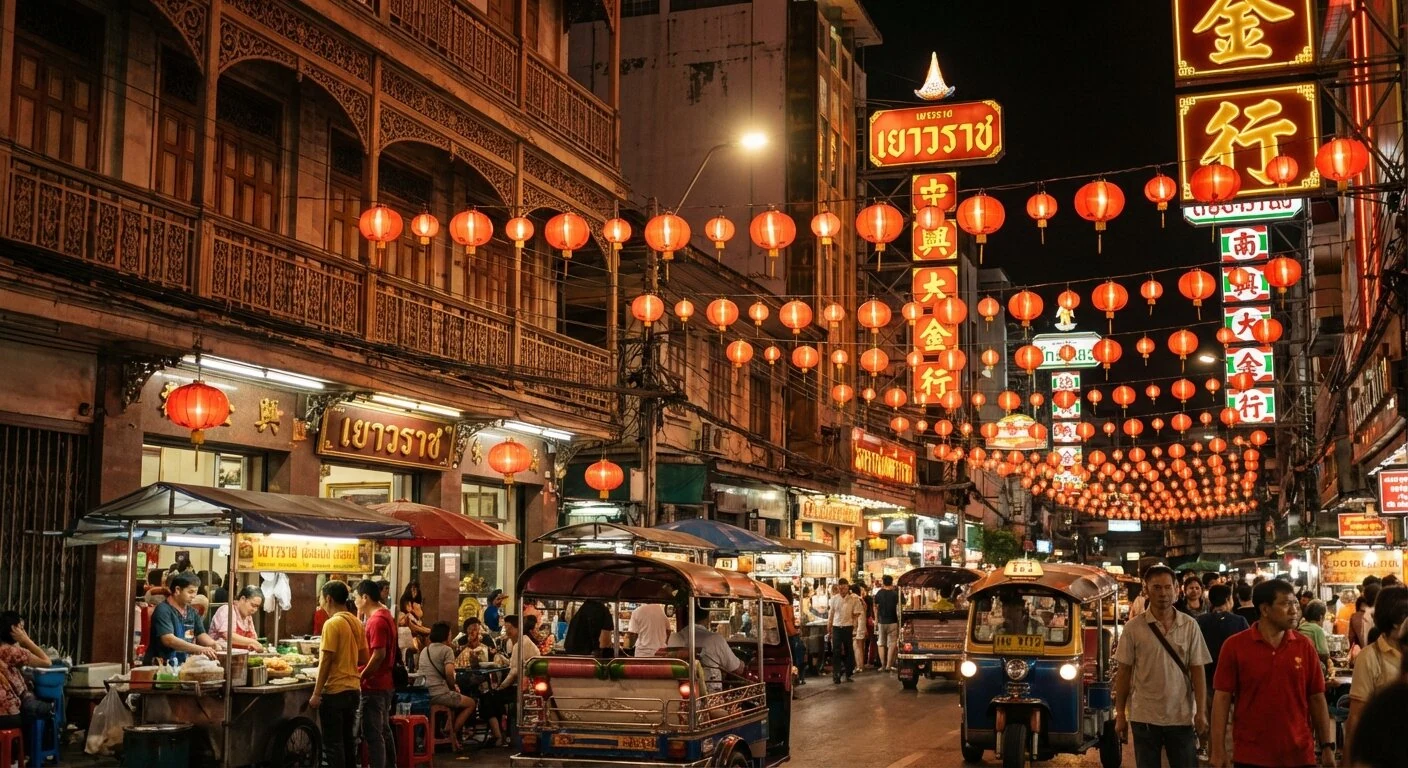
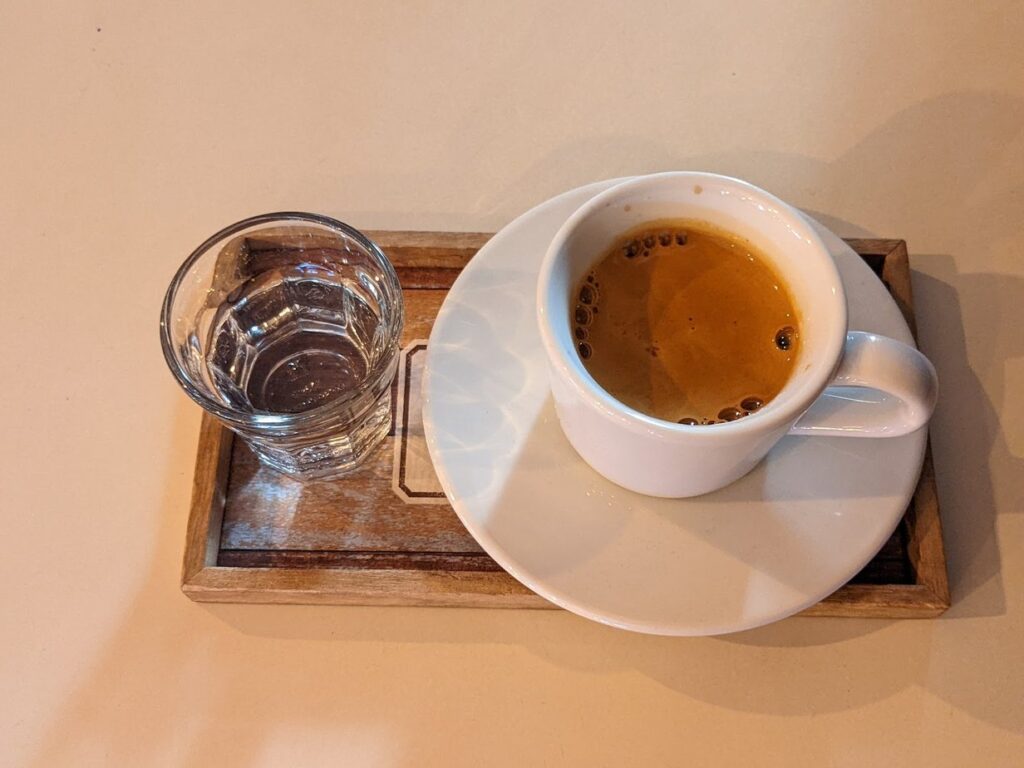
Talat Noi, a small neighborhood toward the river, is quieter and more artistic: street art, ancestral shrines and hidden cafés like Mother Roaster, where I had a coffee in a former scrapyard.
The new Wat Mangkon MRT station has improved access, but I don’t recommend Chinatown as a base: the noise is nonstop, the streets are narrow, and the neighborhood changes completely between day (a congested wholesale market) and night (an electrifying food scene). If you’re set on staying here, ASAI Bangkok Chinatown (1,200-2,500 THB, or 32-66 EUR) is the only hotel I recommend, and Luk Hostel (400-600 THB, or 10-16 EUR) has a lovely common area and a friendly atmosphere, without the chaos of a party hostel.
My strategy: stay near an MRT station (Silom or Asoke) and take the metro to Wat Mangkon for evening food tours. My guide to eating on Yaowarat Road in Chinatown and exploring Silom’s street food covers the best dishes. I also cook Thai street food at home: my moo ping skewers and my som tam are on the site.
Where to stay as a backpacker, near the temples?
Khao San Road is Southeast Asia’s most famous backpacker street: cheap cocktail buckets, EDM until 04:00, pad thai carts, tattoo parlors and travelers from every country packed into 400 meters. It’s loud, chaotic, and only exists in Bangkok.
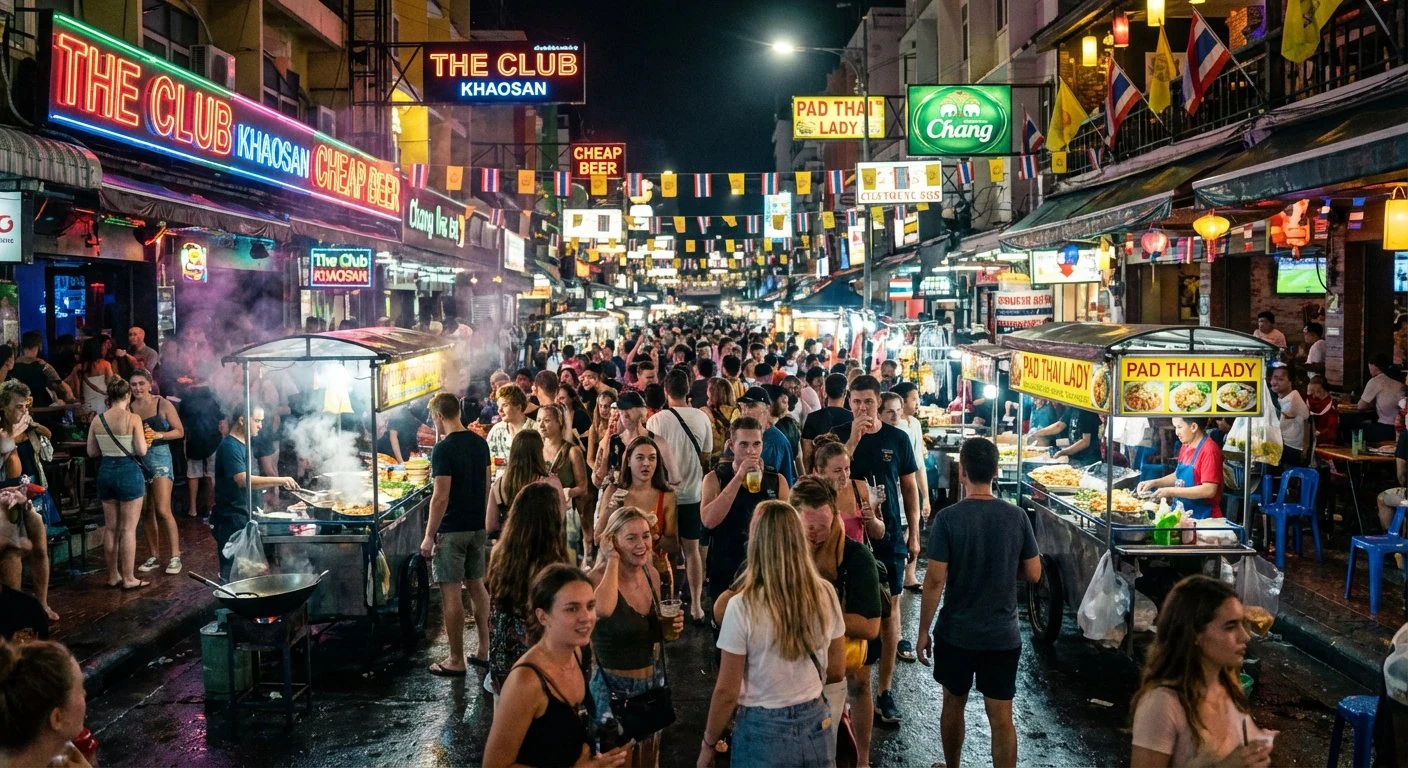
It’s also within walking distance of the Grand Palace, Wat Pho and the Chao Phraya, a good base for the old city’s temples. The main problem is transport: no BTS or MRT station nearby, so it’s a taxi, Grab, tuk-tuk or river shuttle to Sukhumvit, Siam or Silom, and at rush hour, the taxi ride to Asoke can take over an hour. You’re on an “island,” and getting off it takes effort.
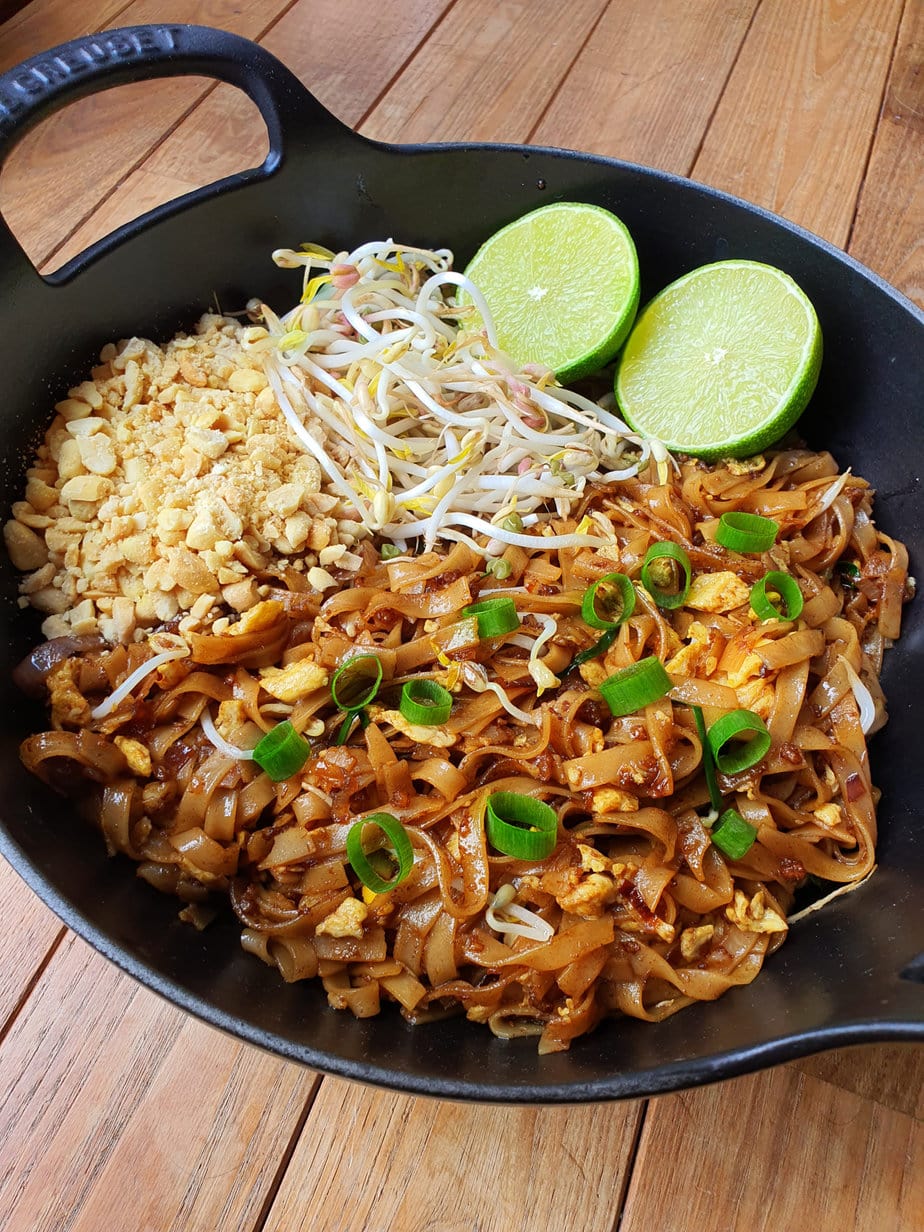
Noise is the other big drawback: the bars compete every night with increasingly powerful speakers, and if your room faces the main street, don’t expect to sleep before 03:00-04:00. Khao San Road is safe, but watch out for tuk-tuk scams and jewelry scams.
My preferred approach: 2 or 3 nights in Khao San/Banglamphu for the temples and the backpacker experience, then Sukhumvit or Silom. Simpler still: base yourself in Asoke and take a taxi to Khao San for 1 or 2 evenings, because getting there for an evening is easier than leaving Khao San every day.
Soi Rambuttri and Phra Arthit Road
I stayed on Soi Rambuttri rather than Khao San Road, which is what I recommend. This parallel street, a block away, is quieter and greener, with cafés and laid-back reggae bars: Khao San’s chaos is a 2-minute walk away, and you sleep in relative peace.
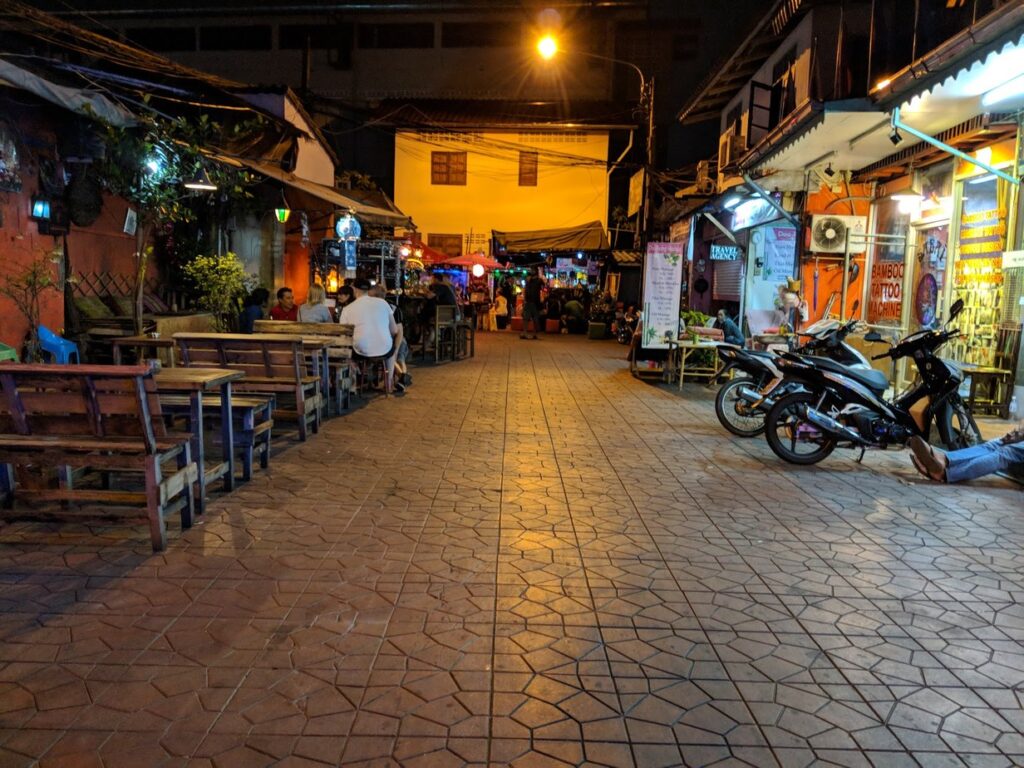
Phra Arthit Road, along the river, is even quieter, more local and artistic. The guesthouses on Soi Rambuttri (400-800 THB, or 10-21 EUR) offer the best value for the Khao San experience without the noise of the main street, and Mad Monkey Hostel (300-500 THB, or 8-13 EUR) is the gathering spot for solo backpackers. Wherever you stay in Banglamphu, earplugs are survival gear.
Where to stay for luxury?
The Chao Phraya is Bangkok’s oldest artery, and the hotels along its banks are among the finest in Asia. Waking up facing the river, with Wat Arun lit up on the opposite bank at sunset, makes you fall in love with the city. For a honeymoon or wedding anniversary, few places in the world can rival it.
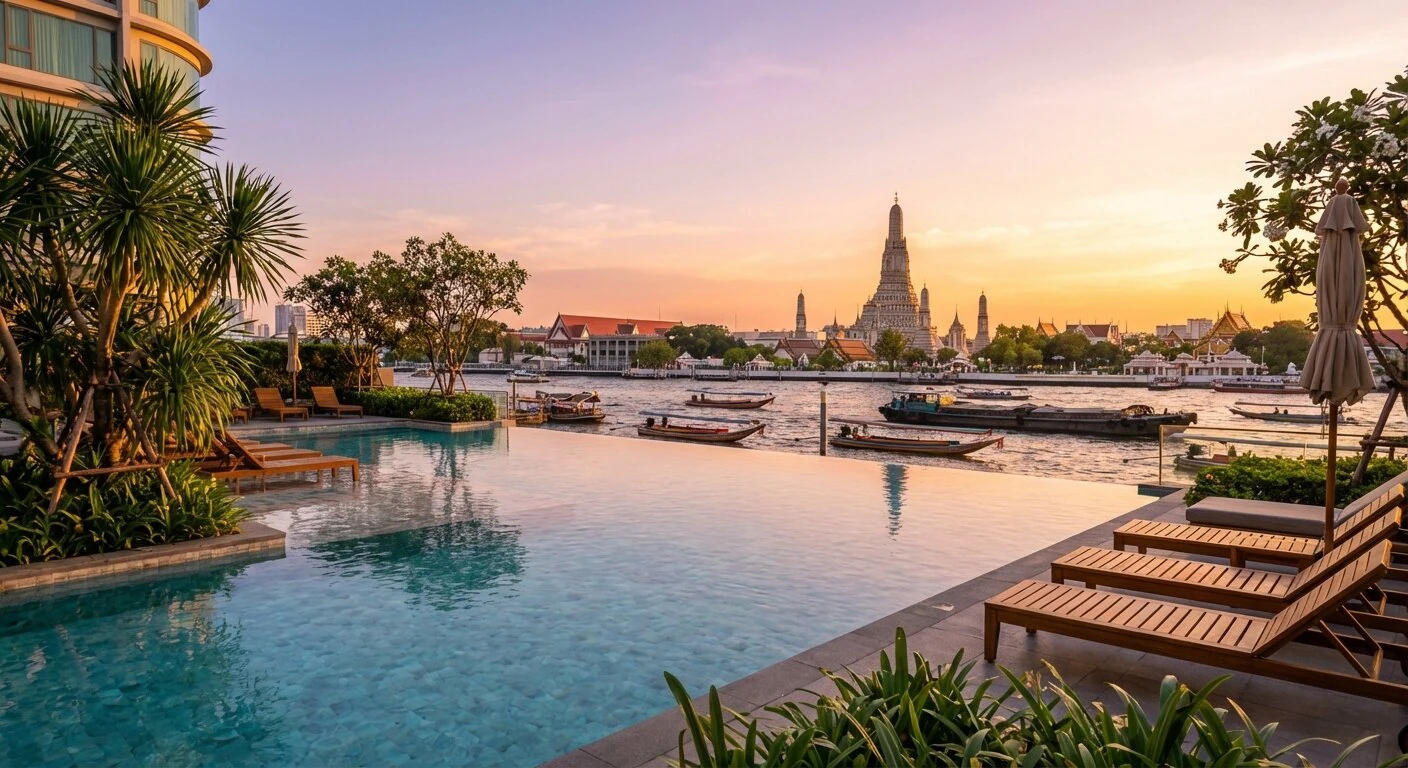
I took the Chao Phraya Express Boat from Saphan Taksin pier: it heads upriver through Chinatown, past the Grand Palace and all the way to Banglamphu. The orange-flag boat costs 16 THB (0.40 EUR) and doubles as a sightseeing cruise.
For a stay focused on temples, staying by the river and taking the boat is faster than battling traffic from Sukhumvit, and Riverside works well with boat trips and cruises on the Chao Phraya. The downside is the isolation: most Riverside hotels rely on shuttle boats to reach Saphan Taksin BTS station, and getting to Siam or Asoke adds 30 to 45 minutes each way.
Mandarin Oriental (25,000+ THB per night, or 660+ EUR) is the “Grande Dame” of Bangkok hotels, open since 1876 and the city’s oldest luxury hotel. Capella Bangkok (30,000+ THB, or 790+ EUR) is, for me, a contender for the title of best hotel in the world. For this level of service and amenities, rates remain far below those of luxury hotels in Paris or London.
Chatrium Riverside (3,000-6,000 THB, or 79-160 EUR) is my go-to for affordable riverside luxury: superb views, family-friendly and a reliable shuttle boat. Anantara Riverside (6,000-12,000 THB, or 160-315 EUR) is the best urban resort for families (huge pool, kids’ club), and Ibis Riverside (900-1,400 THB, or 24-37 EUR) is the budget option with river access.
My budget tip: the Thonburi bank, on the west side near IconSiam shopping mall, offers the Riverside atmosphere at gentler prices. Nearby, on the east bank, Charoen Krung has become Bangkok’s “Creative District,” with the Thailand Creative and Design Center (TCDC) and Warehouse 30, warehouses converted into art galleries and independent shops, a bit like a tropical version of the Marais.
Where to stay with your family?
Siam station is the hub of Bangkok’s BTS network: the Sukhumvit and Silom lines meet here, and you can reach every major station without changing trains. The neighborhood is dominated by huge shopping malls (Siam Paragon, CentralWorld, MBK Center), and Sea Life Ocean World and Madame Tussauds, at Siam Paragon, make it a natural base for families who need air-conditioned activities between temple visits.
Phaya Thai station, 2 stops north, connects to the Airport Rail Link. Pratunam, between Siam and Ratchathewi, is Bangkok’s wholesale clothing market, with the lowest prices in the city, a paradise for shopping addicts.
Pathumwan Princess (3,000-4,500 THB, or 79-120 EUR), connected to MBK Center, offers value that I find unbeatable for this location. Siam Kempinski (10,000-20,000 THB, or 265-525 EUR), directly linked to Siam Paragon and the BTS, is the most convenient luxury hotel for shopping.
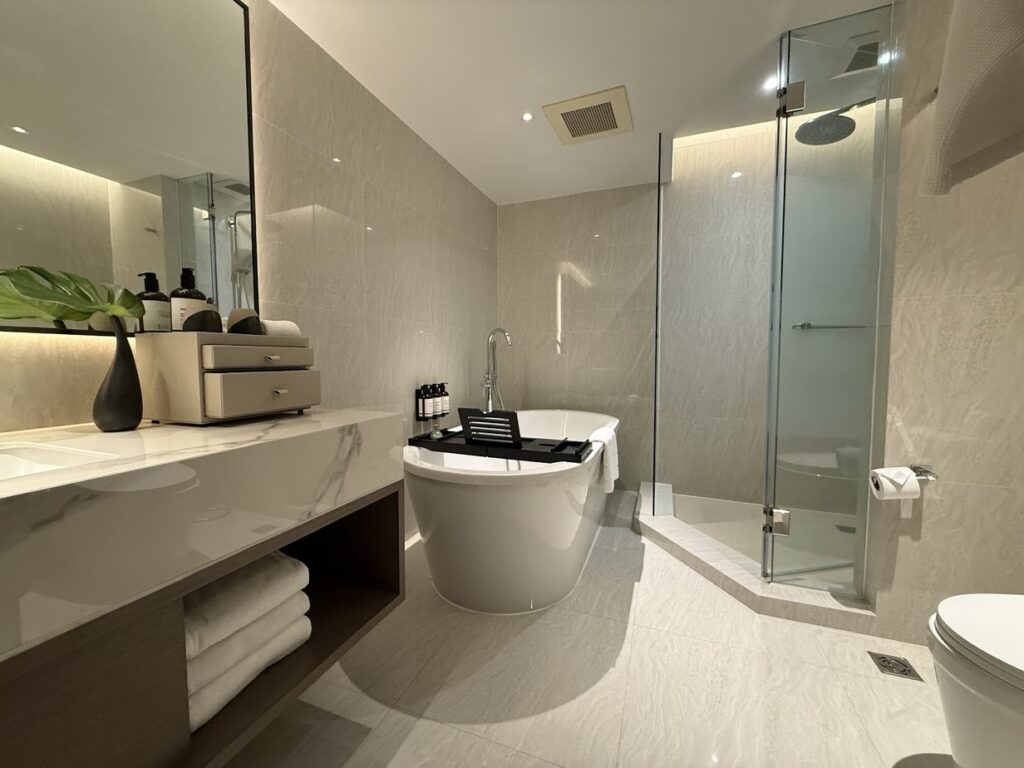
Lub d Bangkok Siam (500-1,000 THB, or 13-26 EUR) is an upscale hostel-hotel hybrid: clean, professionally run and secure. For a group of 3 or 4 friends sharing a room, Vince Hotel Pratunam (1,500-2,500 THB, or 40-66 EUR) is the ideal choice.
Where to stay for a longer trip?
For a month or more as a digital nomad, I recommend Ari for quality of life and On Nut for value, in “serviced apartments” or “mansions”: studios with housekeeping and wifi included for around 10,000-16,000 THB per month (about 265-420 EUR), including Sitara Place, which I recommend, at around 16,000 THB per month. Look for them on Google Maps or in Facebook groups rather than on Airbnb, which is too expensive for Bangkok and technically illegal for stays of less than 30 days.
Ari
Ari, on the BTS Sukhumvit line (Ari station), is my favorite neighborhood in Bangkok. What I noticed straight away was the sidewalks: wide, tree-lined and actually walkable, a rarity in Bangkok. It has a bit of a Thai version of the Canal Saint-Martin atmosphere.
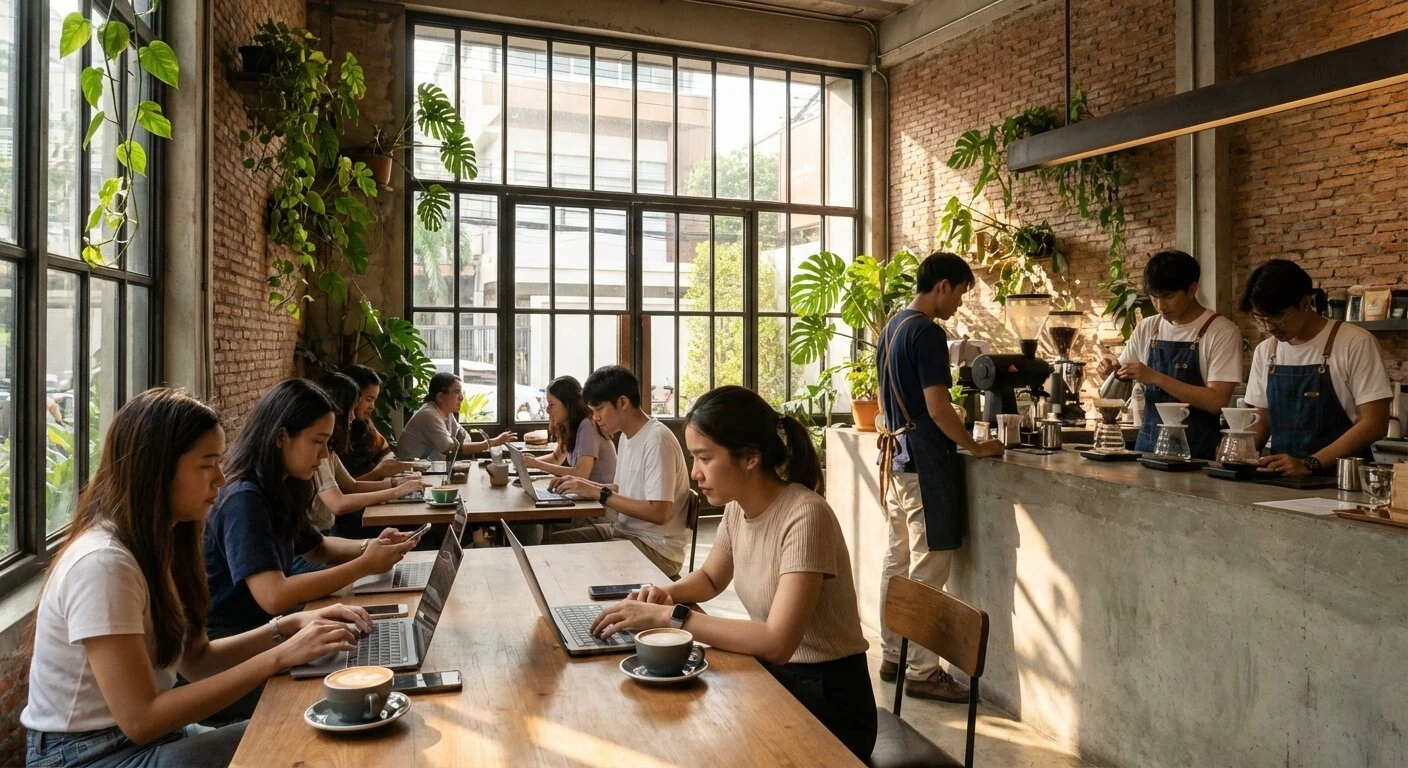
The neighborhood mixes traditional street-food stalls, trendy cafés, artisan bakeries (Landhaus is a local favorite) and community spaces like Gump’s Ari, and it’s where Bangkok locals actually go out on weekends. If you’re a woman traveling solo, I find the neighborhood safe and welcoming.
The trade-off: Ari is a few BTS stops north of Siam, adding 10 to 15 minutes to trips to the central attractions. For a first visit when you want to be in the middle of everything, it may feel too quiet; if you’ve already been to Bangkok and want a proper lived-in neighborhood, this is the place, or Soi Suan Plu in Sathorn.
The Yard Hostel (500-800 THB, or 13-21 EUR) is my first hostel recommendation if you’re traveling solo: safe, clean, intimate and quiet, sociable without being a party hostel, for those who prefer conversation to drinking games. Mid-range hotels in Ari cost around 1,500-3,500 THB per night (40-92 EUR).
On Nut and Phra Khanong
Beyond Ekkamai, the BTS passes through neighborhoods where tourists are rare and prices drop by 30 to 50%. On Nut and Phra Khanong offer authentic street food, local markets and clean budget hotels like Hop Inn (700-1,000 THB, or 18-26 EUR), a few stops beyond the central stations. If you’re backpacking for a week or more, it’s much better value for the same access to transport, in a much more local atmosphere.
How much does it cost?
Mid-range is Bangkok’s sweet spot: at 2,500-4,000 THB per night (66-105 EUR), you get rooftop pools, proper breakfast buffets and modern rooms near BTS stations, with Grande Centre Point properties setting the standard. I find that older 5-star hotels often offer larger rooms and better service than newer trendy properties, even if the decor is a little dated.
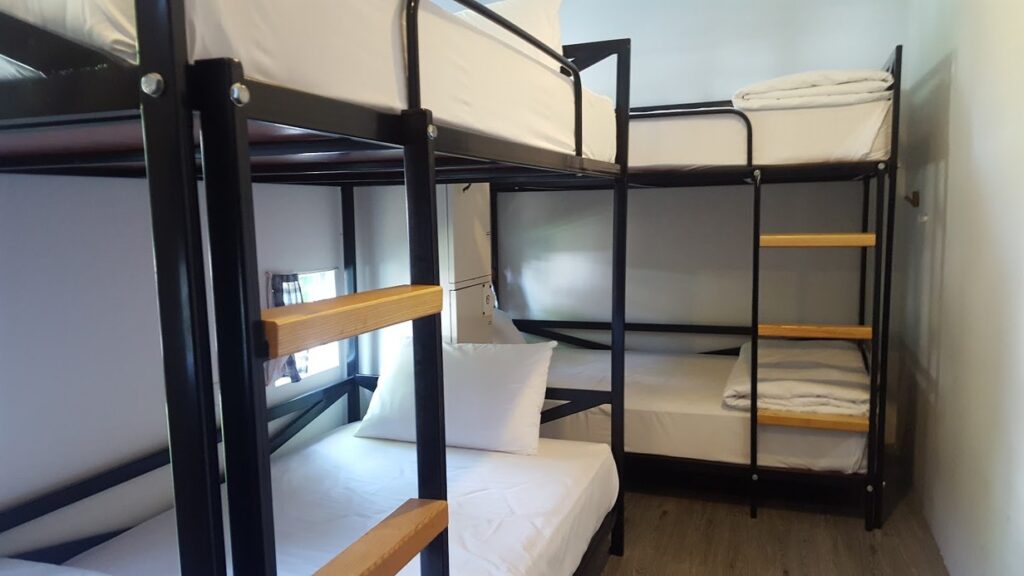
Hostels range from Khao San’s chaotic party dorms to well-kept places on a par with budget hotels. The Lub d chain (Silom and Siam locations) operates like a boutique hotel at hostel prices: secure lockers, privacy curtains on bunk beds and a friendly common area. Bed Station Hostel is another place I recommend; expect to pay 200 to 1,200 THB per night (5 to 32 EUR).
Thai budget hotel chains (Red Planet, Hop Inn) are reliable: small, clean, modern rooms, air conditioning, hot water and wifi, for 800 to 2,000 THB per night (21 to 53 EUR). Avoid Nasa Vegas Hotel (around 500 THB, or 13 EUR), unless you really need the cheapest bed available. Luxury (6,000-25,000 THB, or 160-660 EUR) would cost double or triple in Paris or Tokyo.
For bookings, Agoda consistently has better rates for Thailand than Booking.com or Expedia, with differences of up to 20 to 30%: it’s my go-to platform for Bangkok. French travelers are used to Booking.com, which sometimes has more flexible cancellation policies, and booking directly with the hotel sometimes gets you better cancellation terms or an upgrade.
My budget tip: stay 2 or 3 BTS stops from Siam or Asoke (On Nut, Phra Khanong, Ekkamai), where clean, modern hotels cost 30 to 50% less for the same quality. Splitting your stay also saves money: 2 nights in a hostel at 500 THB (13 EUR) in Khao San plus 4 nights in a hotel at 2,000 THB (53 EUR) in Asoke, averaging 1,500 THB per night (40 EUR), with more variety.
My typical bases: 3 nights of temples and food at Centre Point Silom (boat to the Grand Palace and Wat Pho, MRT to Chinatown for dinner, Lumpini Park in the morning, BTS to Chatuchak on the last day). 5 nights for a first visit split between Soi Rambuttri (temples, Khao San) and Grande Centre Point Terminal 21 in Asoke (modern city, shopping malls, rooftop bars), linked by the canal shuttle boat. 7 nights: 2 in Khao San/Soi Rambuttri, 3 in Asoke, 2 in Riverside (Chatrium or Ibis), giving you 3 different sides of Bangkok.
How do you get between neighborhoods?
On the BTS Skytrain, the Sukhumvit line runs from Mo Chit (Chatuchak) through Ari, Siam, Asoke, Phrom Phong, Thong Lor and Ekkamai, while the Silom line runs from Siam to Sala Daeng (Silom), then Saphan Taksin (river boats). The MRT Blue Line connects Asoke to Silom, Chinatown (Wat Mangkon) and Chatuchak, and the Airport Rail Link connects Phaya Thai BTS station to Suvarnabhumi Airport in 30 minutes.
On the water, besides the Chao Phraya Express Boats from Saphan Taksin, I took the Saen Saep canal boat, which connects Banglamphu/Khao San to Pratunam and Asoke while avoiding traffic: it’s hot and you might get splashed, but it’s quick and costs less than 20 THB (0.50 EUR).
I got around using Grab, Southeast Asia’s ride-hailing app (the equivalent of Uber): always use it rather than hailing a taxi on the street, to avoid rigged meters. Motorcycle taxis (orange vests) are handy for short trips along the sois, as long as you agree on the price beforehand. All the details are in my practical guide to Bangkok.
My other Bangkok guides
My guides to choosing your neighborhood in Phuket and finding the right neighborhood in Bali follow the same logic: Bangkok is more complex, but location matters far more than the thread count per square centimeter. I also cover where to stay in Hanoi, from the Old Quarter to West Lake. For the rest of your stay, start with my complete guide to Bangkok.