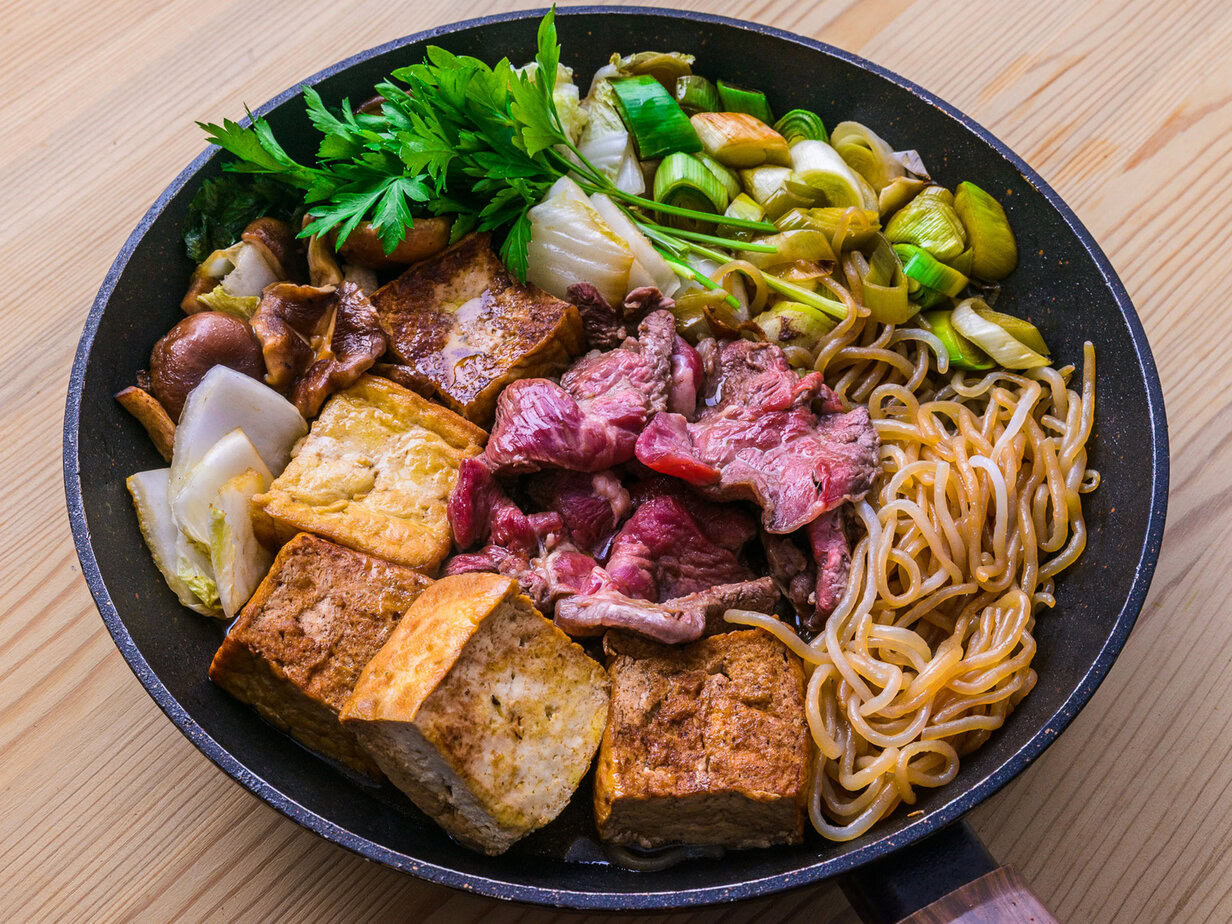
Servings: 4
Ingredients
- 500 g beef thinly sliced for sukiyaki
- 1 block grilled tofu
- 2 Japanese leeks or 1 onion
- 6 shiitake mushrooms
- 0.5 bunch shungiku optional
- 120 g shirataki noodles
- 1 piece beef fat
- 4 eggs
- 500 ml water
- 5 g kombu soaked for about 30 minutes
Recommended optional vegetables
- napa cabbage optional
- mitsuba optional
- komatsuna optional
- tomato optional
- bamboo shoots optional
- watercress optional
- mountain vegetables optional
- bell pepper optional
Warishita sauce
- 100 ml light soy sauce
- 100 ml mirin
- 100 ml sake
- 2 tablespoons sugar
Procédé
Prepare the ingredients
- Cut the beef into bite-size pieces, taking care not to make them too small.500 g beef
- Slice the Japanese leeks on the diagonal into pieces about 1 cm thick.2 Japanese leeks
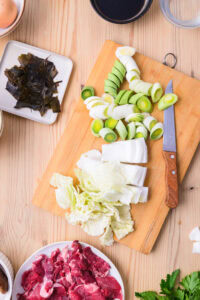
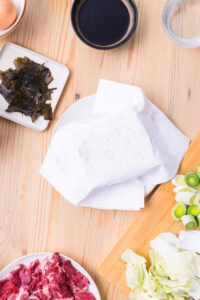
- Pat the grilled tofu dry with paper towels, then cut it into 8 pieces.1 block grilled tofu
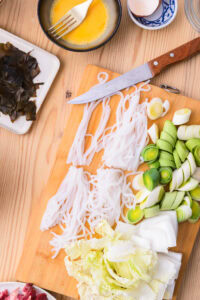
- Cut the shirataki noodles into pieces about 10 cm long, then boil for 2 to 3 minutes to remove their odor. Drain well.120 g shirataki noodles
- Prepare the shungiku: trim off the base, then cut the stems in half, along with the leaves if they are long.0.5 bunch shungiku
- Prepare the shiitake mushrooms: remove the stems and tough bases, halve the stems lengthwise, make decorative cuts in 2 mushrooms if desired, then halve the remaining mushrooms.6 shiitake mushrooms
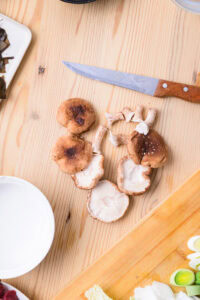
- Arrange all the ingredients in groups for an attractive presentation at the table, including any optional vegetables.napa cabbage, mitsuba, komatsuna, tomato, bamboo shoots, watercress, mountain vegetables, bell pepper
Warishita sauce
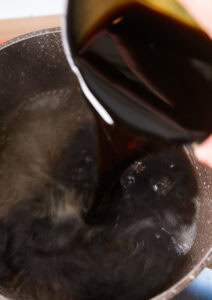
- Combine the mirin, sake, and sugar in a saucepan. Heat to cook off the alcohol, then turn off the heat once the sugar has completely dissolved.100 ml mirin, 100 ml sake, 2 tablespoons sugar
- Add the soy sauce and stir. For a rounder, more mellow flavor, let it rest overnight if possible.100 ml light soy sauce
Prepare the eggs
- Beat the eggs in individual bowls and set them aside before you start cooking.4 eggs

Cook the sukiyaki
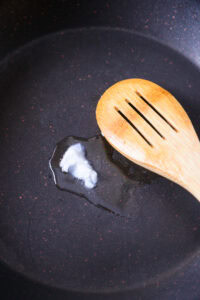
- Heat a sukiyaki pan or large skillet over medium heat. Add the beef fat and let it melt gently without overheating.1 piece beef fat
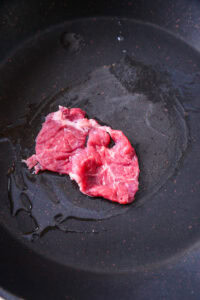
- Add the first portion of beef and brown it on one side. Pour in a small amount of warishita sauce and let the flavor soak in lightly. Taste this first bite.
- Add the leeks, tofu, shirataki noodles, shiitake mushrooms, and any other vegetables you have chosen. Add just enough warishita sauce and simmer until everything absorbs the flavor, avoiding adding too much too quickly, as the tofu will release water.
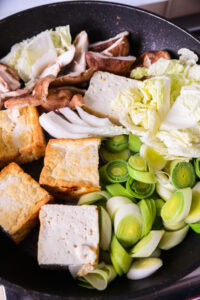
- Coat the tofu with the beef fat and let the vegetables soften. If the bottom starts to stick, add a little kombu broth made with the water and soaked kombu.500 ml water, 5 g kombu
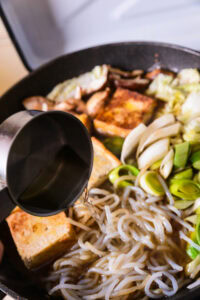
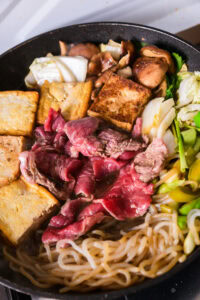
- Push the cooked ingredients toward the edge, add more beef, and cook it on one side before placing it over the vegetables. Drizzle a little sauce over the top and cook as if grilling in the sauce rather than boiling.
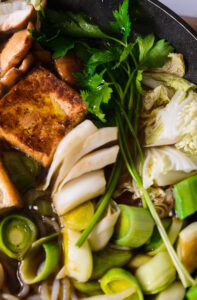
- Add the shungiku at the very end and cook it briefly. Enjoy the sukiyaki as it cooks, dipping each bite into the beaten egg.
Notes
- Make a generous batch of warishita sauce using a 1:1:1 ratio of soy sauce, mirin, and sake, then sweeten to taste.
- Store the warishita sauce in the refrigerator for about 1 month; letting it rest for 2 to 3 days gives it a deeper flavor.
- Always sear the beef before simmering it, then place it over the other ingredients to avoid cooking it too directly.
- Use well-marbled, thinly sliced wagyu or Japanese beef if possible, or at least a well-marbled cut.
- Cook sukiyaki as if you were grilling in the sauce rather than boiling, adding only as much sauce as needed.
- Let the vegetables and beef fat create the cooking juices naturally; adjust the intensity of the sauce at the table with the amount of egg you use for dipping.
Did you make this recipe?Tag @marcwiner on Instagram!