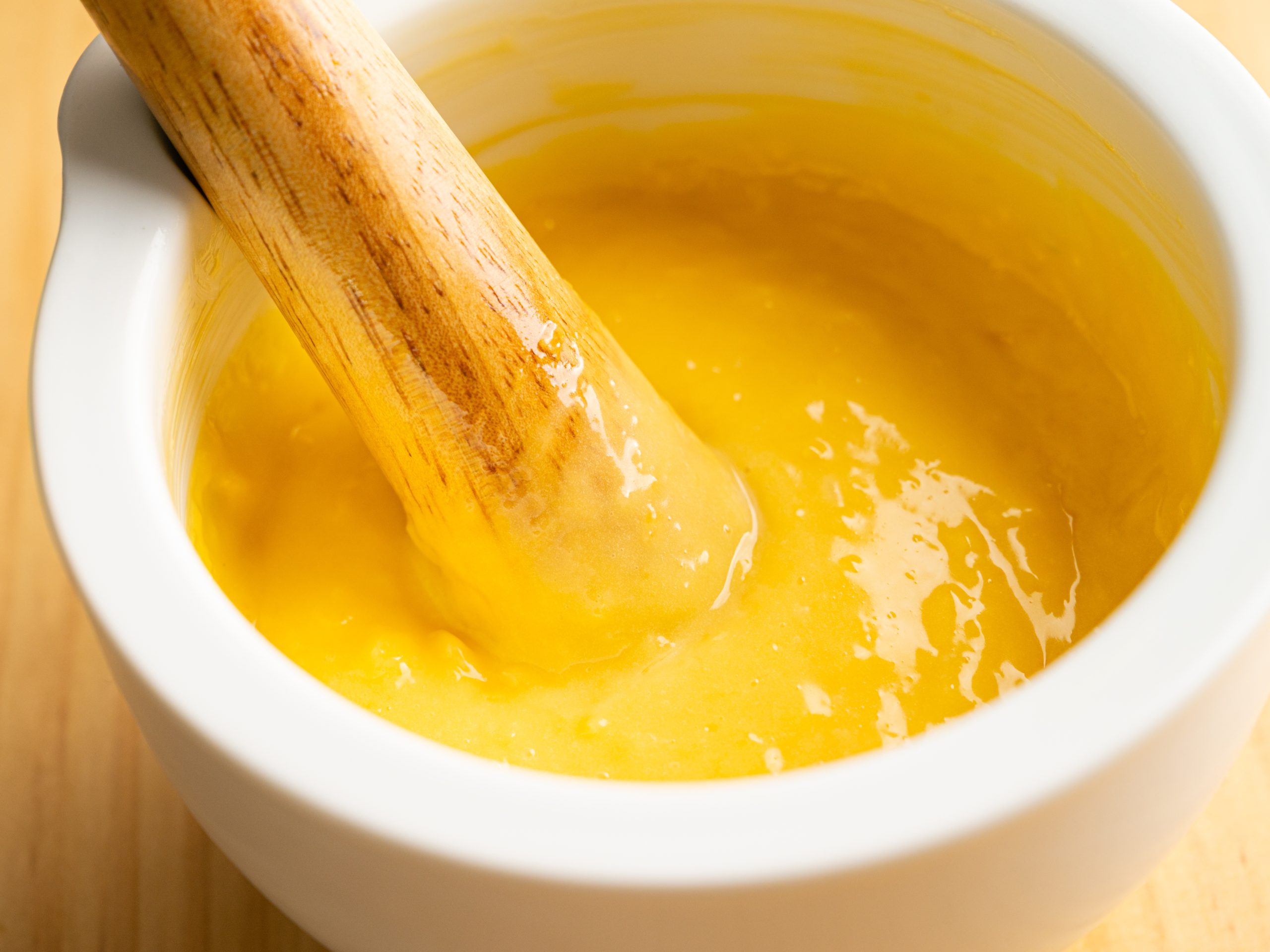
Servings: 4 servings
Ingredients
Garlic Base
- 4 cloves garlic, or 3 for a milder flavor, 5 for a stronger one
- 1 pinch fine salt
- 2 egg yolks, at room temperature
Emulsifying with Olive Oil
- 200 ml extra-virgin olive oil, mild and only slightly bitter
- 1 tablespoon lemon juice fresh
Procédé
Garlic Base
- Take the olive oil, eggs and garlic out of the refrigerator at least 30 minutes before you start: a temperature difference between the ingredients is the number one reason a sauce splits.4 cloves garlic,, 2 egg yolks,, 200 ml extra-virgin olive oil,
- Peel the garlic cloves.
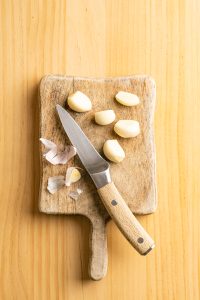
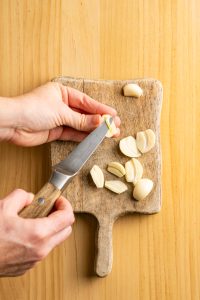
- Cut each clove in half and remove the central germ: it makes the sauce bitter.
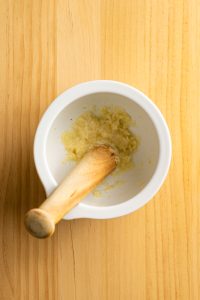
- Put the garlic and salt in the mortar.1 pinch fine salt
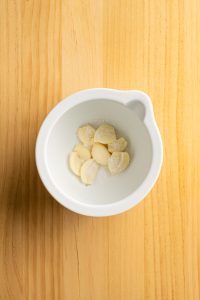
- Pound with the pestle until you have a smooth, even paste with no visible pieces.
- Add the egg yolks.
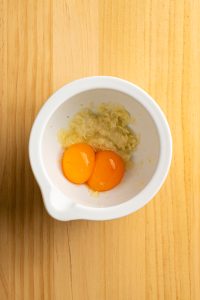
- Mix vigorously with the pestle for 2 minutes, until you have a smooth, golden base.

Emulsifying with Olive Oil
- Start by adding the olive oil drop by drop, turning the pestle without ever stopping, until the mixture thickens and turns opaque.

- Continue in a thin, steady stream, still stirring constantly: the emulsion gradually forms, and the sauce thickens and takes on a lovely golden color.
- When you are halfway through the oil, add the lemon juice to balance the sauce.1 tablespoon lemon juice

- Work in the rest of the oil in a thin stream, still stirring, for a total emulsifying time of about 8 minutes.

- Taste and adjust the salt.
- Serve at room temperature, never heated: heat breaks the emulsion.
Variation Without a Mortar
- Put the garlic (peeled, germ removed and crushed), the egg yolks and the salt in a mixing bowl.
- Whisk, or blend at medium speed, until the mixture is smooth.
- Add the oil exactly as you would in the mortar, drop by drop and then in a thin stream, whisking constantly.
- Add the lemon juice halfway through, work in the rest of the oil, then adjust the salt.
Notes
In Provence, people distinguish between aioli, the sauce, and grand aioli, the full dish. The word comes from the Occitan alh (garlic) and oli (oil). For grand aioli, the sauce is served with soaked and poached salt cod, steamed vegetables (potatoes, carrots, cauliflower, green beans) and hard-boiled eggs. The vegetables and cod come to the table warm, while the sauce stays at room temperature.
If the sauce splits even though the ingredients were at room temperature, start a new emulsion with a room-temperature egg yolk in a clean bowl, then work in the split sauce in a very slow stream, as if it were oil. The sauce will come back together almost without fail.
Bitterness most often comes from the olive oil: choose a mild, fruity oil made from olives harvested ripe, and avoid very “grassy” oils. The other cause is garlic that is too young or whose germ has not been fully removed. A few drops of lemon juice at the end of emulsifying also help balance any lingering bitterness.
Aioli is not garlic mayonnaise: mayonnaise is made with a neutral oil (sunflower, canola) and no garlic, while aioli is made only with extra-virgin olive oil, with the garlic pounded into a paste before the oil goes in. The result is more fragrant and denser.
Quick version, without a mortar: blend the garlic and egg yolks with an immersion blender, then emulsify the sauce with an electric hand mixer. The result is creamy and very close to the original.
Storage: in the refrigerator, in a bowl covered with plastic wrap, for 24 hours at most. Beyond that, the garlic oxidizes and the sauce develops an unpleasant bitterness. Never freeze it, as the emulsion does not survive thawing. Ideally, make it the same day, no more than 3 to 4 hours ahead, and take it out of the refrigerator 20 minutes before serving.
Did you make this recipe?Tag @marcwiner on Instagram!