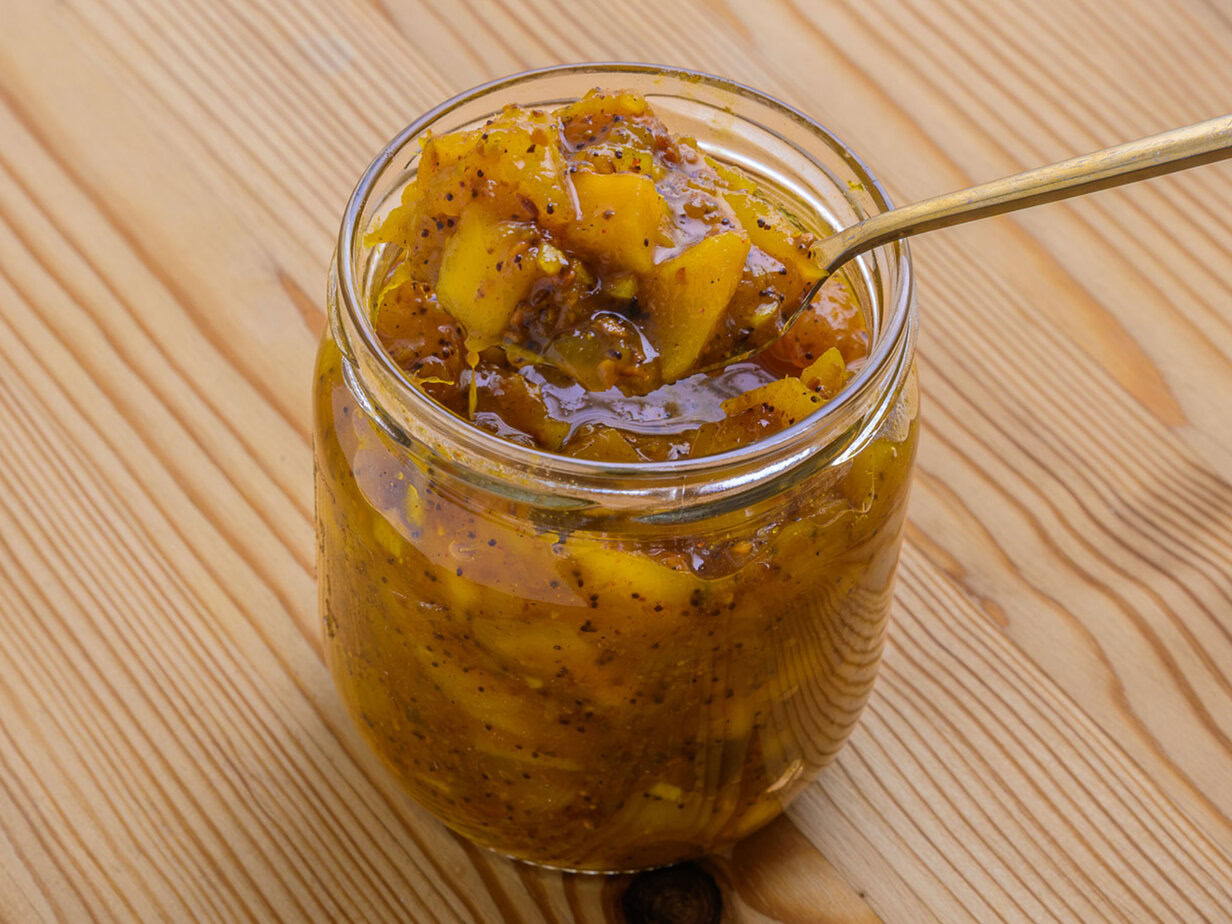
Servings: 3 jars (300 g each)
Ingredients
Toasted Spices
- 1.5 teaspoons cumin seeds
- 1 teaspoon coriander seeds
- 1 teaspoon fenugreek seeds
- 6 pods cardamom green
Syrup
- 300 ml white wine vinegar
- 350 g white sugar
Chutney
- 1.5 kg mangoes ripe but firm, about 1 kg of flesh
- 3 cloves garlic
- 1 piece ginger fresh, 5 cm
- 2 teaspoons nigella seeds
- 1 stick cinnamon 2.5 cm
- 8 whole cloves
- 0.5 teaspoon turmeric ground
- 0.5-1 teaspoon chili ground
- 1.5 teaspoons salt
- 0.5 teaspoon black pepper
Procédé
Toasted Spices
- Heat a dry frying pan over medium heat.
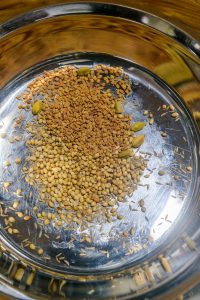
- Toast the cumin seeds, coriander seeds, fenugreek seeds and cardamom pods in the pan, stirring, until they release their aroma.1.5 teaspoons cumin seeds, 1 teaspoon coriander seeds, 1 teaspoon fenugreek seeds, 6 pods cardamom
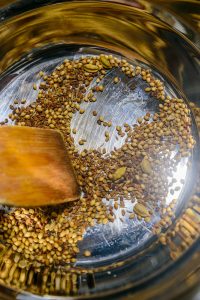
- Transfer the toasted spices to a mortar.
- Grind them into a coarse powder with the pestle.
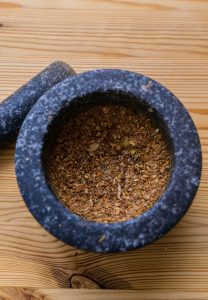
- Set this spice powder aside.
Preparing the Mangoes and Aromatics
- Peel the mangoes.1.5 kg mangoes
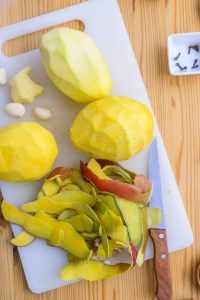
- Cut the flesh away from the pit.
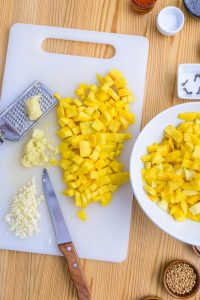
- Cut the flesh into small dice.
- Finely chop the garlic.3 cloves garlic
- Peel the ginger, then grate it.1 piece ginger
Syrup
- Pour the white wine vinegar and sugar into a large heavy-bottomed saucepan.300 ml white wine vinegar, 350 g white sugar
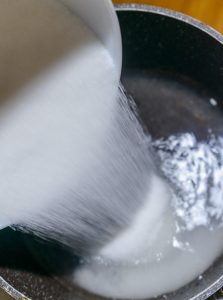
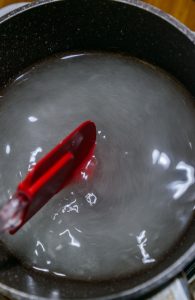
- Bring to a simmer over low heat, stirring until the sugar has completely dissolved.
Cooking the Chutney
- Add the garlic, ginger, nigella seeds, cinnamon stick, cloves, turmeric, ground chili, salt and black pepper to the saucepan.2 teaspoons nigella seeds, 1 stick cinnamon, 8 whole cloves, 0.5 teaspoon turmeric, 0.5-1 teaspoon chili, 1.5 teaspoons salt, 0.5 teaspoon black pepper
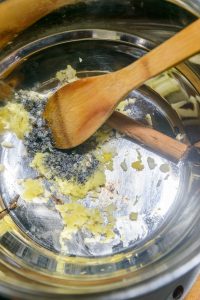
- Add the diced mango and the ground toasted spices.
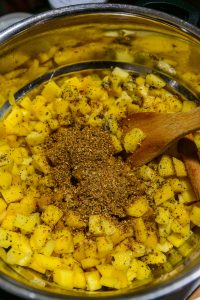
- Stir well.
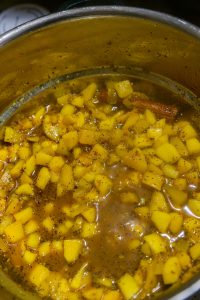
- Simmer uncovered over low heat for 50 minutes to 1 hour.
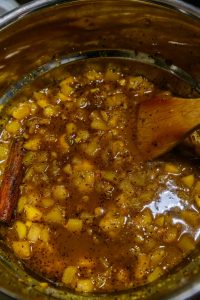
- Stir every 10 minutes, scraping the bottom, so the chutney doesn't stick.
- During cooking, lightly crush the mango pieces with a spatula or potato masher if you prefer a less chunky chutney.
- Remove from the heat once the chutney has noticeably thickened.
Filling the Jars
- Pour the still-hot chutney into sterilized jars.
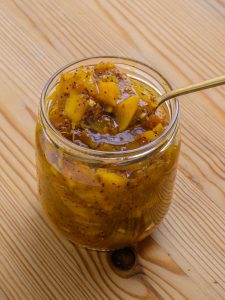
- Seal the jars immediately, while the chutney is still hot.
- Let the jars cool before storing them at room temperature.
Notes
Don't let it boil hard: at a rolling boil, the chutney burns and loses its flavor. Stirring often also keeps its bright yellow color.
Doneness test: put a few saucers in the freezer before you start. Spoon a teaspoon of the syrup onto a cold saucer, wait 30 to 60 seconds and push it with your finger: if the surface wrinkles, it's ready; if not, return the pan to the heat for 5 minutes and test again.
Sterilize the washed, still-damp jars in the oven at 140°C (120°C convection) for 15 to 20 minutes, and leave them there until you fill them: boiling chutney can crack a cold jar. Lids with seals and rubber gaskets can't go in the oven: immerse them in boiling water for 10 minutes.
Storage: at least 6 months in a cool, dark cupboard, then 2 to 3 weeks in the refrigerator once opened. For a more secure seal, immerse the filled, closed jars, with about 1 cm of headspace under the lid, in boiling water for 10 to 15 minutes.
Freshly cooked, the chutney has a strong vinegar taste: it mellows in the jar over two to four weeks, ideally two months.
Did you make this recipe?Tag @marcwiner on Instagram!