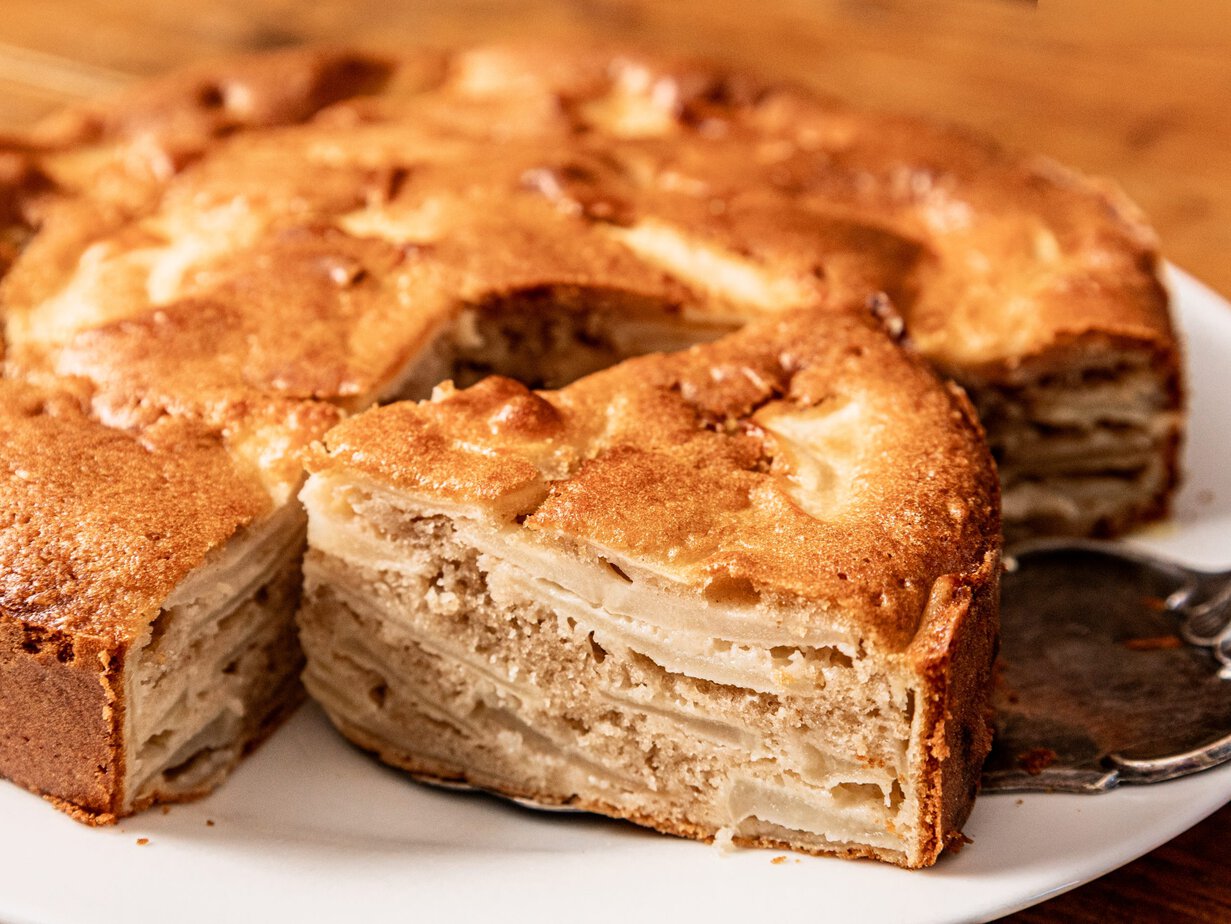
Servings: 6 servings
Ingredients
Pan
- Butter, for the pan
- Flour, for the pan
Apples
- 3 apples medium, a variety that holds its shape when baked, Reine des Reinettes or Boskoop (about 400 g once peeled)
Batter
- 3 eggs
- 80 g cane sugar
- 1 packet vanilla sugar
- 1 teaspoon cinnamon ground
- 100 g butter
- 120 g flour
- 7 g baking powder
Procédé
Oven and Pan
- Preheat the oven to 180°C.
- Butter a round cake pan 22 to 24 cm in diameter.Butter,
- Flour the pan.Flour,
- If using a springform pan, line the bottom with a double layer of parchment paper: otherwise the melted butter in the batter leaks out through the seam.
Apples
- Peel the apples.3 apples
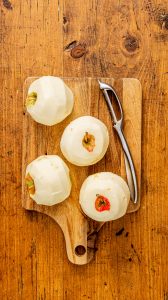
- Core the apples with an apple corer.
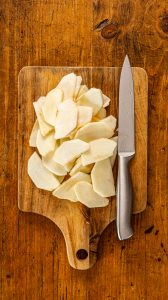
- Cut the apples into thin slices.
Batter
- Crack the eggs into a mixing bowl.3 eggs
- Add the cane sugar, vanilla sugar, and cinnamon.80 g cane sugar, 1 packet vanilla sugar, 1 teaspoon cinnamon
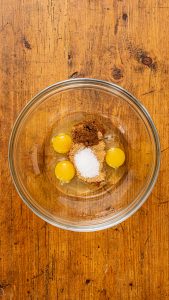
- Whisk vigorously.
- Melt the butter in a small saucepan.100 g butter
- Pour the melted butter into the egg mixture.
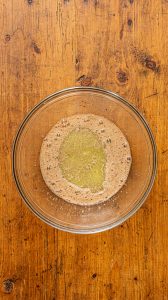
- Whisk to combine.
- Add the baking powder to the flour.120 g flour, 7 g baking powder
- Sprinkle the flour and baking powder into the mixture, whisking as you go: this prevents lumps.
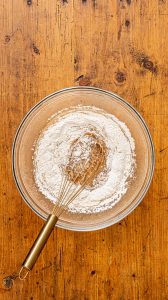
- Add the apple slices.
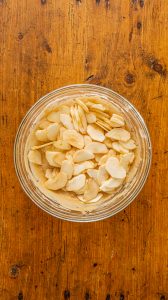
- Stir gently so that all the slices are coated in batter.
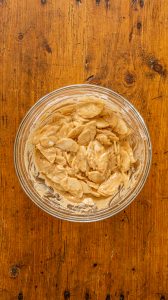
Baking
- Pour the apple batter into the prepared pan.
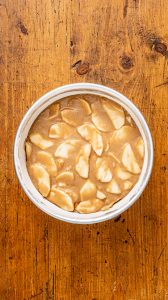
- Bake for 40 minutes at 180°C.
- Check for doneness: a knife blade inserted into the center of the cake should come out clean, and the top should be golden and springy to the touch.
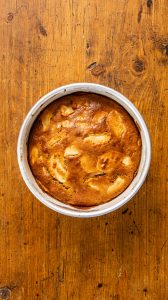
- If the blade doesn't come out clean, bake for 5 more minutes, then check again.
- Take the cake out of the oven.
Cooling and Storage
- Turn the cake out of the pan.
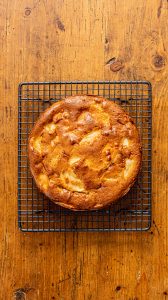
- Let it cool completely.
- Wrap it in plastic wrap, or store it in an airtight container.
- Keep it at room temperature, never in the refrigerator.
Notes
This is the Sunday afternoon cake, the one you make with three apples you have lying around. Cut into thin slices and mixed into the batter, the apples stay spread through every piece instead of sinking to the bottom. They come out meltingly tender but still whole. The cinnamon and vanilla sugar give the cake all its flavor.
Choosing the apples: this is what decides the result. Reine des Reinettes is the best; it holds up in the oven, keeps its shape, and stays slightly tart. Boskoop holds up too, very fragrant and distinctly tart. Reinette Grise du Canada holds up, with firm, slightly dry flesh. Granny Smith holds up but is very sour, so you'll need to add a little more sugar. Avoid Golden Delicious here: it breaks down into applesauce, releases its juice into the batter, and the cake comes out wet in the center with a dense layer at the bottom.
Peeling the apples: yes, for this cake. The skin stays firm while the flesh turns tender, and you can feel it when you bite.
How many apples: three medium apples, about 400 g peeled, for 6 people. Any more and the batter can no longer hold the fruit, and the cake sinks.
Pan size: 22 to 24 cm. In a wider pan, the batter is too thin and the cake dries out. In a narrower pan, it rises too high and stays raw in the center; in that case, allow a little more baking time.
If the cake sinks: a slight dip as it cools is normal. If it caves in noticeably, it came out of the oven too soon and the crumb hadn't finished setting.
Frozen apples: they work, as long as you add them to the batter while they're still hard, without thawing them; otherwise they release their juice. Apples in syrup don't work: they're already cooked, so they fall apart completely.
Dairy-free: replace the butter with the same amount of neutral oil. The cake is a little less fragrant but just as moist.
Vanilla sugar: in France, a packet usually weighs 7.5 g; elsewhere in Europe, supermarket vanilla sugar packets weigh 7.5 to 10 g depending on the brand.
Storage: 3 days at room temperature, wrapped in plastic wrap or in an airtight container. It's even better the next day: it keeps getting moister and the cinnamon flavor spreads through it. The refrigerator dries out the crumb and hardens the butter. It freezes very well, whole or in slices, for up to 3 months: wrap it once it has cooled completely, then let it come back to room temperature for a few hours before serving.
Upside-down version: the same batter is poured over a caramel made in the bottom of the pan and topped with apple wedges. The cake is turned out upside down and the apples end up on top, glossy. It's a cousin of tarte Tatin.
European cousins: gâteau invisible is a French variation in which a great many apples are sliced very thin on a mandoline and bound with very little batter, often in a loaf pan. In Germany, versunkener Apfelkuchen is a thick sponge cake with apple halves, scored on top, pressed into it, and the batter wraps around them as it bakes.
Did you make this recipe?Tag @marcwiner on Instagram!