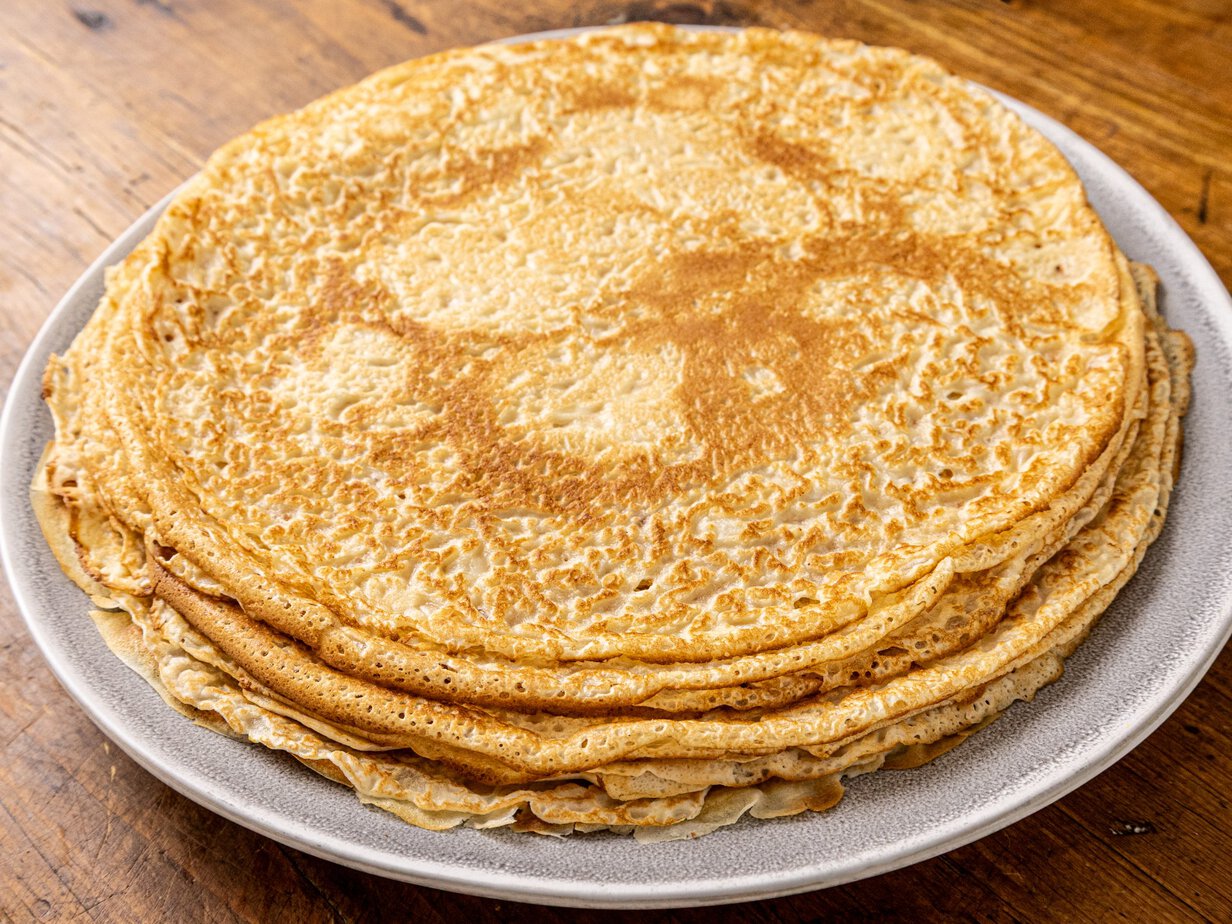
Servings: 12 crêpes
Ingredients
Batter
- 250 g flour T55 (all-purpose flour), or instant flour
- 1 teaspoon salt
- 3 large eggs
- 50 cl milk whole
Brown Butter
- 50 g butter
Cooking
- Oil, for greasing the crêpe pan
Procédé
Before You Start
- Take the eggs and milk out of the fridge ahead of time: all the ingredients should be at room temperature.
Batter
- Sift the flour into a mixing bowl.250 g flour
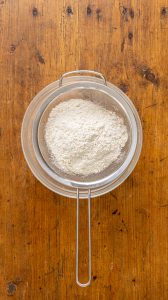
- Add the salt.1 teaspoon salt
- Crack the eggs into the bowl, on top of the flour.3 large eggs
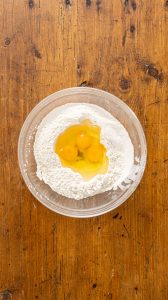
- Whisk the eggs just enough to break the yolks, without mixing in the flour at this stage (or beat the eggs in a separate bowl before pouring them over the flour).
- Pour a little milk over the eggs.50 cl milk
- Whisk, gradually drawing in the flour.
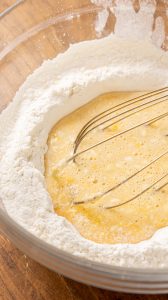
- Keep going, adding the milk gradually, never pouring in all the liquid at once, and drawing in all the flour little by little, until the batter is smooth.
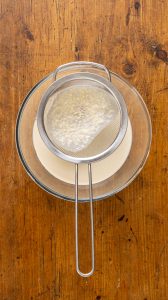
- Strain the batter through a conical strainer, or a fine-mesh sieve, to make sure there are no lumps.
Brown Butter
- Cut the butter into pieces.50 g butter
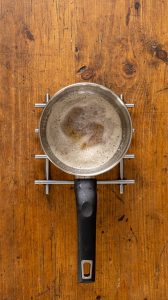
- Melt the butter in a small saucepan over medium heat, keeping a close eye on it.
- Take the saucepan off the heat as soon as the butter starts to color: it is now brown butter.
- Pour the brown butter into the batter.
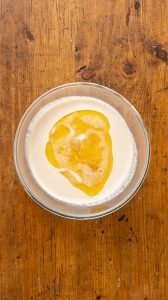
- Whisk to combine.
Resting
- Cover the bowl.
- Let the batter rest for at least 30 minutes at room temperature.
Cooking
- Set a plate over a saucepan of hot water, like a double boiler, to keep the crêpes warm.
- Heat the crêpe pan over medium-high heat, without letting it get too hot.
- Grease the crêpe pan with a paper towel soaked in oil.Oil,
- Pour in a ladleful of batter all at once.
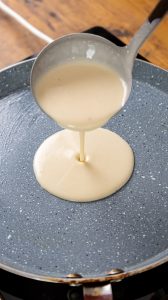
- Immediately swirl the crêpe pan with a flick of the wrist to spread the batter in a thin layer over the entire bottom.
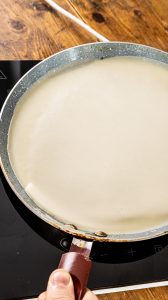
- Flip the crêpe when the top has set.
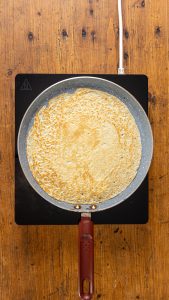
- Cook for 1 more minute.
- Slide the crêpe onto the warm plate.
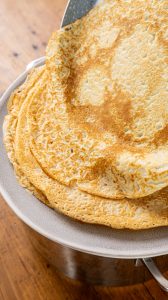
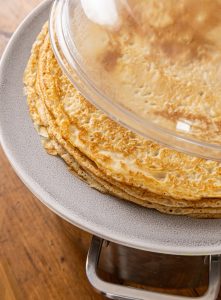
- Cover the plate with a sheet of aluminum foil or a stockpot lid.
- Repeat with the rest of the batter, stacking the crêpes on the plate as you go and keeping them covered.
Notes
The keys to success: sift the flour, use room-temperature ingredients, don't pour in all the liquid at once, let the batter rest, and don't cook the crêpes in a pan that's too hot. The result is golden, tender, light crêpes.
Sugar: this batter deliberately contains none. Sugar caramelizes during cooking and makes the crêpe stick to the pan. Plain batter goes with every sweet filling. Many families still add one to two tablespoons of sugar or vanilla sugar, for more golden, crisp edges, and sometimes a tablespoon of dark rum, vanilla extract or orange blossom water: pour it into the batter along with the butter.
Beer: for even lighter crêpes, replace half the milk with lager.
Brown butter: it gives the crêpes a subtle toasted hazelnut flavor. Simply melted butter works too; it's the most common version.
Why rest the batter: resting gives the flour time to hydrate and the gluten time to relax. Without resting, the crêpes turn out more elastic and rubbery. The batter can also be made the day before and left to rest, covered, in the fridge for 12 to 24 hours; bring it back to room temperature before cooking.
Pan: a crêpe pan or, failing that, a lightweight nonstick frying pan 24 to 26 cm in diameter, the size that makes a dozen crêpes with this batter. To check that it's at the right temperature, flick a few drops of water into it: they should bead up and roll across the surface instead of spreading out.
Storage: once cooled, stack the crêpes and wrap them in plastic wrap, or store them in an airtight container; they keep for 3 days in the fridge. They freeze very well for 1 to 2 months, separated by sheets of parchment paper so they don't freeze into a block, in a tightly sealed freezer bag. To reheat, warm them briefly in a hot pan with a pat of butter rather than in the microwave, which makes them rubbery.
Classic fillings: butter and sugar, lemon and sugar, jam (strawberry, raspberry, apricot), chocolate hazelnut spread, with or without banana slices, chestnut spread, salted butter caramel. Spread on the filling, then fold the crêpe in half, and in half again to form a triangle.
Crêpes and galettes: the Breton buckwheat galette is a different dish. It's made with buckwheat flour (also called black wheat), water and salt, and topped with savory fillings such as ham, egg and cheese. The wheat crêpe, made with wheat flour, milk and eggs, is kept for sweet fillings. In Lower Brittany, the galette is sometimes called a black wheat crêpe.
Did you make this recipe?Tag @marcwiner on Instagram!