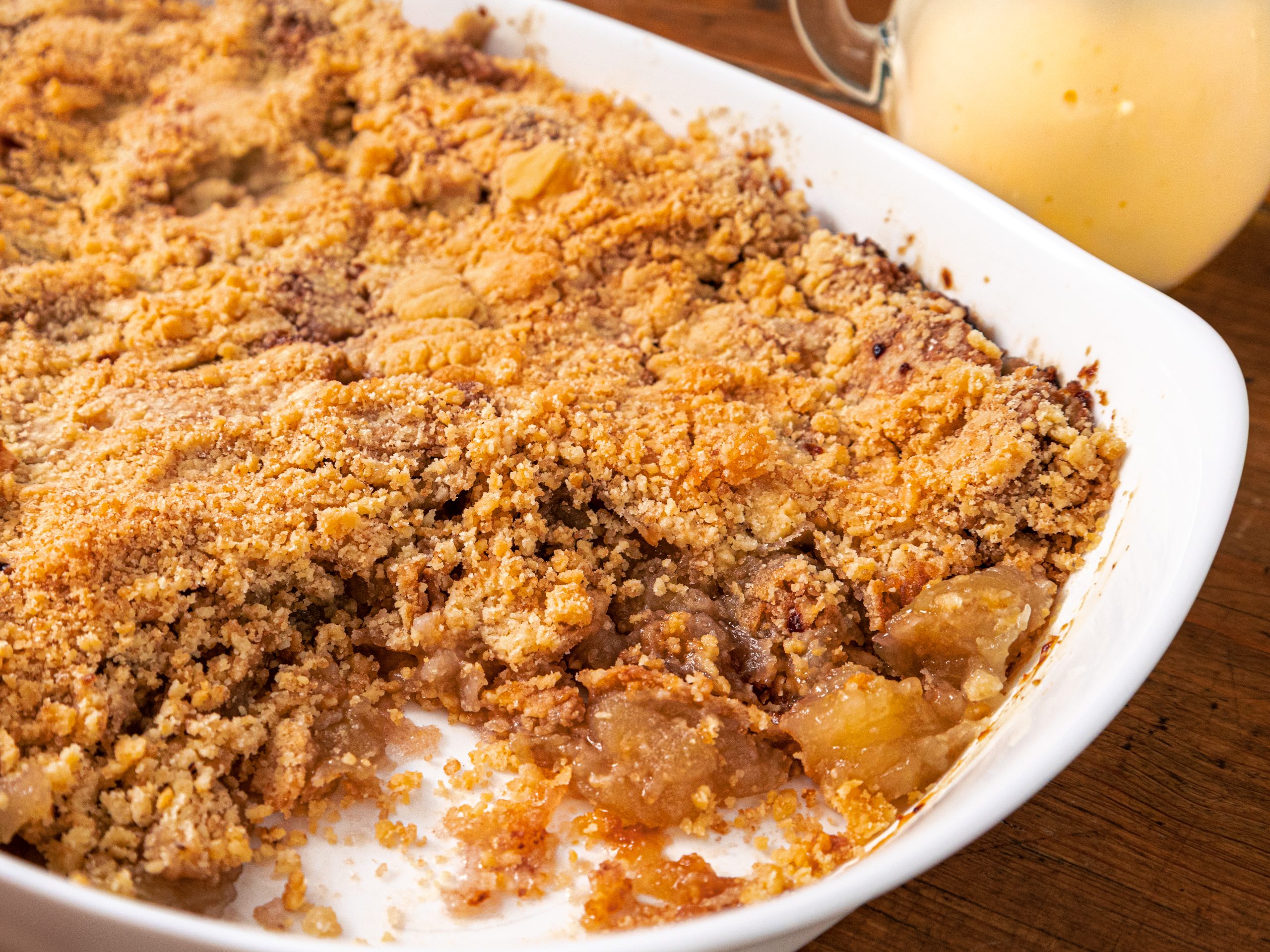
Servings: 6 servings
Ingredients
Crumble
- 150 g all-purpose flour (T45 or T55)
- 75 g unsalted butter well chilled and diced, or stick margarine
- 75 g demerara sugar, or turbinado sugar
Apples
- 750 g apples, peeled and cored (about 6 medium apples)
- 75 g superfine sugar
- 0.75 teaspoon ground cinnamon
- 1.5 tablespoons cornstarch (such as Maizena)
To serve
- Custard, cream or vanilla ice cream, your choice
Procédé
Oven
- Preheat the oven to 180°C (160°C convection).
Crumble
- Put the flour in a large mixing bowl.150 g all-purpose flour
- Add the cold diced butter.75 g unsalted butter
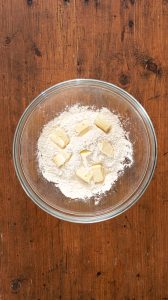
- Using your fingertips, gently rub the butter and flour together until the mixture is coarse and sandy, with a few larger lumps.
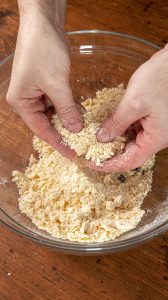
- Stop as soon as you reach this texture: the mixture should stay crumbly and never come together into a dough.
- If the butter softens while you are rubbing it in, put the bowl in the fridge or freezer for a few minutes to firm it up.
- Add the demerara sugar.75 g demerara sugar,
- Stir with a spoon to distribute it evenly.
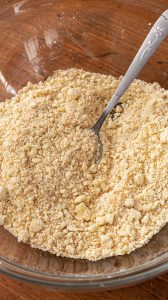
- Set the crumble aside while you prepare the apples.
Apples
- Peel the apples.750 g apples,
- Remove the cores.
- Roughly cut the apples into bite-size pieces, as even as possible so they all cook at the same rate.
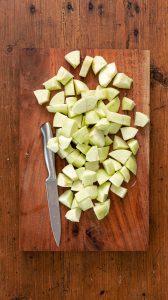
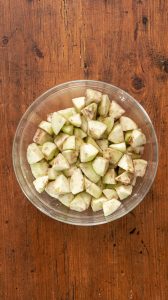
- Put the apple pieces in a second large mixing bowl.
- Add the superfine sugar, cinnamon and cornstarch.75 g superfine sugar, 0.75 teaspoon ground cinnamon, 1.5 tablespoons cornstarch
- Toss until all the apple pieces are coated.
Assembly
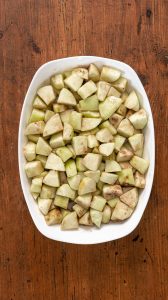
- Transfer the coated apples to a glass or ceramic baking dish about 20 cm across, with a capacity of 1 to 1.5 L.
- Spread the apples over the whole bottom of the dish.
- Press them down lightly so there are no large gaps.
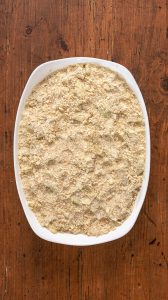
- Spoon the crumble over the apples, covering the fruit completely.
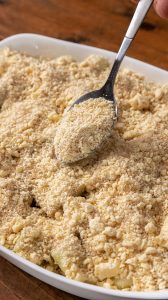
- Using your fingertips, press lightly on top of the crumble to pack it down a little.
- Leave the surface uneven and bumpy rather than smoothing it: those bumps turn crisp and golden as it bakes.
Baking
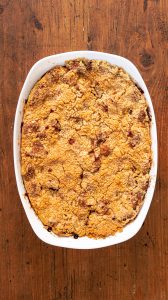
- Bake for 40 to 45 minutes, until the top is crisp and golden.
- Toward the end of the baking time, insert the tip of a small knife into the center of the dish: it should slide easily into the apple pieces.
- If the apples are still firm, bake for a few more minutes, then check again.
- If the top is already nicely browned but the apples are not tender yet, lay a sheet of aluminum foil over the dish to finish baking.
- Take the crumble out of the oven.
Resting and serving
- Let the crumble rest for 10 to 15 minutes: the apple juices thicken slightly and it is easier to serve.
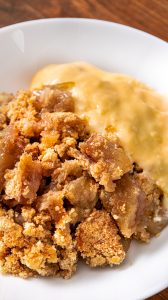
- Serve warm with custard, cream or vanilla ice cream, or on its own.Custard, cream or vanilla ice cream,
Notes
This is the timeless British pudding: sweet, cinnamon-scented apples under a crisp layer of flour, butter and sugar, served warm with plenty of custard, Britain's hot crème anglaise. Crumble became hugely popular during and after World War II rationing, because this mix of flour, fat and sugar was simpler and cheaper than pie pastry.
A classic British crumble has no oats: it's the American version, apple crisp, that includes them. For a version with oats, like Swedish smulpaj, stir a handful of rolled oats into the crumble before spreading it over the apples.
Choosing apples: in the UK, cooks use Bramleys and other cooking apples, which give a softer, slightly tarter filling. Bramleys are impossible to find in continental Europe: for that same tartness, use Boskoop, King of the Pippins, Elstar or Granny Smith. Sweeter eating apples work too: the filling is then sweeter and the pieces hold their shape a little better.
No need to precook the apples: cut into even pieces, they cook under the crumble as it bakes.
Cornstarch thickens the juice the apples release as they cook: the filling turns soft and syrupy instead of leaving watery liquid at the bottom of the dish. The recipe works without cornstarch, but the filling is runnier.
Demerara sugar, with its large crystals, gives the crumble extra crunch. You can replace it with turbinado sugar, light brown sugar, superfine sugar or granulated sugar: the flavor and texture change slightly.
Butter or margarine: stick margarine works for an everyday crumble, while butter gives a richer flavor. Unsalted butter is best, but salted butter is fine if that's all you have. Either way, the fat must stay cold until you rub it in: that's what gives a crumbly, crisp topping rather than a doughy layer.
Crumble not crisp enough: the butter was too warm, the mixture was overworked, or it didn't bake long enough. Leave some bigger lumps in the crumble and bake until it is nicely golden.
Dish size: any baking dish of a similar capacity will do, even a cake pan. With 750 g of apples, a 1 L dish is filled to the brim; a 1.5 L dish of the same diameter gives you more room. A deeper dish or one made of a different material changes the baking time: keep an eye on it toward the end.
Storage: 3 days in the fridge, covered. Reheat in the microwave or the oven before serving.
Freezing: the crumble is best frozen before baking, for up to 3 months, with the dish wrapped in plastic wrap and then in aluminum foil. Bake it straight from frozen: allow 15 to 20 minutes extra baking time in total, keeping the dish covered with foil for the first 15 to 20 minutes.
Reheating: in the microwave, a portion heats up quickly but the crumble softens a little. To keep the top crisp, reheat it in the oven under a sheet of aluminum foil, removing the foil for the last few minutes.
Did you make this recipe?Tag @marcwiner on Instagram!