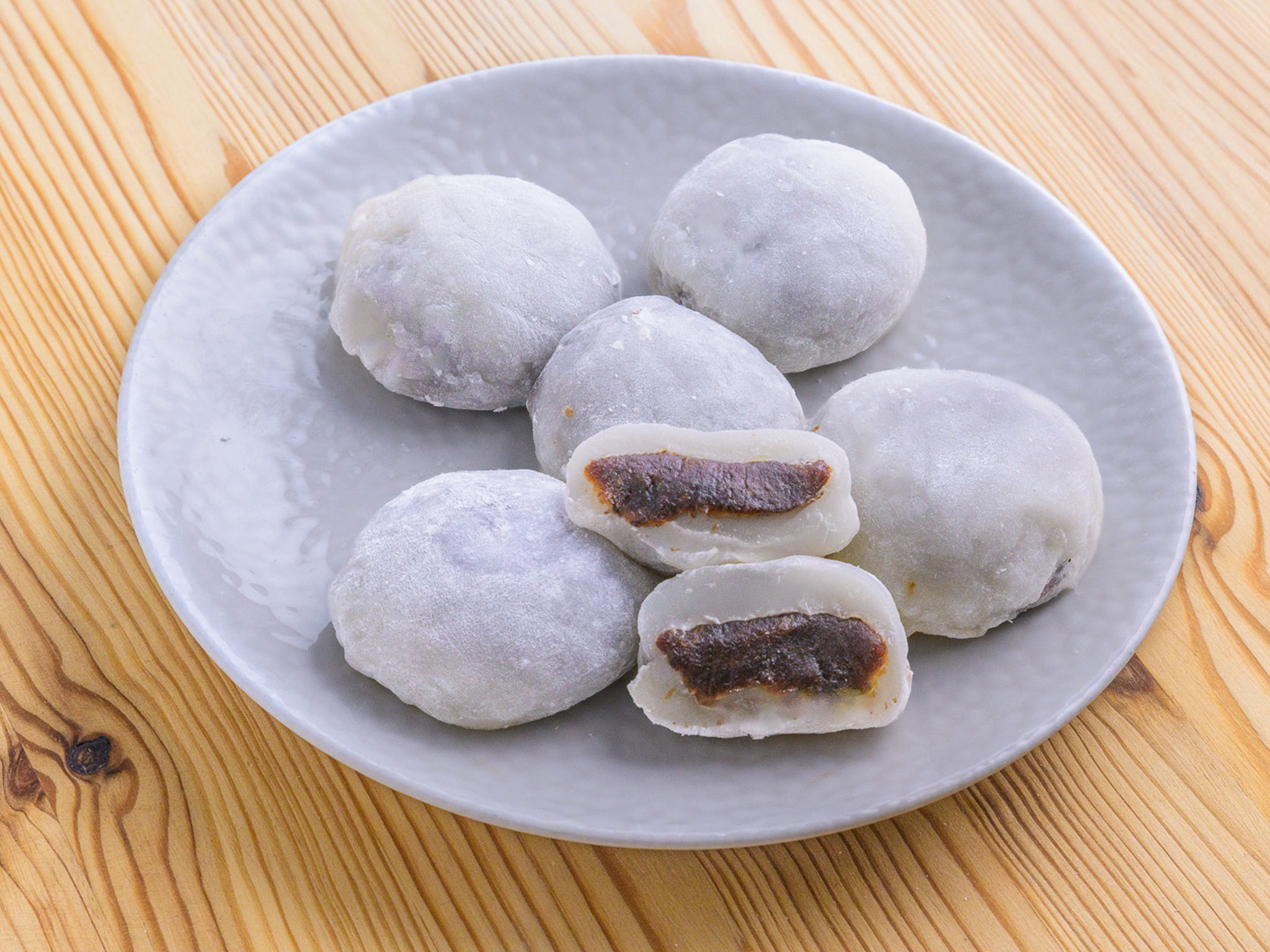
Servings: 8 daifuku
Ingredients
Filling
- 8 heaping tablespoons red bean paste sweetened (anko, about 250 g), made ahead and completely cooled
Mochi Dough
- 160 g mochiko (glutinous rice flour)
- 180 ml water, plus a little extra if the dough is too dry
- 150 g sugar, added in three batches
Shaping
- Potato starch (katakuriko), or cornstarch, for dusting generously
Procédé
Filling (Make Ahead)
- Make the red bean paste ahead of time.
- Let it cool completely.
- Shape 8 balls of red bean paste, each the size of a heaping tablespoon.8 heaping tablespoons red bean paste

- Set the balls aside on a plate.
Mochi Dough
- Put the mochiko in a glass bowl, or in another heatproof container.160 g mochiko
- Add the water.180 ml water,
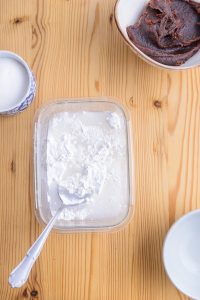
- Mix well.
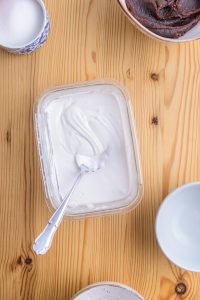
- If the dough is too dry, add a little water, one tablespoon at a time, mixing after each addition.
- Place the bowl, with the dough in it, in the basket of a steamer.
- Steam for 20 minutes.
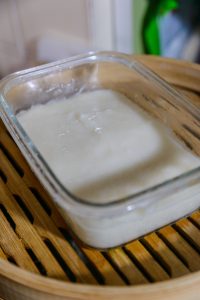
Cooking with Sugar
- Transfer the steamed mochi to a saucepan.
- Heat over medium to medium-low heat.
- Add the first third of the sugar.150 g sugar,
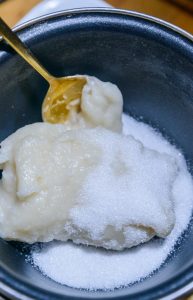
- Stir until the sugar has completely dissolved.
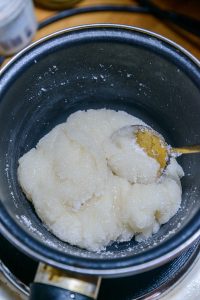
- Add the second third of the sugar.
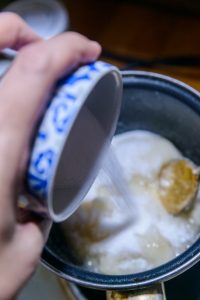
- Stir well until it has dissolved.
- Add the last third of the sugar.
- Keep cooking, stirring, until the sugar has dissolved.
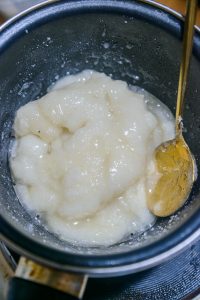
- Take your time to melt the sugar fully, without letting it burn.
Shaping
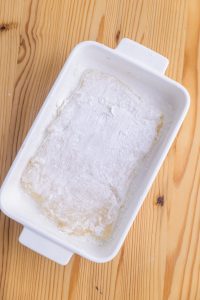
- Generously dust a baking sheet with the starch.Potato starch
- Place the hot mochi on the baking sheet.
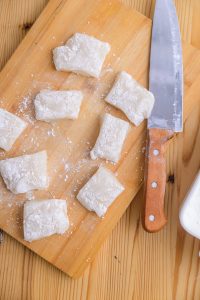
- Cut off a piece of mochi for each daifuku (8 in total).
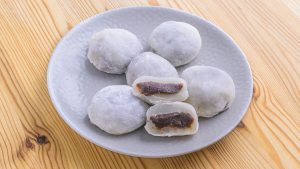
- Wrap a ball of red bean paste in the piece of mochi.
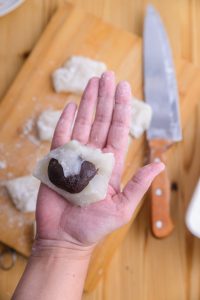
- Pinch the edges of the mochi to seal the daifuku tightly.
- Place the daifuku on the baking sheet, seam side down.
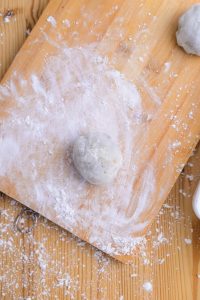
- Repeat with the remaining mochi and red bean paste balls.
- Serve the daifuku seam side down.
Notes
Mochiko (glutinous rice flour) is essential: regular rice flour won't give mochi its stretchy texture. You can find it at Asian or Japanese grocery stores and online.
The sugar, added to the saucepan in three batches, keeps the dough soft and tender far longer than mochi made from pounded rice. Don't reduce the amount.
Red bean paste can be bought at Japanese grocery stores, or made with the homemade recipe on this site. Both koshian (smooth) and tsubuan (chunky) work well.
No steamer? A steamer basket set over a saucepan of simmering water, with the lid on, does the job.
Did you make this recipe?Tag @marcwiner on Instagram!