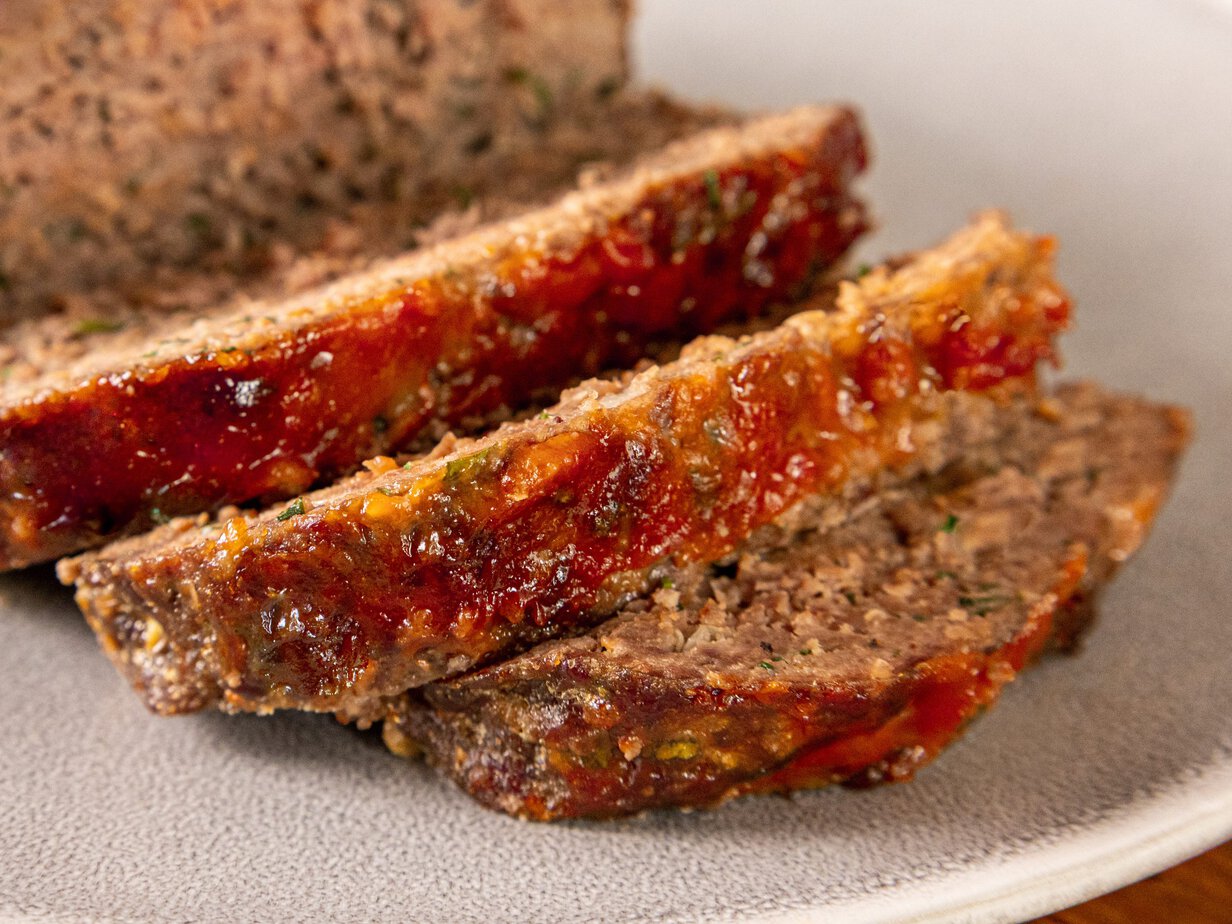
Servings: 8 servings
Ingredients
Glaze
- 2 tablespoons brown sugar
- 2 teaspoons Worcestershire sauce
- 1 tablespoon Dijon mustard
- 4 tablespoons ketchup
- 1 tablespoon horseradish prepared, from a jar
Panade
- 2 slices bread (white, whole wheat, rye or sourdough)
- 120 ml milk
Meatloaf
- 900 g beef ground (round or chuck)
- 1 egg
- 1 teaspoon salt kosher, or 0.5 teaspoon table salt
- 0.75 teaspoon black pepper, freshly ground
- 1 teaspoon Worcestershire sauce
- 1 small onion, diced
- 4 tablespoons parsley fresh, chopped
Procédé
Preparation
- Preheat the oven to 180°C.
- Line a rimmed baking sheet with parchment paper or aluminum foil.
Glaze
- In a small bowl, combine the brown sugar, the Worcestershire sauce for the glaze, the Dijon mustard, the ketchup and the horseradish.2 tablespoons brown sugar, 2 teaspoons Worcestershire sauce, 1 tablespoon Dijon mustard, 4 tablespoons ketchup, 1 tablespoon horseradish
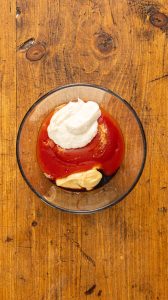
- Whisk until smooth.
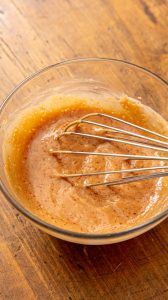
- Divide the glaze in half: one half will be used to coat the meatloaf, the other will be served at the table.
Panade
- Tear the bread into very small pieces.2 slices bread
- Place the bread pieces in a small bowl.
- Pour the milk over the bread.120 ml milk
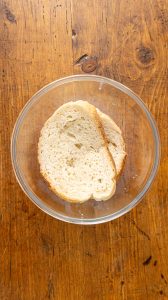
- Let soak for 5 minutes, until the milk is completely absorbed and the bread is very soft and soggy.
- Mash the bread with your fingertips to form a paste.
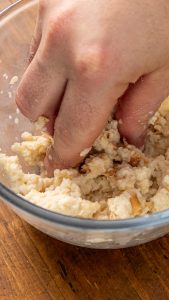
Meatloaf
- Place the ground beef in a large mixing bowl.900 g beef
- Add the panade.
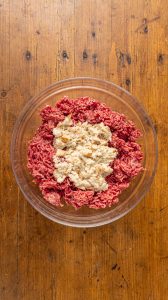
- Mix by hand, mashing the larger pieces of bread, until the bread is almost completely blended into the meat.
- Add the egg, salt, pepper and the Worcestershire sauce for the meatloaf.1 egg, 1 teaspoon salt, 0.75 teaspoon black pepper,, 1 teaspoon Worcestershire sauce
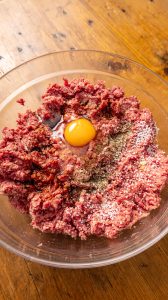
- Mix by hand until everything is evenly combined.
- Add the onion and parsley.1 small onion,, 4 tablespoons parsley
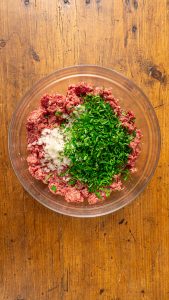
- Mix until the onion and parsley are evenly distributed.
- Transfer the meat to the prepared baking sheet.
- Shape it by hand into an oblong loaf.
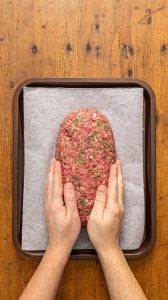
Baking
- Bake for 30 minutes.
- Remove the baking sheet from the oven.
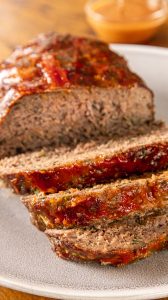
- Spread the half of the glaze meant for coating over the entire top of the meatloaf.
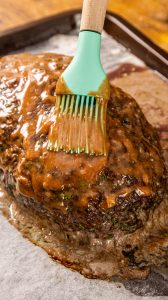
- Return to the oven for 20 to 30 minutes, until a thermometer inserted into the center of the loaf reads 71°C.
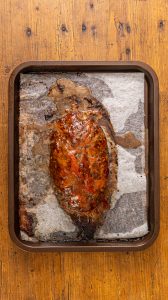
Resting and Serving
- Let the meatloaf rest for 5 to 10 minutes before slicing.
- While it rests, spoon off the whitish juices (coagulated proteins) that have collected around the meat.
- Transfer the meatloaf to a serving platter.
- Cut into slices.
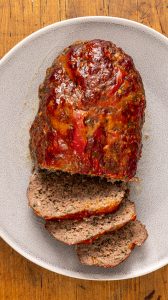
- Serve with the reserved glaze on the side.
Notes
Meat: this recipe uses ground round, but chuck works too. In France, avoid 5% fat ground beef, which is too lean: the meatloaf turns out dry and dense. Choose 15% fat, or cut the beef with a little ground pork. In Germany, gemischtes Hackfleisch (half beef, half pork) works well. You can also use a mix of beef and pork, or beef and veal, or 10% fat ground beef for a slightly lighter version.
Salt: this recipe uses Diamond Crystal kosher salt, which is much less salty by volume than table salt, hence the half teaspoon of table salt as a substitute.
Horseradish: you'll find it in jars in the condiment aisle (Meerrettich in Germany). It gives the glaze a spicy kick. If you don't like horseradish, you can replace it with bourbon for a smokier flavor. Worcestershire sauce (Lea & Perrins) is available in most European supermarkets. European ketchup is a little less sweet and more acidic than American ketchup.
Loaf pan or baking sheet: you can bake the meatloaf in a loaf pan, but it's better to shape it by hand on a baking sheet, because that makes it easier to remove the juices that run out during baking. For mini meatloaves, divide the mixture into 6 to 8 small loaves and bake for 20 to 25 minutes depending on their size. A 900 g loaf generally takes 45 to 60 minutes to cook: a thermometer reading of 71°C in the center is still the best guide.
Other variations: add dried herbs or spices (oregano, basil, thyme, onion powder, garlic powder); blitz fresh bread into fine crumbs so it mixes in more easily; replace the bread with rolled oats (quick or old-fashioned, never steel-cut), panko breadcrumbs or crushed crackers, well soaked; replace the milk with a plant-based milk; use gluten-free bread and gluten-free Worcestershire sauce.
Make ahead: the raw mixture keeps for one day in the refrigerator, in the bowl covered with plastic wrap. Take it out about 20 minutes before baking, then shape the loaf.
Storage: leftovers keep for up to 5 days in the refrigerator, tightly wrapped or in an airtight container. Reheat slices in the microwave for 30 to 45 seconds, or wrapped in aluminum foil in a 150°C oven for 10 to 15 minutes. Cooked meatloaf can be frozen for 3 months, double-wrapped; uncooked meatloaf can be frozen for 2 to 3 months and must be thawed completely before baking and glazing as in the recipe.
Did you make this recipe?Tag @marcwiner on Instagram!