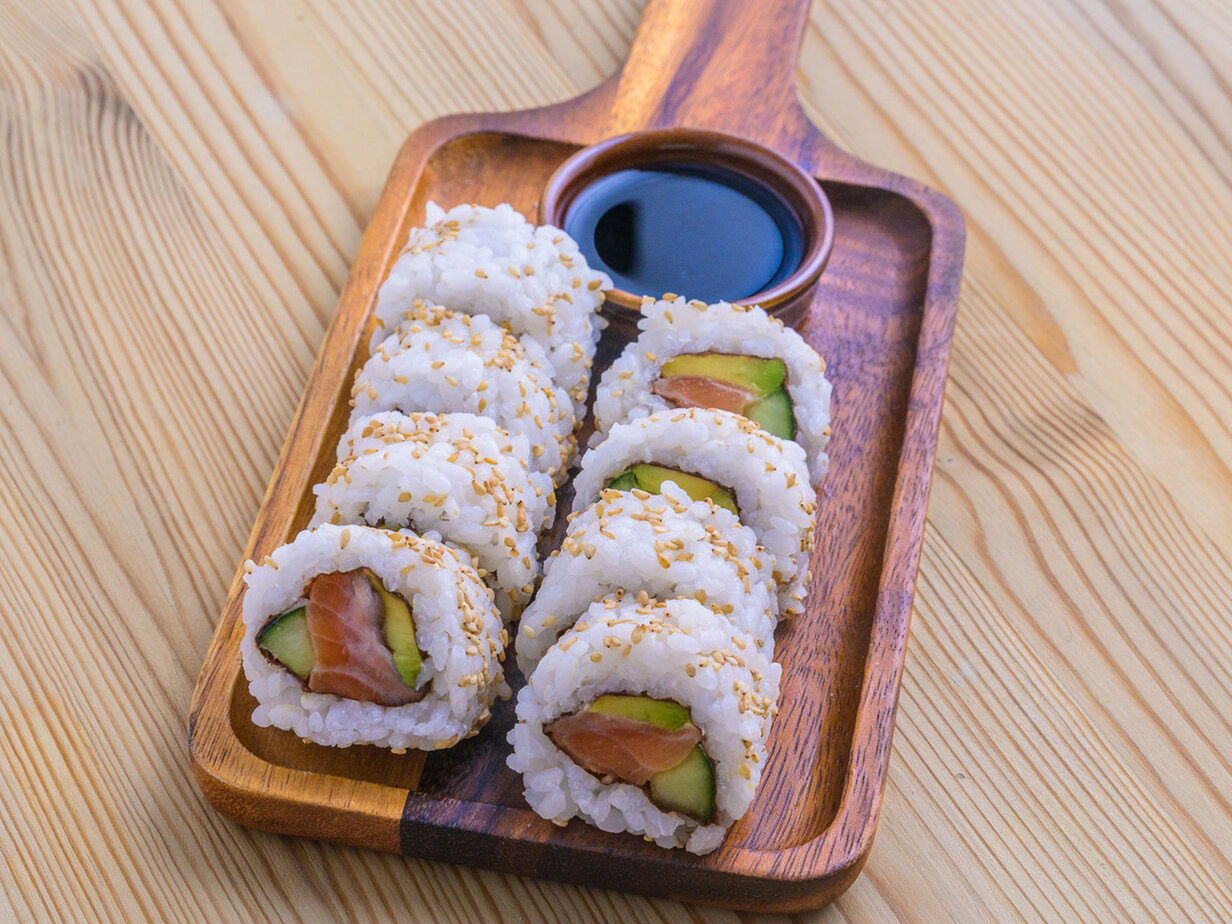
Servings: 4 servings
Ingredients
Sushi Rice
- 165 g sushi rice
- 240 ml water
- 1.5 tablespoons rice vinegar
- 1 teaspoon sugar
- 0.5 teaspoon salt
Filling
- 4 slices tuna or salmon, cut into long sushi-style slices
- 1 tablespoon Japanese mayonnaise
- 0.5 cucumber Lebanese
- 0.5 avocado
- 1 teaspoon lime juice, about
Rolls
- 2 sheets nori
- 1 tablespoon sesame seeds, or flying fish roe (tobiko)
To Serve
- Ginger pickled
- Soy sauce
Procédé
Sushi Rice
- Put the rice in a saucepan or large bowl with plenty of cold water.165 g sushi rice, 240 ml water
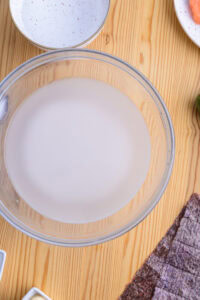
- If time allows, let it stand for 15 to 20 minutes; otherwise, go straight to rinsing.
- Stir the rice in the water with your hands, swirling it around, until the water turns cloudy.
- Pour off the water.
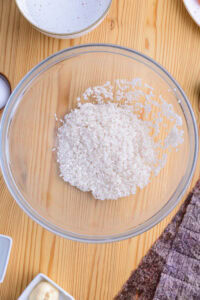
- Repeat once or twice, until the water stays almost clear.
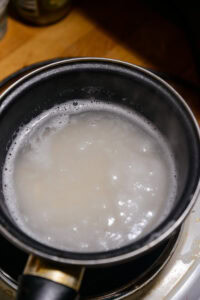
- Put the rinsed rice in a saucepan with the cooking water.
- Cover and set over medium heat.
- As soon as the water comes to a boil, lower the heat and simmer for about 10 to 12 minutes, until all the water has been absorbed and the rice is cooked but still has a little bite.
- While the rice is cooking, put the rice vinegar, sugar and salt in a microwave-safe bowl.1.5 tablespoons rice vinegar, 1 teaspoon sugar, 0.5 teaspoon salt
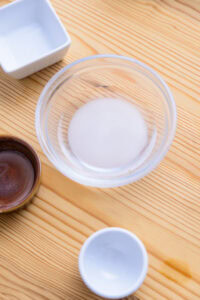
- Microwave for about 15 seconds, until the sugar and salt have dissolved.
- Take the rice off the heat and transfer it to a large bowl so it cools faster.
- Pour the vinegar mixture over the rice and mix to distribute it evenly.
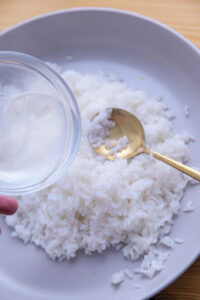
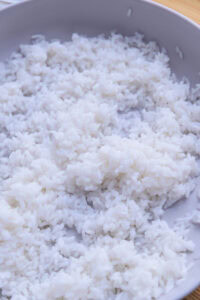
- Let the rice cool.
Filling
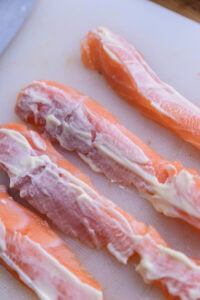
- Prepare the strips of raw fish.4 slices tuna or salmon,
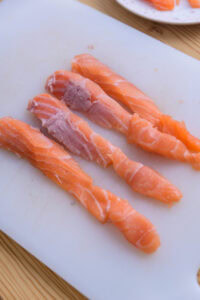
- Spread a little mayonnaise on the cut side of the strips.1 tablespoon Japanese mayonnaise
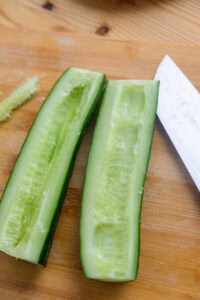
- Cut the half cucumber lengthwise into four sticks.0.5 cucumber
- Remove some of the seeds if there are a lot of them.
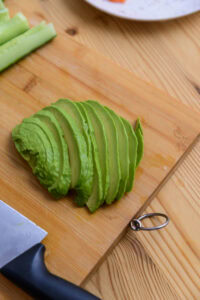
- Cut the avocado into long slices.0.5 avocado
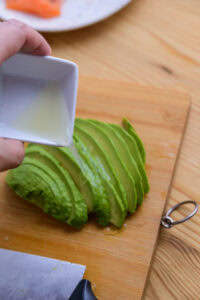
- Drizzle the avocado slices with a little lime juice and gently rub them to spread it, so they don't turn brown.1 teaspoon lime juice,
Rolls
- Cut the nori sheets in half along the fold, using scissors if they don't separate easily.2 sheets nori
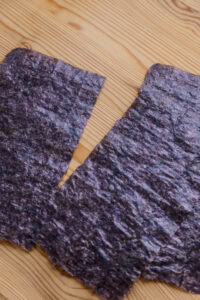
- Cover the sushi mat with plastic wrap, or slip it into a freezer bag.
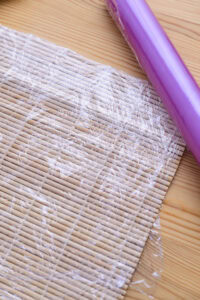
- Divide the rice into four equal portions.
- Lay half a sheet of nori on the covered mat.
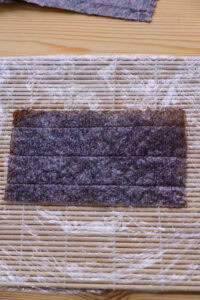
- Press one portion of rice in an even layer over the entire half sheet, right to the edges, working from one long side to the other.
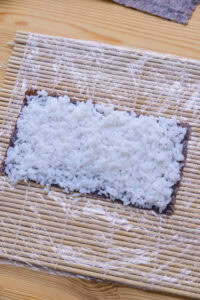
- Sprinkle the entire surface of the rice with sesame seeds, or with tobiko.1 tablespoon sesame seeds,
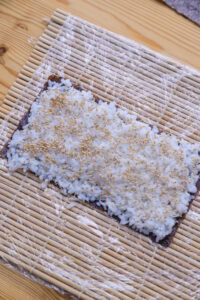
- Carefully flip the sheet over, seaweed side up.
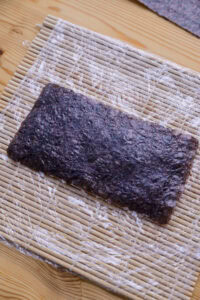
- Lay a cucumber stick along the full length, close to one of the long edges.
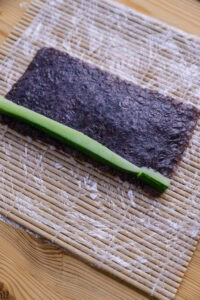
- Lay a line of salmon or tuna right next to it.
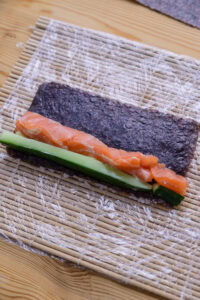
- Lay a row of avocado slices, keeping it as even as possible along the full length.
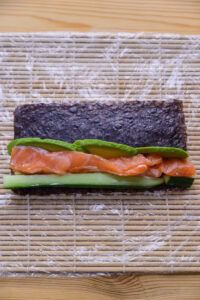
- Lift the edge of the mat on the filling side and fold it over, to enclose the filling in the nori, pressing lightly.
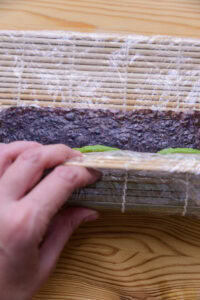
- Pull back the edge of the mat so it doesn't get rolled up inside the roll, then keep rolling the mat so the roll turns over on itself.
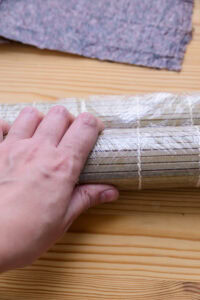
- When you reach the end of the rice, unroll the mat: the roll is formed.
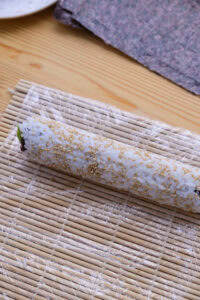
- Place the roll on a cutting board.
- Cut it in half through the middle with a very sharp knife.
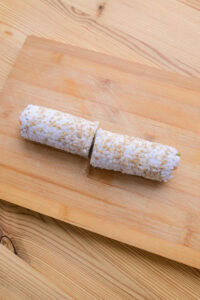
- Cut each half into three pieces.
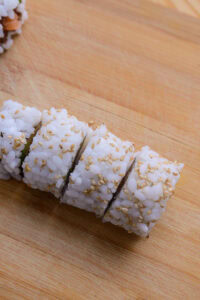
- Repeat with the remaining nori, rice and filling.
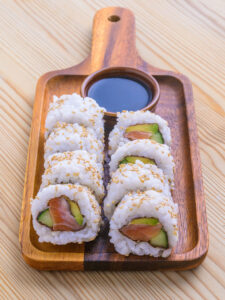
- Serve with pickled ginger and soy sauce for dipping.Ginger, Soy sauce
Notes
The California roll is an uramaki, an inside-out roll: the rice is on the outside and the nori sheet on the inside. Its origin is disputed between Los Angeles (the Tokyo Kaikan restaurant, in the 1960s) and Vancouver (chef Hidekazu Tojo).
Japanese mayonnaise (Kewpie) is available in Asian grocery stores.
The cucumber should be roughly as long as the long side of the nori sheet so it fills the roll from end to end. If you can't find a Lebanese cucumber or a mini cucumber, cut a section of regular cucumber and remove some of the skin, which is more bitter, along with the excess seeds, so the roll isn't too wet.
You may come up a little short on rice for the fourth roll if you don't divide it into equal portions from the start. Another option: make three generously filled rolls and use the last half sheet and the remaining rice for two small maki.
A small bowl of water with a little rice vinegar added helps keep your fingers moist while you press the rice onto the nori, so it doesn't stick.
Did you make this recipe?Tag @marcwiner on Instagram!