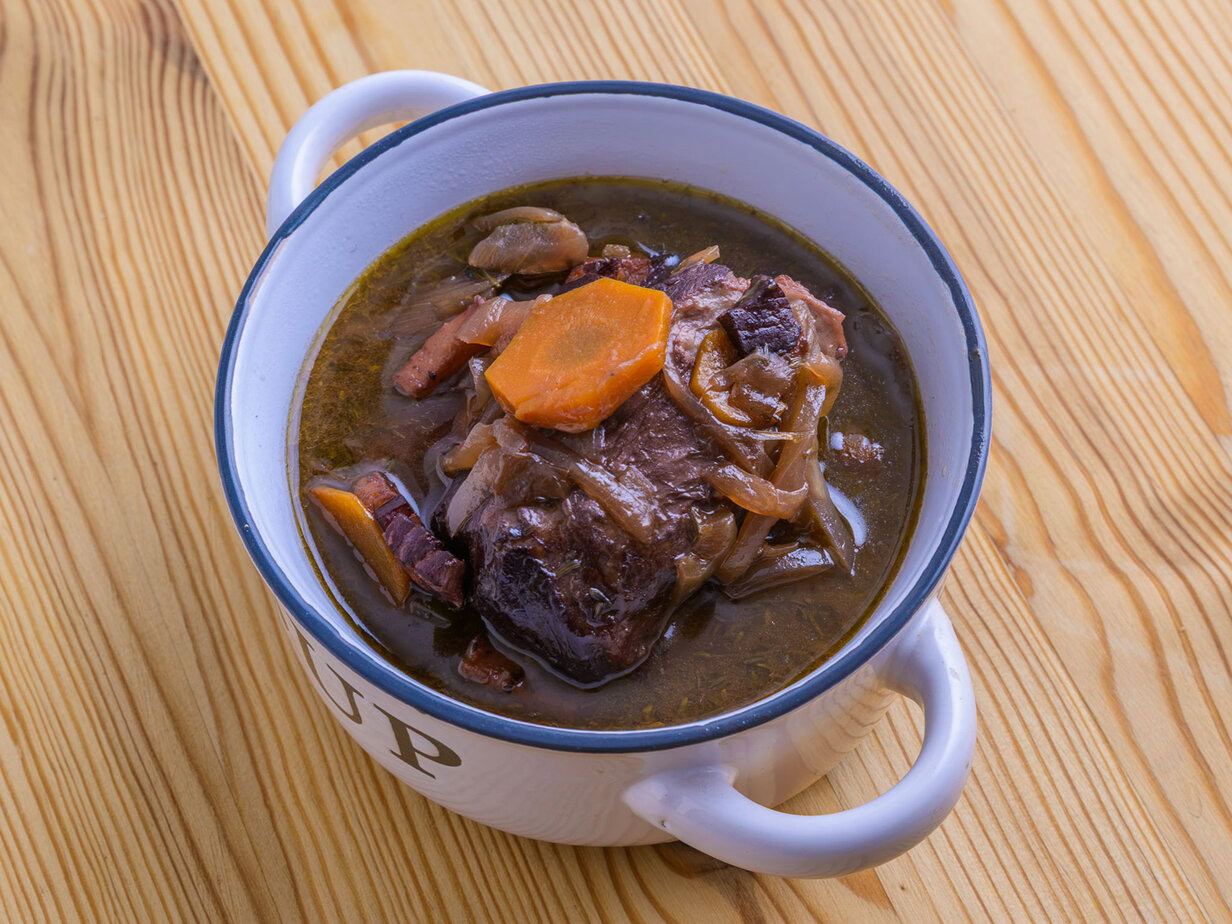
Servings: 6 servings
Ingredients
Marinade
- 4 pork cheeks
- 1 onion, finely chopped
- 1 carrot, peeled and thinly sliced
- 2 cloves garlic, peeled
- 1 bouquet garni (thyme, bay leaf, flat-leaf parsley)
- 2 whole cloves
- 1 bottle red wine full-bodied
Aromatics
- 150 g cured pork belly, or lean slab bacon
- 1 onion
- 1 carrot
- 1 stalk celery
- 4 cloves garlic
- 1 drizzle of oil
Browning and Flouring
- 1 tablespoon flour
Simmering
- 1 L chicken stock or meat stock, homemade or made with 1 bouillon cube
- 1 tablespoon peppercorns, about, to taste
- salt fine
Procédé
Marinade
- Place the pork cheeks in a deep container, such as a large bowl or a terrine dish.4 pork cheeks
- Add the finely chopped onion, sliced carrot, garlic cloves, bouquet garni and whole cloves.1 onion,, 1 carrot,, 2 cloves garlic,, 1 bouquet garni, 2 whole cloves

- Pour all the red wine over the cheeks.1 bottle red wine
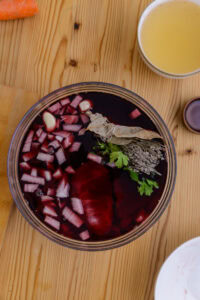
- Let marinate in the refrigerator for at least 2 hours, and up to 12 hours.
- Turn the cheeks over after 1 hour, then from time to time if they marinate longer.
Aromatics
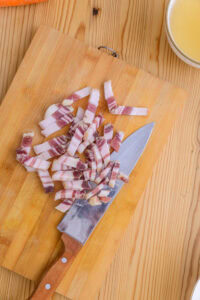
- Cut the cured pork belly into lardons.150 g cured pork belly,
- Peel and slice the onion.1 onion
- Peel and thinly slice the carrot.1 carrot
- Thinly slice the celery stalk.1 stalk celery
- Peel the garlic cloves.4 cloves garlic

- Cook the lardons in a sauté pan with the drizzle of oil, just long enough to render their fat, without letting them brown.1 drizzle of oil
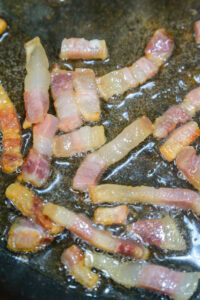
- Add the onion, carrot, celery and garlic, and cook them the same way, just until softened, without browning.

- Remove the aromatics from the pan and set them aside: the pan is then used to brown the cheeks.
Browning and Flouring
- Drain the pork cheeks, reserving the marinade and its aromatics.
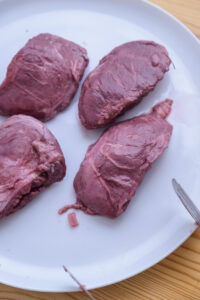
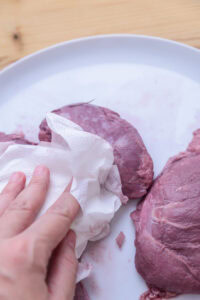
- Carefully pat the cheeks dry with paper towels.
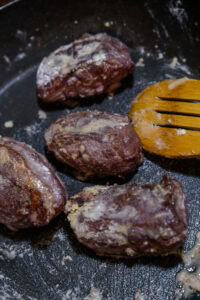
- Sear the cheeks in the same pan until browned on both sides.
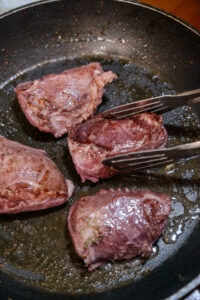
- Pour off the excess fat from the pan, leaving the cheeks in it.
- Flour the cheeks: dust them with a light coating of flour directly in the pan, sifting it if possible.1 tablespoon flour
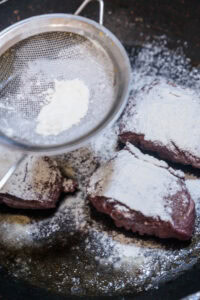
- Stir with a spatula for a few minutes to coat the cheeks well on all sides, without letting the flour brown (at most, let it turn golden), or it will make the sauce acrid.
Simmering
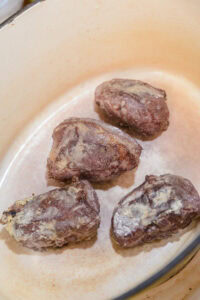
- Place the cheeks in a Dutch oven.
- Pour the marinade over them, along with all its aromatics.
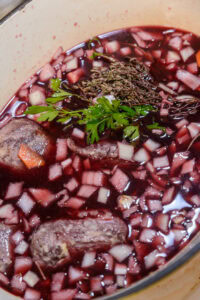
- Add the reserved sautéed lardons and aromatics.
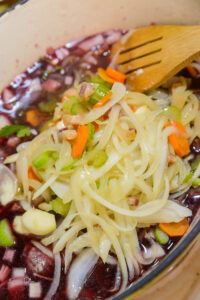
- Stir.
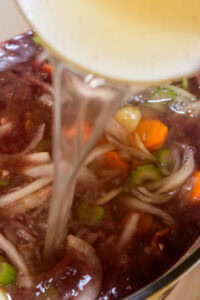
- Add the stock, or pour in water until the meat is just covered.1 L chicken stock
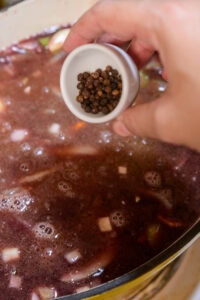
- Add the peppercorns.1 tablespoon peppercorns,
- Season with salt, depending on the stock used.salt
- Stir again.
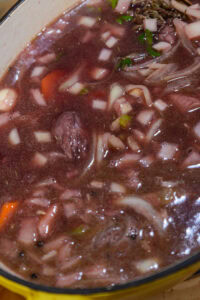
- Gently bring to a simmer over low heat.
- Cover and simmer for 2½ to 3 hours over the lowest possible heat.
- Check from time to time that it stays at a bare simmer.
- Ideally, stop cooking after 2½ hours and let cool, as with all slow-simmered dishes.
- The next day, put the Dutch oven back over low heat and cook for another 30 minutes.
Notes
This recipe is a variation on daube. It can also be made with beef cheeks.
Flouring means sprinkling flour over pieces of meat that have been browned in fat, before adding liquid. The flour gradually dissolves into the sauce, which gains body and slowly turns velvety without thickening.
The marinade can be given more punch with a little wine vinegar, used sparingly, especially if the marinating time is short.
Oven method: place the covered Dutch oven in the oven at 120°C, 150°C at most, and cook very gently for 3 to 4 hours.
Serve with steamed potatoes, the side that goes best with this dish. Leftovers can be used to make a parmentier.
Did you make this recipe?Tag @marcwiner on Instagram!