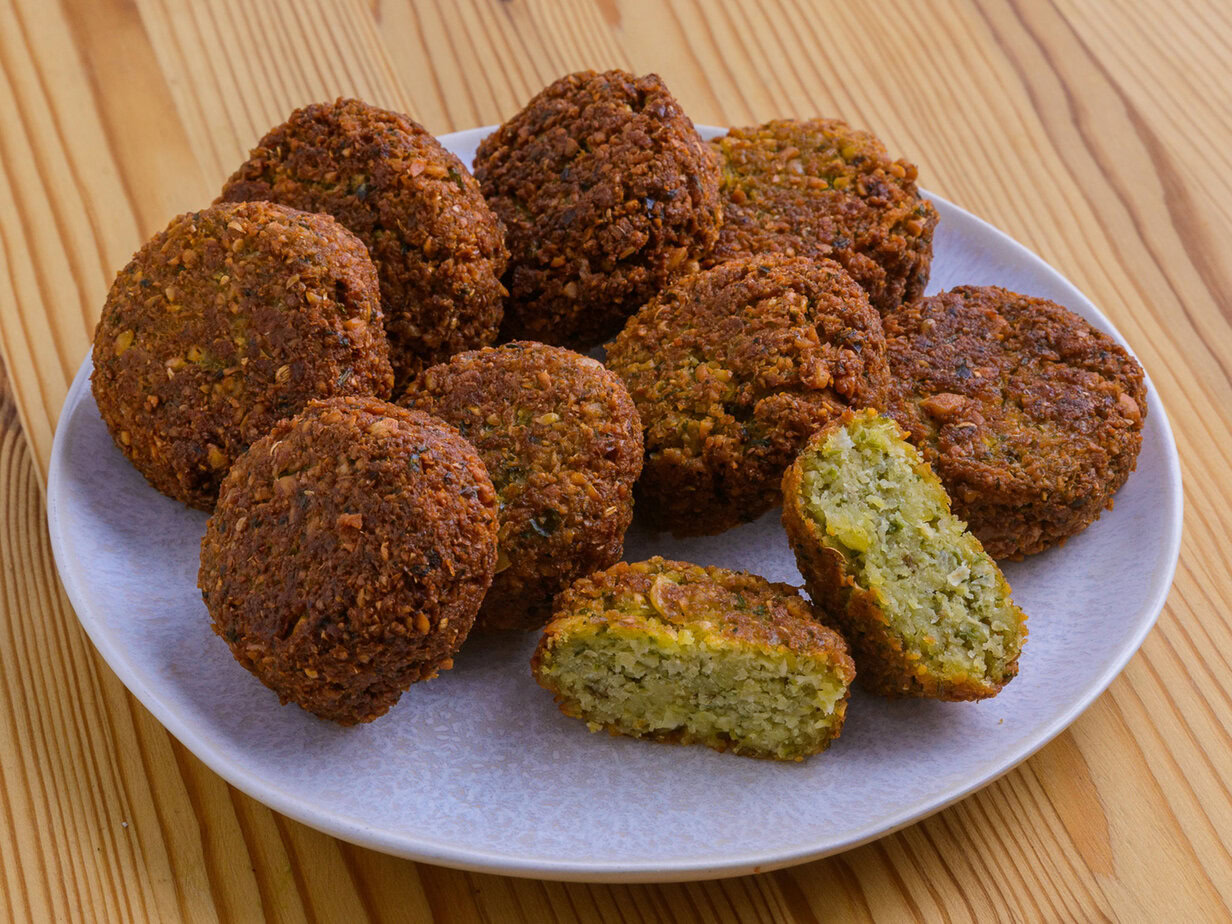
Servings: 30 falafel
Ingredients
Soaking
- 250 g chickpeas dried
Falafel Mixture
- 1 onion
- 2 small garlic cloves
- 2 tablespoons flat-leaf parsley, chopped
- 2 tablespoons cilantro fresh, chopped
- 1 chili pepper red or green, optional
- 1 teaspoon cumin ground
- 1 teaspoon coriander ground
- 1 teaspoon salt
Frying and Serving
- Vegetable oil, 5 to 7 cm deep in the wok or frying pan
- 1 teaspoon baking powder
- Pita bread
- Tahini sauce
- Assorted vegetables
- Pickles
Procédé
Soaking
- The day before, put the dried chickpeas in a large mixing bowl and cover them with plenty of water: they will double or even triple in size.250 g chickpeas
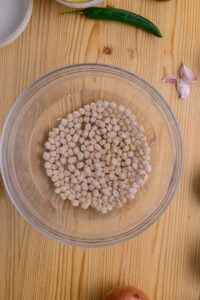
- Let soak overnight.
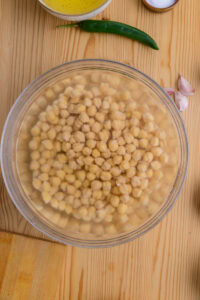
- The next day, drain the soaked chickpeas without cooking them: they are blended raw. Cooked or canned chickpeas would make a mixture that falls apart in the oil.
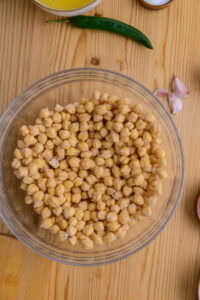
Falafel Mixture
- Put the onion, garlic, parsley, fresh cilantro and chili pepper in the bowl of the food processor.1 onion, 2 small garlic cloves, 2 tablespoons flat-leaf parsley,, 2 tablespoons cilantro, 1 chili pepper
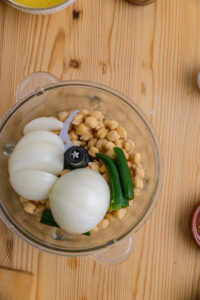
- Process until everything is finely chopped.
- Add the drained chickpeas.
- Process again, stopping now and then to scrape down the sides of the bowl, until everything forms a coarse paste.
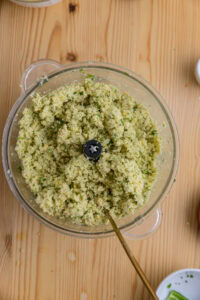
- Stop before the mixture turns smooth: it should stay a little grainier than hummus, which is what keeps the falafel light and fluffy.
- Transfer the mixture to a mixing bowl.
- Add the cumin, ground coriander and salt.1 teaspoon cumin, 1 teaspoon coriander, 1 teaspoon salt
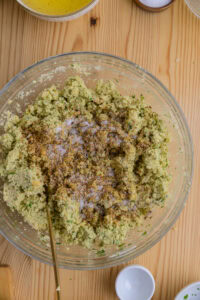
- Mix until well combined.
- At this point, if you are not frying the falafel right away, the mixture will keep for a few days in the refrigerator or a few months in the freezer.
Frying and Serving
- Pour the oil into a large wok or a large frying pan.Vegetable oil,
- Heat it over medium-high heat until it reaches 180°C.
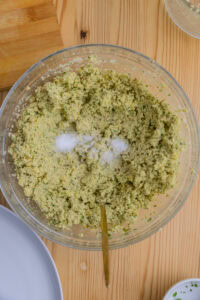
- While the oil heats, sprinkle the baking powder over the mixture and mix well: the baking powder goes in only now, just before frying.1 teaspoon baking powder
- Using a falafel scoop, drop the balls one at a time into the hot oil, without overcrowding the pan, so the oil does not cool down.
- If you do not have a falafel scoop, roll the mixture between your hands into walnut-sized balls, then flatten them very slightly between your palms before lowering them into the oil.
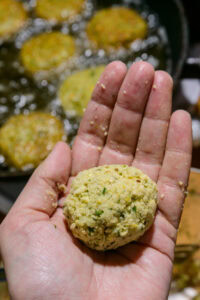
- Fry for about 5 minutes, until the falafel are a deep golden brown.
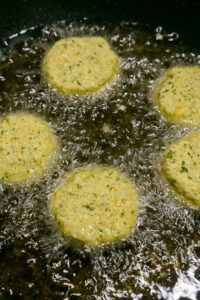
- Remove them from the oil with a skimmer.
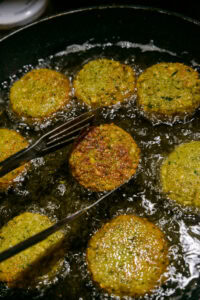
- Drain them on paper towels.
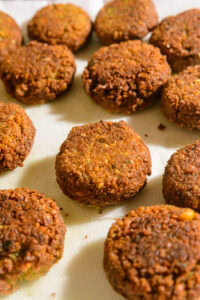
- Serve with the pita bread, tahini sauce, assorted vegetables and pickles.Pita bread, Tahini sauce, Assorted vegetables, Pickles
Notes
A Palestinian recipe, the way falafel is eaten for breakfast in the Old City of Jerusalem, where it is bought at a stall, in paper bags filled according to how much you want to spend. Made at home, falafel is a nice thing to make on the weekend, to recapture that breakfast.
The key point: the chickpeas are never cooked. They are only soaked overnight, drained, then blended raw with the herbs and aromatics, and it is their raw starch that holds the mixture together during frying, with no flour or egg.
Falafel can also be made with a mix of dried chickpeas and dried split fava beans. Dried split fava beans are hard to find outside Middle Eastern grocery stores, which is why this recipe uses only chickpeas. If you have fava beans, they can replace up to half of the chickpeas.
Did you make this recipe?Tag @marcwiner on Instagram!