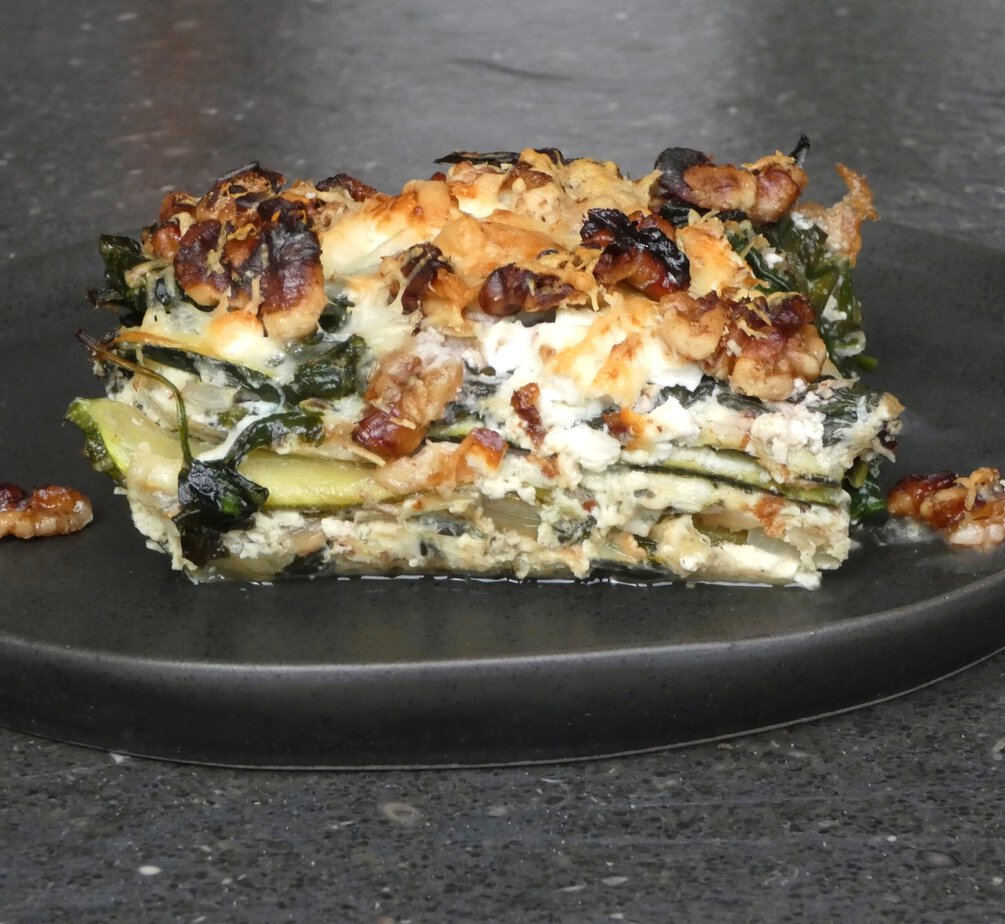
Zucchini Lasagna with Spinach and Feta
This zucchini lasagna combines tender spinach, feta, Pecorino, and walnuts in an Italian-inspired gratin.
Print Recipe
Pin the recipe
Servings: 2 servings
Ingredients
- 1 large zucchini
- 300 g fresh spinach
- 1 large onion
- 4 cloves garlic
- 1 lemon, zest only
- 150 g feta
- 100 g Pecorino
- 2 eggs
- 2 small handfuls walnuts
- 1 tablespoon extra virgin olive oil
- 1 teaspoon thyme dried
- 1 teaspoon rosemary dried
- 1 teaspoon paprika
- 1 pinch black pepper
- 1 generous splash avocado oil, mild olive oil or high-oleic sunflower oil for cooking
Procédé
- Preheat the oven to 200 degrees.
- Thinly slice the onion and sauté it in the frying pan with a splash of oil until translucent.1 large onion, 4 cloves garlic, 1 generous splash avocado oil, mild olive oil or high-oleic sunflower oil
- Wash the lemon and grate its zest. Add along with the herbs and spices.1 lemon, zest only, 1 teaspoon thyme, 1 teaspoon rosemary, 1 teaspoon paprika, 1 pinch black pepper
- Add the spinach gradually (about two handfuls at a time). The first two handfuls take a little longer to wilt. Tuck the next handfuls under the hot, already wilted leaves. This makes each batch wilt a little faster.300 g fresh spinach
- Meanwhile, grate the Pecorino. Divide into 3 roughly equal piles.100 g Pecorino
- Cut the zucchini into thin slices. They won’t all be equally long and neat, but that’s fine: you’ll also need small or narrow slices for each layer.1 large zucchini
- Mash 100 grams of feta finely and beat with the eggs and a tablespoon of extra virgin olive oil. The mixture doesn’t need to be completely smooth. The remaining 50 grams of feta will go on top of the lasagna later.150 g feta, 2 eggs, 1 tablespoon extra virgin olive oil
- Once all the spinach has wilted, drain the excess liquid from the pan. Use a colander or sieve if needed.
- Stir the drained spinach into the egg/feta mixture.
- Now assemble the lasagna in three layers. I use a loaf pan. This lets you build taller layers without having to make lots of servings at once, as you would in a baking dish.
- Very lightly grease the loaf pan with a few drops of olive oil. Place a third of the zucchini slices in the bottom of the loaf pan. The slices don’t need to cover the entire bottom.
- Spread a third of the spinach/feta mixture over the top. Sprinkle a third of the Pecorino over it.
- Cover again with a third of the zucchini, followed by the spinach/feta and Pecorino. Then add another layer of zucchini and spinach/feta.
- Finish with the remaining feta, crumble the walnuts over the top (you can do this by hand) and finally add the last portion of Pecorino.2 small handfuls walnuts
- Bake for half an hour.
Notes
Nutritional value calculated using 0 g of carbohydrates for the feta and Pecorino.
Equipment: oven at 200 degrees, loaf pan, large PFAS-free frying pan, (cheese) slicer, mandoline or box grater, garlic press, (box) grater, bowl, fork and (hand) mixer, colander or sieve (optional).
Did you make this recipe?Tag @marcwiner on Instagram!